EDITS.WS

Author: Christina Gwira

  • Download a FREE Blog Post Template for Divi’s Conference Layout Pack

    Hey Divi Creators! Thanks for joining us for the next installment of our weekly Divi Design Initiative where each week, we give away brand new freebies. This time around we’re building upon the Divi Conference Layout Pack with a brand new blog post template that matches the rest of the pack perfectly. Hope you enjoy it!

    divi layout

    Check Out The Divi Conference Blog Post Template Below

    Get it for free today!

    Divi Conference Blog Post Template for Desktop

    Tablet and mobile view for the Divi Conference Blog layout

    Download The Blog Post Template For The Divi Conference Layout Pack

    To lay your hands on the free Divi Conference Blog Post Template, you will first need to download it using the button below. To gain access to the download you will need to subscribe to our newsletter by using the form below. As a new subscriber, you will receive even more Divi goodness and a free Divi Layout pack every Monday! If you’re already on the list, simply enter your email address below and click download. You will not be “resubscribed” or receive extra emails.

    How to Upload The Template

    Go to Divi Theme Builder

    To upload the template, navigate to the Divi Theme Builder in the backend of your WordPress website.

    Navigating to the Divi Theme Builder

    Upload Website Template

    Then, in the top right corner, you’ll see an icon with two arrows. Click on the icon.

    Opening the import export functionality of the Divi Theme Builder

    Navigate to the import tab, upload the JSON file that you could download in this post, and click on ‘Import Divi Theme Builder Templates’.

    Save Divi Theme Builder Changes

    Save the imported Divi Conference Blog Post Template within the Divi Builder

    Once you’ve uploaded the file, you’ll notice a new template with a new body area that has been assigned to All Posts. Save the Divi Theme Builder changes as soon as you want the template to be activated.

    How to Modify The Divi Conference Blog Layout

    Open Post Template

    To modify the template’s elements, start by opening the template.

    Edit the newly imported Divi Conference Blog Post Template

    Inside the Body Layout Editor, you can edit the design on the front end using the Divi Builder just like you would with a normal Divi page. Since this is a template that has been assigned to all posts for the site, there is a post content module that is necessary for displaying the post content. You will need to keep that module in place, but you can adjust the post content module’s design elements, which will design the post content that is displayed dynamically.

    Editing the post content module to match your site within the Blog Template

    About the Divi Conference Blog Layout

    This blog post template has a lot of dynamic elements that will work with your blog posts immediately. For example, the entire post header is made up of dynamic elements including a featured image as the background, the post title, and the post metadata (date, categories, author, and comment count). This content won’t need updating, but you can tweak the design of each of those elements if needed. Other dynamic elements include the following:

    • Related Posts Module(s) – displays the most recent posts that share the same category.
    • Post Content Module – displays the post content added when editing the post on the backend of WordPress.
    • Comments – a functional comment area for the post.
    • Post Navigation – provides previous and next buttons to the post.

    Here is a quick illustration that identifies the elements of the Divi Conference blog post template.

    Divi Conference Blog Post Layout element breakdown

    However, some elements on a post template will need your immediate attention before using it live on your own website. For this post template, you will need to update the icon module that acts as a back to blog button on top of the comments module.

    The back to blog page Icon Module

    Add Link to Icon Module

    The Icon Module can link back to your main blog page. To do this, you’ll need to add it’s link into the link section of the Icon Module.

    Setting up the link back to the main blog page within the Icon Module of the Divi Conference Blog Post Layout

    New Freebies Every Week!

    We hope you’ve enjoyed the Divi Conference Layout Pack and the blog post template freebie that goes along with it. We look forward to hearing your opinions in the comment section below. Make sure you check back next week for more freebies!

    The post Download a FREE Blog Post Template for Divi’s Conference Layout Pack appeared first on Elegant Themes Blog.

  • Download a FREE Header & Footer for Divi’s Jewelry Designer Layout Pack

    Hey Divi Nation! Thanks for joining us for the next installment of our weekly Divi Design Initiative where each week, we give away brand new freebies. We recently shared a brand new Jewelry Designer Layout Pack. To help you get your website up and running as soon as possible, we’re sharing a global header & footer template that matches this layout pack perfectly as well! Hope you enjoy it.

    divi layout

    Check Out The Jewelry Designer
    Global Header & Footer Template Below

    Get it for free today!

    Header Design

    Desktop View

    Divi Jewelry Header Design for Desktop

    Tablet and Mobile View

    Divi Jewelry Header Design for Tablet and Mobile

    Footer Design

    Desktop View

    Divi Jewelry footer design for desktop

    Tablet and Mobile View

    Divi Jewelry footer design for tablet and mobile

    Download The Global Header & Footer Template For The Jewelry Designer Layout Pack

    To lay your hands on the free global header & footer template, you will first need to download it using the button below. To gain access to the download you will need to subscribe to our newsletter by using the form below. As a new subscriber, you will receive even more Divi goodness and a free Divi Layout pack every Monday! If you’re already on the list, simply enter your email address below and click download. You will not be “resubscribed” or receive extra emails.

    How to Upload The Jewelry Designer Layout Template

    Go to Divi Theme Builder

    To upload the template, navigate to the Divi Theme Builder in the backend of your WordPress website.

    Getting started with the Divi Conference Layout Pack

    Upload Global Default Website Template

    Then, in the top right corner, you’ll see an icon with two arrows. Click on the icon.

    Importing the Header and Footer Layout into the Divi Theme Buidler

    Navigate to the import tab, upload the JSON file which you were able to download in this post, and click on ‘Import Divi Theme Builder Templates’.

    Import settings for the header and footer layout pack

    Save Divi Theme Builder Changes

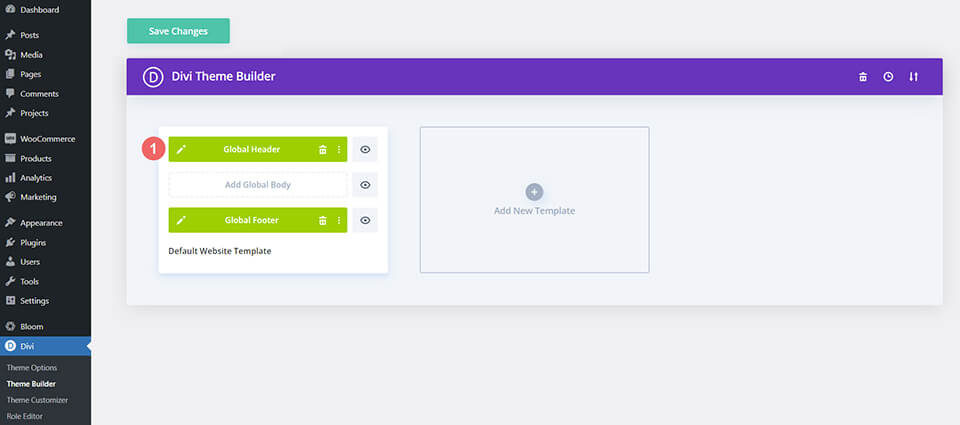
    Once you’ve uploaded the file, you’ll notice a new global header and footer in your default website template. Save the Divi Theme Builder changes as soon as you want the template to be activated.

    Save global header theme builder

    How to Modify The Template

    Open Jewelry Designer Layout Header Template

    To modify the global header template’s elements, start by opening the template.

    Editing the global header within the Divi Theme Builder

    Select Menu of Choice for Desktop, Tablet and Mobile

    Select a menu of your choice in the Menu Module.

    Selecting your menu for desktop

    We use two menu modules: one for desktop, and one for tablet/mobile. Ensure that the menus for both are the same as to not confuse your website users.

    Select your menu for use on tablet and mobile

    Update Logo with Menus

    You will need to upload your own logo into the Menu Modules within this header. Logos that are horizontal/landscape work best.

    Update header logo within the header Menu Module

    Update Text Call-to-Actions

    This header has three text areas that can be used as call-to-actions. Edit the text to match your brand. You can even go as far as to add links to them if you’d like, get creative!

    Update the text CTAs to match your brand and business goals

    Open Footer Template

    Continue by opening the global footer inside the default website template.

    Editing the footer template within the Divi Theme Builder

    Select Menu of Choice for Desktop, Tablet and Mobile

    Similar to the Header Template, you will need to add your menu to the footer menu.

    Select menu for footer menu module

    This will need to be done for both desktop and tablet/mobile view.

    Select menu for footer Menu Module for use in tablet and mobile

    Update Footer Menu Logo

    Just like the header’s Menu Module, you will need to update the logo included with our template with your own logo.

    Update footer Menu Module's logo

    Connect Your Email Marketing Solution

    Our footer has an Email Optin Module that needs to be activated. Connect your email marketing solution of choice to the module so that you can gather email addresses for your business.

    Connect your email marketing solution

    Update Static Footer Content

    You will need to go through and update the static content of the footer. This can include adding your own text, updating link URLs, and connecting your social media networks. Don’t forget about the copyright text at the bottom of the footer as well.

    Update static footer modules

    New Freebies Every Week!

    We hope you’ve enjoyed the Jewelry Designer Layout Pack and the Header & Footer freebie that goes along with it. We look forward to hearing your opinions in the comment section below. Make sure you check back next week for more freebies!

    The post Download a FREE Header & Footer for Divi’s Jewelry Designer Layout Pack appeared first on Elegant Themes Blog.

  • Download a FREE Category Page Template for Divi’s Home Baker Layout Pack

    Hey Divi Nation! Thanks for joining us for the next installment of our weekly Divi Design Initiative where each week, we give away brand new freebies. This time around we’re building upon the Home Baker Layout Pack with a brand new Category Page Template that matches the rest of the pack perfectly. Hope you enjoy it!

    divi layout

    Check Out The Home Baker
    Category Page Template Below

    Get it for free today!

    Desktop View

    Category Page Template for Divi's Home Baker Layout Pack Desktop View

    Tablet and Mobile View

    Category Page Template for Divi's Home Baker Layout Pack Tablet and Mobile View

    Download The Category Page Template For The Home Baker Layout Pack

    To lay your hands on the free Home Baker Category Page Template, you will first need to download it using the button below. To gain access to the download you will need to subscribe to our newsletter by using the form below. As a new subscriber, you will receive even more Divi goodness and a free Divi Layout pack every Monday! If you’re already on the list, simply enter your email address below and click download. You will not be “resubscribed” or receive extra emails.

    How to Upload The Template

    Go to Divi Theme Builder

    To upload the template, navigate to the Divi Theme Builder in the backend of your WordPress website.

    Getting started with the Divi Conference Layout Pack

    Upload Website Template

    Then, in the top right corner, you’ll see an icon with two arrows. Click on the icon.

    Importing the Header and Footer Layout into the Divi Theme Buidler

    Navigate to the import tab, upload the JSON file that you could download in this post, and click on ‘Import Divi Theme Builder Templates’.

    Import settings for the header and footer layout pack

    Save Divi Theme Builder Changes

    Once you’ve uploaded the file, you’ll notice a new template with a new body area that has been assigned to All Category Pages. Save the Divi Theme Builder changes as soon as you want the template to be activated.

    Save the imported category page layout within the Divi Theme Builder

    How to Modify The Template

    Open Category Page Template Body Layout

    To modify the template’s elements, start by opening the template’s body layout.

    Begin the process for editing the Category Page Layout

    Inside the Body Layout Editor, you can edit the design on the front end using the Divi Builder just like you would with a normal Divi page.

    About the Template

    This category page template has a few dynamic elements that will work automatically including:

    • Category Page Post/Archive Title: This will display the name of the category.
    • Blog Module 1: This displays the two most recent posts within the current category.
    • Blog Module 2: This module has a 2 post offset that displays the next 6 posts, following the first two. This module is display in a masonry grid format and has pagination.

    Here is a quick illustration that identifies the dynamic elements of the Home Baker Category Page Template.

    Illustration of Prepopulated Modules in the Category Page Template for Divi's Home Baker Layout Pack

    Updating the Template’s Dynamic Elements

    Blog Module(s)

    Posts for Current Page

    Since this is a template that has been assigned to all category pages for the site, there are going to be one or more blog modules that are set to display posts for the current page. This is how the template displays the posts dynamically for each category page.

    Showcasing the blog posts for the specific category chosen

    You can update the rest of the settings (like post count) to adjust the module elements and design. However, make sure to keep the option Posts for Current Page set to YES.

    Post Offsets

    If more than one blog module is used on the template, the post offset option is used in conjunction with the previous blog module to preserve the order of dynamic posts by picking up where the previous blog module left off. In our case, the previous blog module had a post count of 2, the next blog module will have a post offset of 2 to display posts starting at #3.

    Understanding the post offsets for the second Blog Module

    Keep this in mind when making updates to blog modules’ post count and offsets.

    Updating the Template’s Static Elements

    Some elements on a category page template will need your immediate attention before using it live on your own website. These elements are called static because they will not update dynamically.

    Email Optin

    To allow the Email Optin Module to show up in your design, you’ll need to link an email account.

    Connect email marketing platform of choice to Email Optin Module

    Update Other Category Page Static Content

    Other content that isn’t going to change dynamically should be updated as well. These include all modules displaying text, links, social media follow icons, etc.

    New Freebies Every Week!

    We hope you’ve enjoyed the Home Baker Layout Pack and the Category Page Template freebie that goes along with it. We look forward to hearing your opinions in the comment section below. Make sure you check back next week for more freebies!

    The post Download a FREE Category Page Template for Divi’s Home Baker Layout Pack appeared first on Elegant Themes Blog.

  • How to Organize Your Templates in Divi’s Theme Builder Library

    Consider using the new Divi Theme Builder Library in your workflow as you build your next website. With its integration with the Divi Cloud, you have the power to take your templates from one site to another. It can get tricky to keep this newfound creative expression under wraps though. Before you get out of hand with loading your library, let’s learn how to organize templates in Divi’s Theme Builder Library.

    Let’s Start with the Basics: Naming Conventions

    When working on a large project, as we are working through ideas and iterations, our workspace, documents, and folders can get a little bit… disheveled…

    A real life example of a disorganized logo design folder

    It is entirely possible to bring this same mindset to your Divi Theme Builder Library items. With new layout packs released almost weekly and freebies abounding, your library can easily get swamped. As such, having a standardized way of organizing your templates through having a naming convention is advised.

    A cross-section of a Divi Theme Builder with multiple templates

    In the Divi Theme Builder example above, we notice that each template follows a similar naming convention. Firstly, the name of the template pack is written down in sentence case. Next, there is a dash. Lastly, the type of freebie or template is stated. We can take these same learnings to organize templates in Divi’s Theme Builder Library.

    An example of an organized Divi Theme Builder Library

    In this example, we see that naming conventions aren’t followed as strongly. Nevertheless, it is a far cry from our logo design folder! Notice that at the very least, a sentence case is used with each template. Also, the type of template is denoted within the name.

    Use Tags to Make Searching Easier

    The Divi Theme Builder comes with three ways to search and find your templates. These are search (with filter), categories, and tags.

    Search with filter, tags and categories

    By having a consistent naming convention, it is easier to look for items in our library. For example, by using the word header in all our header templates, when we search for “header”, all header templates will show up. This is where tags can come in. Irrespective of your naming convention, if you were to tag all your header templates with the tag header, you will get the same result when you search.

    Manage tags and categories

    It is also possible to manage your tags and categories within the Divi Theme Builder Library. If you make a typo, or want to add alternatives, you can do so.

    Organize Templates in Divi’s Theme Builder Library with Categories

    Just like categories on a WordPress website, categories in the Divi Theme Builder Library allow you to group your templates together. Perhaps you want to have a category for all your blog post templates. Maybe you want a category for all your red templates. However you’d like to organize your templates, a category will help make your life easier.

    Local categories in the Divi Theme Builder Library

    Divi Cloud Categories vs. Local Categories

    A special note needs to be made for categories. In the Divi Theme Builder Library, you can make two types of categories. These categories are Divi Cloud Categories and Categories. As the name suggests, Divi Cloud Categories allow you to save templates to the Divi Cloud. However, these categories are not available on your local Divi installation. Your local Divi categories are relegated only to the site that they were built on.

    Managing categories in Divi Theme Builder

    Should you decide to manage your categories in the Divi Theme Builder Library, you are also able to manage your Divi Cloud Categories as well.

    Using Template Sets to Organize Templates in Divi’s Theme Builder Library

    The final way in which you can organize your templates within Divi’s Theme Builder Library is via Template Sets. A Template Set is a group of templates that were created within the Divi Theme Builder.

    A preview of a Theme Builder Library Template Set

    The above screenshot shows that currently, there are a few Template Sets that are matched to different layout pack categories provided by Divi. Template Sets can help you organize your Divi Theme Builder Library by helping you to create packs of templates that speak together. Take for example the Landscaper Set. Inside this Template Set, we have all built upon the free Landscape Maintenance Layout Pack, added it’s header and footer, as well as the blog post template. Changes were also made to all of these templates to customize it for our needs. If we were to simply have all those templates within our Divi Theme Builder, you’re looking at quite a few templates. However, by putting them all within a Template Set, we keep our Divi Theme Builder neat. In addition to a neat and tidy Theme Builder, we can easily reference all the templates within the set.

    Template Sets and their categories

    It is important to note that Divi Theme Builder Template Sets have their own set of categories. These categories are different from the categories used to organize standalone Divi Theme Builder Templates. Standard Theme Builder Templates and Divi Template Sets cannot be organized in the same categories. Similar to the standard Divi Theme Builder Template, there is also a different type of category for Template Sets that reside on the Divi Cloud.

    In Conclusion

    There are a number of ways to keep your Divi Theme Builder Library organized. Adopting a naming convention for your Divi Theme Builder Library is a practice that can assist you in keeping your library organized. Following this, you may want to consider adding tags to your individual templates. Tags make it easier to filter and search through your library. Noticing that there is a difference between categories on your local Divi install and Divi Cloud is an important point to remember. Also, don’t forget that you cannot store Template Sets and Templates in the same categories. With all of these things in mind, you have the tools that you need to ensure that your Divi Theme Builder is organized for your next project.

    The post How to Organize Your Templates in Divi’s Theme Builder Library appeared first on Elegant Themes Blog.

  • Download 4 FREE Blog Post Template Sets for Divi

    Over the years we’ve provided a ton of freebies for your next Divi website. With the release of the Divi Theme Builder Library and Divi Cloud, we’re rounding up some of our freebies into template sets that you can add to your next project. For today’s post, we’ll be focusing on our Blog Post Template freebies. Not sure what a Blog Post Template is? Let’s take a look and find out!

    What is a Blog Post Template?

    Blog posts are the foundation of WordPress. Before WordPress became the main website builder of the internet, it was a humble blogging platform. With the advent of pages in WordPress 1.5, WordPress began making waves as a content management system. However it has never forgotten its blogging roots. With the Divi Theme Builder, we can create templates for our blog posts. We can even assign different templates to all blog posts in a tag or category. If we wanted to, we could even assign a different template to every single blog post on our website (I wouldn’t recommend it, but you could do it!).  Markedly in Divi, we use Blog Post Templates to set a consistent style for our blog posts, whether it be a single post or all the posts on our website.

    What is a Template Set?

    In the new Divi Theme Builder Library, we can group a number of templates together. This is called a Template Set. As an example, in your current Divi Theme Builder, you may have created a template for your homepage, your blog posts and your product pages. You can add all of these templates to a template set. Then, you can add this Template Set to your Divi Cloud account so that you can access it on another site at a different time.

    Four FREE Blog Post Template Sets

    In this freebie, we’ll be providing you with four FREE Blog Post Template Sets. We’ve organized each set according to their industry. Let’s take a look at the templates included in each set.

    Art & Design Template Set

    The Art & Design Blog Post Template Set is geared toward those in creative fields like artists and creators.

    Architecture Firm Blog Post Template

    Architecture Firm Blog Post Template

    Craft School Blog Post Template

    Craft School Blog Post Template

    Creative CV Blog Post Template

    Creative CV Blog Post Template

    Film Lab Blog Post Template

    Film Lab Blog Post Template

    Freelance Writer Blog Post Template

    Freelance Writer Blog Post Template

    Home Staging Blog Post Template

    Home Staging Blog Post Template

    Interior Design Blog Post Template

    Interior Design Blog Post Template

    Renovation Blog Post Template

    Renovation Blog Post Template

    Painter Blog Post Template

    Painter Blog Post Template

    Community & Non-Profit Template Set

    Our Community & Non-Profit Template Set speaks to those who have social good as their main purpose.

    Charity Blog Post Template

    Charity Blog Post Template

    Chess Club Blog Post

    Chess Club Blog Post

    NGO Blog Post Template

    Food & Drink  Template Set

    Restaurants and food vendors this set is for you.

    Bistro Blog Post Template

    Bistro Blog Post Template

    Cooking School Blog Post Template

    Cooking School Blog Post Template

    Home Baker Blog Post Template

    Home Baker Blog Post Template

    Italian Restaurant Blog Post Template

    Italian Restaurant Blog Post Template

    Meal Kit Blog Post Template

    Meal Kit Blog Post Template

    Nutritionist Blog Post Template

    Nutritionist Blog Post Template

    Pizzeria Blog Post Template

    Pizzeria Blog Post Template

    Produce Box Blog Post Template

    Produce Box Blog Post Template

    Sushi Restaurant Blog Post Template

    Sushi Restaurant Blog Post Template

    Winery Blog Post Template

    Winery Blog Post Template

    Health & Fitness Template Set

    Finally, if you’re in the fitness industry, this set will have your blog posts looking sharp.

    Acupuncture Blog Post Template

    Acupuncture Blog Post Template

    Family Doctor Blog Post Template

    Family Doctor Blog Post Template

    Fitness Coach Blog Post Template

    Fitness Coach Blog Post Template

    Golf Lesson Blog Post Template

    Golf Lesson Blog Post Template

    Meditation Center Blog Post Template

    Meditation Center Blog Post Template

    Psychologist Blog Post Template

    Psychologist Blog Post Template

    Telehealth Blog Post Template

    Telehealth Blog Post Template

    Tennis Club Blog Post Template

    Tennis Club Blog Post Template

    Therapy Blog Post Template

    Therapy Blog Post Template

    Virtual Fitness Blog Post Template

    Virtual Fitness Blog Post Template

    Women’s Health Center Blog Post Template

    Women's Health Center Blog Post Template

    Download All 4 FREE Blog Post Template Sets for Divi

    To lay your hands on all 4 of the free Blog Post Template Sets for your Divi Layout Library, you will first need to download it using the button below. To gain access to the download you will need to subscribe to our newsletter by using the form below. As a new subscriber, you will receive even more Divi goodness and a free Divi Layout pack every Monday! If you’re already on the list, simply enter your email address below and click download. You will not be “resubscribed” or receive extra emails.

    How to Upload The Blog Post Template Sets

    Go to Divi Theme Builder

    To upload the template, navigate to the Divi Theme Builder in the backend of your WordPress website.

    Getting started with the Divi Conference Layout Pack

    Upload Template Set

    Then, in the top right corner, you’ll see a plus sign icon. Click on the icon. This will open the Template Sets Library.

    Open the Sets Library within the Divi Theme Builder

    Once you are in the Template Sets Library, click on the two arrows icon.

    Upload template set

    Locate your .JSON file from the ZIP folder. Upload it to the library by clicking No File Selected.

    Upload template set .JSON file from computer

    Once you have selected your file, it’ll display the name of the file. Next, click the blue Import Theme Builder Library Templates button.

    After successfully uploading template set .JSON file from computer

    As your Template Set is uploading, you’ll notice a modal pop-up with a progress bar letting you know how your import is doing.

    Import progress

    Please Note: Due to the number of post templates and assets within each set, it can take some time for the set to install. Please be patient.

    Using Your Template Set

    After the Template Set has been added to your library, click on the kebab menu on the library item.

    Using your new template set

    In the menu that pops up, select Use This Set. This will begin the process to add the templates within your new Template Set to your Divi Theme Builder.

    Click use this set to add the templates within the template set to your Divi Theme Builder

    An Import Templates modal box will appear. Because this template set has multiple Blog Post Templates within, we’ll uncheck the Override Existing Assignments checkbox. Remember as  you’re working on your site, to set the templates to your chosen page, post, product, etc. assignment in the Divi Theme Builder. Next, click on the Import Divi Builder Templates button in blue.

    Import template modal box

    Please Note: Due to the number of post templates and assets within each set, it can take some time for the set to install. Please be patient. Also, template thumbnails do take some time to generate.

    Save Changes

    Once your Template Set has been installed, you’ll notice that all the Blog Post Template titles are in red. This is because as they stand, they have not been assigned to a page, post, product, etc. Don’t forget to assign them once you have carried out your changes. Press the green Save Changes button to save your new template set in the Divi Theme Builder.

    Save Template Set into the Divi Theme Builder

    New Freebies Every Week!

    We hope you’ve enjoyed our very first Blog Post Template Set freebie! We look forward to hearing your opinions in the comment section below. Make sure you check back next week for more freebies.

    The post Download 4 FREE Blog Post Template Sets for Divi appeared first on Elegant Themes Blog.

  • How to Create Template Sets Using Divi’s Theme Builder Library

    The Divi Theme Builder Library allows us to do more with the templates that we have created in the Theme Builder. We now have access to tools such as tags, categories, and search. These make the job of keeping our templates organized as we work with Divi on a day-to-day basis. Another thing we are now able to do is create template sets in the Divi Theme Builder Library. Template sets allow us to bulk-add templates to the Divi Theme Builder Library. Think of template sets in the same light as the premade layout packs that you can install in the Divi Builder. Now, not only can you save the templates that you’ve created, but you can also save each template’s assignments. Furthermore, with the Divi Theme Builder Library you can bundle all of these together into a template set.

    In this post, we’ll walk you through the process. Let’s get to it!

    What is a Template Set?

    We can learn alot about template sets from Divi’s premade layout packs.

    Divi Layout Packs Overview

    Layout packs typically come with a design for the home page, blog page, and some interior pages. Depending on the layout pack you’re installing some may come with a layout for a products page, a shop page, or even an online course. In the Landscape Maintenance Layout Pack below, we can see that there are 7 page layouts included.

    Divi Landscaper Layout Pack

    We can use this layout pack to create different templates for our site in the Divi Theme Builder. For example, we could assign the landing page layout to the homepage only. Next, we could assign the services page layout to the services pages on our website. Luckily for us, we can also download a free header, footer and blog post template from the Divi Resources section of the Elegant Themes blog.

    Equipped with our freebies, we can assign the blog post template freebie to all the blog posts on our website. We could then follow the tutorial to set up the header and footer to be global elements of our website. Let’s say that after following the tutorial, we decided to make a pretty cool edit to the header freebie template. With all of our assigned templates in place, as we are working on our site, we don’t need to think about the design of individual pages too much. This is the power that comes with using the Divi Theme Builder.

    Why Create Template Sets in the Divi Theme Builder Library?

    A friend approaches us and asks for our help with setting up a website for their pool cleaning business. They want their site to look “exactly” like ours. With template sets, we add all our handiwork together. We can gather the layouts from the layout pack, the template assignments plus our newly updated header template and create a template set. With the Divi Theme Builder Library, we can now download this template set to our friend’s Divi installation. No need to export and re-import JSON files from the Divi Theme Builder. We can simply bulk add our templates into a template set, and use the Divi Theme Library to move them to our friend’s website. Then we can make any necessary edits to our friend’s website.

    How to Create Template Sets in the Divi Theme Builder Library

    Navigate to the Divi Theme Builder Library

    First things first, we need to be in the Divi Theme Builder. From the WordPress backend, go to Divi. Then, click on Theme Builder.

    Navigate to the Divi Theme Builder Library

    As you can see able, we have our global header and footer installed. We also have our individual page and post assignments in place.

    Save Theme Builder Set

    Our templates have been customized and are ready to be added in bulk to the Divi Theme Builder. To do this, notice the new icon that has been added to the icon menu in the Divi Theme Builder.

    Begin to save the Theme Builder Set

    Click on this icon to begin the process of bulk-adding our templates to our Divi Theme Builder Library. Once we have done this, we are presented with the following popup. This is the Save Template Set modal, and this is where we’ll be able to bulk-add our templates to the Divi Theme Library.

    The Save Theme Builder Set Modal Box

    Enter in your Set Name. Because these are the only templates in our library, for the templates that we’re going to select, we’re going to check Include All Templates. If you have a library with a myriad of templates, select the appropriate templates that you’d like to bulk add to your Divi Theme Builder Library.

    A filled Save Template Set modal box

    For our case, we’ve assigned a Set Name. We also want to save this entire library as a set. We want it on the cloud because we will be using it on different sites. It’ll go in a category and a tag has been added. Once we are happy, we can go ahead and save our template set to Divi Cloud.

    Checking Our Work

    Let’s check to see if our template set bulk added all our necessary templates to the Divi Theme Builder Library. From the Divi Theme Builder icon menu, we click on the plus icon.

    Divi we correctly Bulk Add Templates to Your Divi Theme Builder Library?

    When this happens, our Divi Theme Builder Library will open. If you are logged into Divi Cloud, you will also see your Divi Cloud templates. Notice that we have our Landscaper Set here. Also, the Divi Theme Builder Library will automatically populate the thumbnail with screenshots of the templates within.

    This is how to successfully create template sets in the Divi Theme Builder Library

    Successfully Create Template Sets in the Divi Theme Builder Library

    Now, you can use template sets to bulk-add your templates to the Divi Theme Builder Library. When coupled with the Divi Cloud, you can take your beautiful designs from one site to another, easily. By streamlining your design process, you can set up sites faster, but also maintain a certain quality standard when it comes to your work. It’s always a good time being able to save your favorite design combinations is also a plus! Try creating your own template sets today and see how easy your work becomes as you build sites for clients with Divi.

    The post How to Create Template Sets Using Divi’s Theme Builder Library appeared first on Elegant Themes Blog.

  • How to Edit a Template in Divi’s Theme Builder Library

    The newly arrived Divi Theme Builder Library allows us to better organize our favorite templates and template sets. When we add the power of Divi Cloud, we are able to create our beloved templates on one website and then bring them across to multiple installs of Divi. The Divi Theme Builder Library allows us to see the fruits of our labor in the form of the templates and template sets that we’ve created over time. But what happens when you want to edit a theme in Divi Theme Builder Library? Is this possible? Can we make this happen? What does that look like? We’ll discuss and walkthrough that use case in this tutorial. Follow along!

    Why Would You Want to Edit a Template in the Divi Theme Builder Library?

    Having the ability to edit your templates right in the Divi Theme Builder Library allows you to work faster. It’s really as simple as that. You have greater control over your templates and can build a solid workflow. Having a streamlined process is necessary to building better websites and by being able to edit a template in the Divi Theme Builder Library, we are saving time and energy in your design flow.

    How to Edit a Template in the Divi Theme Builder Library

    First things, first, let’s go to the Divi Theme Builder. This is where we’ll be spending our time and also where we go to access the Divi Theme Builder Library.

    Navigate to the Divi Theme Builder Library

    Move to the Divi Theme Builder in the backend of your WordPress website.

    Navigate to Divi Theme Builder

    Add a New Template

    Now that we are in the Divi Theme Builder, we will click on the Add New Template button.

    Click on the Add New Template button to access the Divi Theme Builder Library

    Next, we will click on Add From Library. This will take us to our Divi Theme Builder Library.

    We are now entering the Divi Theme Builder Library when we click on Add from Library

    Select Your Template to Edit

    Now, you will be taken to the Divi Theme Builder Library. You will see the templates that currently reside in your library. Those that are in the cloud are denoted with a blue cloud.

    A look at the Divi Theme Builder Library

    You will also notice that the library has a column where you can search your templates via Tags, Categories, Locations (This website meaning it is only locally available) and by Search.

    Begin to Edit Your Selected Template

    At the bottom right of the thumbnail of the template that you want to edit, click on the three-dots menu.

    Select the template that you want to edit in the Divi Theme Builder Library

    Once the menu has opened, select Edit with Theme Builder.

    Edit the template with the Theme Builder inside the Divi Theme Library

    Begin to Edit a Template in Divi Theme Builder Library

    You will now notice that a new tab/window/popup has opened. This is where you will now go in to edit your template.

    Edit a template in Divi Theme Builder Library

    Edit Your Template

    Once in the template, you can edit it with the Divi Builder, just as you would in the Divi Theme Builder.

    Using the Divi Builder in the Divi Theme Builder Library

    All the tools that are at your disposal in the Divi Builder and the Divi Theme Builder are also available to you as you edit your template in Divi’s Theme Builder Library.

    Save Your Changes

    When you have edited your template, you can now save your newly edited template the same way you would do in the Theme Builder. Click on the purple meatball menu icon, and then click on the green Save button. Once the button saves, you’ll then click on the white X icon to the top right. This will close the Divi Theme Builder Library Editor window.

    Exit the Divi Builder within the Divi Theme Builder Library

    You will also need to save your changes again in the main Divi Theme Builder Library.

    Save template in Divi Theme Builder Library and return to the Divi Theme Builder Library

    To go back to the library, you will then click on the green Return to Theme Builder button. This will then close the tab/pop/window where you did your editing.

    Another Way…

    There is also an alternative method to edit templates that are saved within you Divi Theme Builder. Let’s quickly explore it below. As before, we will enter the Divi Theme Builder Library.

    Click on the Add New Template button to access the Divi Theme Builder Library

    We then go ahead, and click Add from Library to go into our library.

    We are now entering the Divi Theme Builder Library when we click on Add from Library

    Now, as opposed to clicking on the three-dot menu for the template that we’d want to edit, we’re going to click on the thumbnail of the template that we want to use.

    Click thumbnail of template you'd like to edit... again :)

    Edit with Theme Builder Through Template Details

    Now, a new popup will open. This new popup will show you the details of the template. From here, you can see a lot more details about the template you are previewing. As an example, you can see that this template is in the Headers category, it’s on the Divi Cloud, and it hasn’t been added to my favorites just yet.

    Understanding the Template Details window

    We are also able to see a live preview of the template in question. Additionally, we can go right ahead and use the template as is. However, notice that we also have the option to edit the template in question. When we click on the Edit with Theme Builder button, we’ll still be able to edit our selected template.

    Edit with the Divi Theme Library Theme Builder

    In Conclusion

    The Divi Theme Builder Library powered by Divi Cloud allows us to take our work from one site to another. We can have access to sites that we’ve built since the start of our journey with Divi to the templates that we created last week. With the added benefit of being able to edit our work directly in the library, our workflow is more streamlined. With a more streamlined workflow, we are able to have a design process that can help us update our sites more effectively.

    The post How to Edit a Template in Divi’s Theme Builder Library appeared first on Elegant Themes Blog.

  • Download a FREE Header & Footer for Divi’s Home Remodeling Layout Pack

    Hey Divi Nation! Thanks for joining us for the next installment of our weekly Divi Design Initiative where each week, we give away brand new freebies. We recently shared a brand new Home Remodeling Layout Pack. To help you get your website up and running as soon as possible, we’re sharing a global header & footer template that matches this home remodeling layout pack perfectly as well! Hope you enjoy it.

    divi layout

    Check Out The Home Remodeling
    Global Header & Footer Template Below

    Get it for free today!

    Header Design

    Desktop Version

    Divi Home Remodeling Header Template Desktop View

    Tablet/Mobile Version

    Divi Home Remodeling Header Template Tablet and Mobile View

    Footer Design

    Desktop Version

    Divi Home Renovation Footer Template Desktop View

    Tablet/Mobile Version

    Divi Home Remodeling Footer Template Tablet and Mobile View

    Download The Global Header & Footer Template For The Home Remodeling Layout Pack

    To lay your hands on the free global header & footer template, you will first need to download it using the button below. To gain access to the download you will need to subscribe to our Divi Daily email list by using the form below. As a new subscriber, you will receive even more Divi goodness and a free Divi Layout pack every Monday! If you’re already on the list, simply enter your email address below and click download. You will not be “resubscribed” or receive extra emails.

    How to Upload The Home Remodeling Header & Footer Template

    Go to Divi Theme Builder

    To upload the home remodeling template, navigate to the Divi Theme Builder in the backend of your WordPress website.

    Getting started with the Divi Conference Layout Pack

    Upload Global Default Website Template

    Then, in the top right corner, you’ll see an icon with two arrows. Click on the icon.

    Importing the Header and Footer Layout into the Divi Theme Buidler

    Navigate to the import tab, upload the JSON file which you were able to download in this post, and click on ‘Import Divi Theme Builder Templates’.

    Import settings for the header and footer layout pack

    Save Divi Theme Builder Changes

    Once you’ve uploaded the file, you’ll notice a new global header and footer in your default website template. Save the Divi Theme Builder changes as soon as you want the template to be activated.

    Save global header theme builder

    How to Modify The Home Remodeling Template

    Open Header Template

    To modify the global header template’s elements, start by opening the template.

    Editing the global header within the Divi Theme Builder

    Select Menu of Choice

    Select a menu of your choice in the Menu Module.

    Choose your main menu in your home remodeling template

    Update Logo within Menu Module

    Within the Menu Module, update the Logo setting by uploading your logo to the module.

    Update logo within Menu Module for your business or brand

    Update Main Menu CTA in the Home Remodeling Template

    The main menu of this header template has a Button Module. Open the settings for this module and change the text or link destination to one that suits your needs.

    Update CTA Button Module with your links, text and more

    Update Secondary Icon Menu

    This header has a secondary menu made up of Blurb Modules. Open the settings of each to module and add the link URL, icon type etc. to your liking for your website.

    Updating secondary menu Blurb Module's icons, links and text

    Update Mobile Secondary Icon Menu

    The icon menu is make up of multiple Blurb Modules. This secondary icon menu is set to display only on tablet and mobile, providing a mobile responsive experience for your website users.

    Update the icons, links for the mobile version of the secondary menu

    Open Footer Template

    Continue by opening the global footer inside the default website template.

    Editing the footer template within the Divi Theme Builder

    Update Footer Menu Module

    Like the main menu, we need to select our footer menu from the Menu Module within the footer template.

    Select menu for footer Menu Module in your home remodeling template

    Connect Email Marketing Solution

    This footer template has an Email Optin Module. With this module, we are able to connect and collect email addresses from our website visitors. We will need to connect our email marketing program — Mailchimp, ActiveCampaign etc. — to this module so that the module works correctly.

    Connect email marketing solution of choice to Email Optin Module

    Update Footer Call-to-Action

    We have a call-to-action within the footer. Update the text and link URL for the Button Module to suit your website needs.

    Update Text and Button Module in the home remodeling template making up the footer call-to-action

    Update Static Modules

    Don’t forget to update the static modules within the footer template. This includes module titles, the copyright text and the social media icons with their subsequent links.

    Remember to update the static elements within your home remodeling template's footer

    New Freebies Every Week!

    We hope you’ve enjoyed the Home Remodeling Layout Pack and the Header & Footer freebie that goes along with it. We look forward to hearing your opinions in the comment section below. Make sure you check back next week for more freebies!

    The post Download a FREE Header & Footer for Divi’s Home Remodeling Layout Pack appeared first on Elegant Themes Blog.

  • How to Access Different Libraries in Divi

    Organization can make a huge difference in the time and effort you put into a task. Having your trusted tools on hand makes the task that you’re working on move faster. This counts when building your website too. With Divi, we make sure you can have all your design elements within reach. This is done through the Divi libraries. You can access Divi’s various libraries in a variety of ways. In today’s post, we’re going to be looking at the difference between Divi’s libraries, where to find them, and how to use them. We’ll put a special emphasis on the new Divi Theme Builder library that allows you to organize your various templates as well!

    Let’s get to it.

    What is the Difference Between Divi’s Libraries?

    Fundamentally, most of Divi’s libraries operate in the same way. When you hover over a module, row or section, you can access a library filled with your past saved elements. When you click on the plus icon within an element you have two options: Add New Element or Add From Library. 

    The Add to Library Button can be found throughout the Divi Builder

    By clicking on Add From Library, you’ll be accessing the library of saved elements. In the screenshot below, we see what that looks like when trying to access the Module Library.

    Accessing the Add from Library section within the Module Popup

    However, how do we get elements into its’s library? Let’s quickly take a look at that before we ponder the difference between Divi’s library.

    How to Add an Element to Its Respective Library

    Let’s say you’ve made an amazing layout. The page looks great, your modules are where they’re supposed to be and you want to save the layout so that you can use it exactly on another page. To do that, we’ll click on the purple icon in the middle of the screen with the three dots. This will open up the menu for the page.

    Preparing to add an element - a layout - to it's library

    From there, we’ll click on the Save to Library icon. Remember this icon, as it is used within to add Divi’s different elements to their respective library.

    Adding a layout to the Layout Library

    Once this step is complete, we see the Save to Library Modal Box. At the bare minimum, we assign a name to our layout and click the blue Save to Library button. You can further organize your library by adding it to a category, or taking your organization and – and workflow skills – up a notch by saving your layout to the Divi Cloud, so that you can use it across different websites.

    Saving our layout to the Divi Layout Library

    With our layout saved, we can now further explore the difference between Divi’s libraries

    Working with Divi’s Layout Library

    In Divi, an element is a module, row, section, and layout. Anytime we save one of these – outside of Divi Cloud – it is stored in the Divi Layout Library. Divi’s Layout Library allows us to access saved elements. It also allows us to organize our elements. We can create categories, manage tags and we can also import or export elements within the Divi Layout Library. Notice that if an element is global, it has a green globe next to it.

    An inside look at Divi's Layout Library

    Also notice how there is a column within the Divi Layout Library screen, called Type, that shows the family an element belongs to. Our new element, the Divi Choco Landing page, is denoted as a layout. Layouts may consist of multiple sections, rows, and modules. Sections can hold multiple rows and modules, but they can only be comprised of one section. Rows are encompassed of a number of columns and modules. Again, we can only have one row saved as an element within the Divi Layout Library. We can save modules can be saved separately from rows, columns, and sections within the Divi Layout Library.

    The Section Library

    To access the Section Library, we first click on the blue plus icon underneath any section within the Divi Builder.

    Accessing the Divi Section Library from the Divi Builder

    After, we immediately see the option to add a new, empty section to our page. However, we also have the option to access the sections that we have saved within the Divi Layout Library – or Divi Cloud – at our disposal.

    Divi Section Library

    If you are logged into your Elegant Themes and Divi Cloud account, you’ll see your avatar at the top right, as well as the location My Divi Cloud added to your Locations menu. By clicking on the thumbnail of our section element, we have three options. We can see a live demo of the section, use it as is, or edit it with the Divi Builder. In addition to this, we can also favorite it and move it to Divi Cloud.

    Managing the Divi Section Library

    Managing Divi’s Row Library

    We take similar steps to access the Row Library. Except, we now will click on the green Add a New Row button.

    Adding a new row via the Row Library

    Then, we’ll select Add from Library to see the rows that we have saved within our Divi Layout Library.

    The Divi Row Library within the Divi Layout Library

    Remember that you cannot save multiple rows into one element. If you want to save multiple rows, you would have to save said rows within a section. Next, you would need to add that section to the Section Library.

    Benefits of The Module Library

    The Module Library allows you to save individual modules. Personally, this is my most used library. The Module Library also allows you to save third-party modules, like those found on the Divi Marketplace, within the Module Library. Whenever you have the option to add a new module, you can also add modules from within the Module Library through the Divi Builder.

    The Divi Module Library - with Global Modules - inside the Divi Layout Library

    Notice in the screenshot above that we have a few Blurb Modules and an Accordion Module. They are all Global Modules, which we can tell by the green globe icon that is in the bottom right.

    Introducing Divi Cloud Library

    With the introduction of the Divi Cloud Library, a major difference between Divi’s libraries emerges. So far, all of our elements — modules, rows, columns, and layouts — have been local, on our web host of choice. With Divi Cloud, we can save these same elements in the cloud, and access them across multiple websites. No longer will there be a need to export and import elements between websites. By simply having a Divi Cloud account, the header you made on website A can be accessed and used on website B through Z.

    A snippet of the Divi Cloud Library

    To access elements saved onto Divi Cloud, select My Divi Cloud from the Locations menu to the left of the modal window that opens when you got to add a new element. You will also notice that a blue cloud shows up in the bottom right-hand corner of the element to show that it is an element from within your Divi Cloud Library.

    The Divi Theme Builder Library

    The new kid on the block, Divi’s Theme Builder Library adds a ton of spice to our libraries. With Divi’s new Theme Builder Library, not only can we save header, footer, and body templates, but we can also save their respective assignments as well.

    Save to the Divi Theme Builder Library

    What does this mean? If we have created a Blog Post Template that will apply to All Blog Posts across our blog, we can save this into the template that we will then save into the Divi Theme Builder Library. When we couple this now with Divi Cloud, we can take this exact same template, with it’s assignment to All Blog Posts, and add it to a completely new Divi install. This helps us save time when building websites, optimizing our workflow and saving us time and energy.

    Inserting templates into the Divi Theme Builder

    This can be taken a step further when we bring in Template Sets into the equation. This highlights a key difference between Divi’s libraries. Whereas on an element level, we could only save a single element or a group of elements into a single layout. With the Divi Theme Builder, we can create our own layout packs and also keep the pages, posts, products etc. to which they were assigned at the click of a button.

    Exporting and saving Theme Builder Sets within the Divi Theme Builder Library

    In Conclusion

    The various libraries that come with Divi allow us to organize the various elements that we use. On a day-to-day basis, we can have access to our favorite designs, layouts, and more by saving elements to their respective libraries. When we add Divi Cloud into the mix, we can take our beautiful assets to different domains and web hosts. Time is saved across our web building processes as we now have a more elegant solution to managing the assets that we have created in Divi.

    The post How to Access Different Libraries in Divi appeared first on Elegant Themes Blog.

  • How to Upload Divi Theme Builder Templates to Your Divi Cloud

    The release of the Divi Theme Builder Library hands you the power to organize your Theme Builder templates in a deeper way. The Divi Theme Builder Library allows you to save your favorite templates and template sets, along with their assignments. Coupled with Divi Cloud, you can now copy your headers, footers, blog posts and more from one website — or web host — to another. There is no longer a need to download any additional files. Before we learn how to upload Divi Theme Builder Templates to Divi Cloud, let’s take a quick look at what Divi Theme Builder Templates are and their benefits to your workflow.

    What Are Divi Theme Builder Templates?

    There was a time when one of the biggest gripes that people had with website builders was their inability to control the design of headers, footers and blog posts, to name a few. When Divi brought the Theme Builder to life, this all changed. We are now blessed with a powerful tool that enables us to have deep control over many elements of our websites. Divi Theme Builder Templates are the blocks that we use to be able to do this. We can create a template that we can apply to all pages, all posts within a certain category, and even custom post types.

    The Benefits of Using Divi Theme Builder Templates

    The templates bring a “set it and forget it” approach to our design process. We do not need to redo a design for every piece of content on our site. For example, if we want all blog posts to have a featured image, we don’t need to add a Post Title Module to every blog post on our site. Instead, we would create a Divi Theme Builder Template. Next, we would assign it to all posts on our blog. Then, we would determine the design that we want. This will then be propagate to each blog post that we have on our website. Through creating and assigning a Divi Theme Builder Template, we are able to control the design and functionality in one place.

    When it comes to the web designer’s process, this can be extremely helpful. If a client is looking to make a change to a design, you can use the assigned Divi Theme Builder Template to quickly make a change. This change would then reflect across the entire site. You can find some free Divi Theme Builder Templates released weekly on our blog.

    Why Upload Divi Theme Builder Templates to Your Divi Cloud?

    Now that we have an understanding of why we use Divi Theme Builder Templates, let’s briefly touch on how their power is magnified with Divi Cloud. As the name implies, Divi Cloud is a cloud based product. Think of it as Dropbox — or Google Drive! — for your Divi elements. By uploading our Divi Theme Builder templates to Divi Cloud, we can take our designs from one site to the next, without any issues. Irrespective of the web host you use, you can bring your headers, footers, blog post templates and more to your new Divi install. As long as you have an active Divi and Divi Cloud subscription, you can have a streamlined design process that will save you time as you are building sites.

    Upload Divi Theme Builder Templates to Divi Cloud

    Go to Divi Theme Builder

    To begin uploading Divi Theme Builder templates to Divi Cloud, navigate to the Divi Theme Builder in the backend of your WordPress website.

    Navigate to the Divi Theme Builder

    The library above is pretty jam packed with templates that have been created. Your Divi Theme Builder Library probably looks the same. 🙂 There are a few header and footer templates, some blog post template, and more. We’re going to focus on moving the Divi Home Baker Divi Templates to Divi Cloud.

    Templates within the Divi Theme Builder

    Sign Into Divi Cloud

    Once you have decided which templates you’d like to upload to Divi Cloud, in the top right corner, you’ll see a plus sign icon. Click on the icon.

    Sign into Divi Cloud via the Divi Theme Builder Library

    Once the popup appears, click on the Sign into Divi Cloud blue button.

    Sign into Divi Cloud via the blue button

    If your browser is not already logged into ElegantThemes.com, you will need to login to your account. You will need to have an active subscription.

    Login to your ElegantThemes.com account

    Once you’ve logged in, you’ll see your active account. Next, click on the blue Login with This Account in the popup window.

    Confirm your ElegantThemes.com account

    You’ll know that you are logged into your account when you see your icon in the top right hand corner.

    A successful login to the ElegantThemes.com

    Save Theme Builder Template to Divi Cloud

    Next, hover over the template that you want to upload to the Divi Cloud. When the icon menu pops up, select the fourth icon, the circled arrow.

    Beginning the process to save the Theme Builder Template

    Once you click on the icon, you’ll be presented with the Save Theme Builder Template modal box.

    Save your template to Divi Cloud

    Give your template a name, and then click on the Save to Divi Cloud switch. We want the switch to say On and become blue. This is how we know that the template will save to Divi Cloud. You can also add your template to categories or add tags Once you’ve organized your template, click on the blue Save to Divi Library at the bottom of the modal box.

    Check Our Newly Uploaded Divi Theme Builder Template

    After we have completed the previous step, we can double check our work. From the Divi Theme Builder scroll to the end of all your template. Click on the Add New Template button.

    Seeing our Divi Cloud Library

    After this, click on the Add from Library button.

    Add from library

    When we click on this button, it takes us to our library. Notice that the Divi Theme Builder Template that we uploaded appears there. In the bottom right hand corner, we have the blue Divi Cloud icon. This means that the template in question has been successfully added to Divi Cloud.

    Confirming that our template has been uploaded

    In Conclusion

    The choice to upload Divi Theme Builder Templates to Divi Cloud gives you more freedom and flexibility when it comes to your design process. Having the power to access your previous templates across sites and web hosts will help you as you build websites for your business, brand or personal use. Divi Theme Builder Templates in and of themselves add great power to a Divi website. Coupled with Divi Cloud, we are able to take our ideas from one site to another, without having to use FTP, XML files or other modes of uploading and downloading files. Consider adding Divi Theme Builder Templates with the Divi Cloud to your web design process.

    The post How to Upload Divi Theme Builder Templates to Your Divi Cloud appeared first on Elegant Themes Blog.