EDITS.WS

Tag: social media

  • Why Social Media is Important for Your Business (27 Benefits)

    The world we live in has a heartbeat, and it’s the rhythmic tapping of keys, the swiping of screens, and the posting of emojis. Yes, we’re talking about social media, the digital megaphone that amplifies our voices and connects us to the rest of the world.

    For a business owner, social media offers a treasure trove of opportunities to grow, thrive, and outshine the competition.

    In today’s post, we’ll unveil 27 benefits of embracing this digital revolution for your business. And, because we’re all about helping WordPress site owners find success, we’ll introduce you to Jetpack Social, the plugin that helps you ride the social media wave with ease and finesse.

    Social media benefits for brand visibility and awareness

    1. Expand your reach to a wider audience

    Think of social media as your business’s virtual megaphone, shouting your message to the masses. It helps you tap into the vast pool of potential customers who are out there, just waiting to discover your brand. With a well-crafted social media strategy, your company will attract more attention, turning those casual scrollers into loyal followers.

    2. Connect with your target audience on a personal level

    On social media, people aren’t looking for cold, corporate messages. They’re seeking connections with real, authentic brands. Social media platforms offer the opportunity to create a genuine bond with your audience, allowing you to showcase your brand’s personality and tell your story in an engaging way. Make your audience feel like they’re a part of your journey, and they’ll become your biggest cheerleaders.

    3. Boost brand perception

    By fine-tuning your social media presence, you can create a cohesive and memorable brand image that makes your business stand out. Remember, consistency is key — from your profile picture to your bio, ensure that your brand message is clear and consistent across all platforms, including your website and any print materials you use.

    4. Tie your brand to influential personalities

    For their followers, the opinions and recommendations of influencers are incredibly powerful. By partnering with influencers who resonate with your brand, you can amplify your message and gain the trust of their audience. Moreover, don’t underestimate the value of your existing customers — anyone now has the potential to become a brand advocate and share their experiences.

    5. Build brand partnerships and run cross-promotions

    In the business world, collaboration is the secret sauce for success. Social media provides a unique opportunity to forge strategic partnerships with complementary brands and run cross promotions to expand your reach and share resources. 

    Social media benefits for traffic, sales, and revenue

    6. Easily create and share existing content

    Thankfully, you don’t need a million dollar production budget to create and share valuable, engaging content. You can quickly try many different kinds of content and see what ideas are engaging enough to entice your audience to click, like, comment, and share. When ideas succeed, they can not only drive traffic to your website, but also help to establish your brand as a thought leader.

    7. Auto-share content from your website

    As much work as you’ve put into your website, you want to ensure as many people as possible see it. Often, the hardest part of sharing site content on social media is remembering to work it into your content calendar.   

    But imagine a world where your site content is automatically posted on your social media channels, without any extra effort on your part. It sounds awesome, right?

    Jetpack Social homepage with information about features

    With Jetpack Social, you can easily auto-share your blog posts and other website content to your social media platforms, saving you time and ensuring that your audience never misses an update.

    8. Run more short-term promotions and offers

    Social media provides an irresistible opportunity to run flash sales and marketing promotions that turn followers into customers. And you no longer need a big budget for signage and ad creative. You can quickly create deals for almost any holiday, special event, or temporary fad. 

    By running exclusive deals and offers on your social media channels, you can not only drive sales, but also encourage your followers to share these promotions with their networks, extending your reach even further. 

    9. Make the most of social commerce and shoppable posts

    The age of social commerce is upon us, where customers can shop directly from their social media feeds. By integrating shoppable posts and social commerce features into your social media strategy, you can create a seamless shopping experience that drives sales and keeps customers coming back for more.

    selling products on Pinterest

    10. Benefit from affordable advertising

    Organic reach is fantastic, but sometimes you need a little boost to get your message in front of the right people. Paid social media advertising offers the opportunity to target specific demographics and interests, ensuring that your ad budget is spent wisely and effectively. With the right targeting, your ads will reach your ideal customers, driving traffic and increasing sales. The best part is that, unlike traditional media advertising, you can start advertising for just a few dollars per day. 

    11. Efficiently follow up with potential customers

    Sometimes, customers need a gentle nudge to remind them of your brand and products. Retargeting ads on social media can help you re-engage potential customers who have shown interest in your brand but haven’t yet converted. By keeping your brand top-of-mind, you can increase the likelihood of turning those prospects into paying customers.

    Social media benefits for gaining customer insights

    12. Learn from detailed audience demographics and analytics

    Social media platforms are treasure troves of data, providing valuable insights into your audience’s demographics, interests, and preferences. By analyzing this data, you can better understand your target customers and create content and campaigns that resonate with them, ultimately driving more engagement and conversions.

    13. Track and measure customer engagement

    You can’t improve what you don’t measure. Regularly tracking and analyzing engagement metrics — such as likes, shares, comments, and click-through rates — will help you identify what’s working and what’s not. This valuable information enables you to fine-tune your social media strategy and focus on the content and tactics that generate the best results.

    14. Take advantage of social listening and sentiment analysis

    Social listening involves monitoring social media conversations and mentions to gain insights into what people are saying about your brand, products, and industry. Sentiment analysis takes it a step further by evaluating the tone and emotions behind these conversations. By leveraging these tools, you can stay ahead of the curve, identify potential issues before they escalate, and uncover valuable feedback to improve your offerings.

    15. Send out fast, reliable surveys and polls

    Want to know what your customers really think? Just ask them. In the past, you had to send out expensive paper surveys, ask for feedback at your physical locations, or hire an expensive firm to do market research. 

    Now, social media surveys and polls offer an easy and engaging way to gather feedback, opinions, and preferences from your audience. Get quick feedback on which SKUs to stock next, what pricing format your audience prefers, or nearly anything else. Use this valuable data to inform your business decisions and demonstrate that you value your customers’ input. 

    Social media benefits for strengthening customer relationships

    16. Provide real-time customer support

    More than ever, customers have an expectation of quick and efficient support. Social media allows you to offer real-time assistance, addressing concerns and inquiries promptly and publicly. You can solve issues before they turn into a bigger headache, and by demonstrating your commitment to customer satisfaction, you can strengthen relationships and build a loyal customer base.

    customer support on Facebook Messenger

    17. Gather more customer-generated content and testimonials

    There’s no better endorsement than a happy customer singing your praises. Through social media, you can easily encourage your customers to share their experiences with your brand through user-generated content and testimonials. By showcasing these authentic stories on your social media channels, you can build trust and credibility with your audience.

    18. Host more frequent events and contests

    Who doesn’t love a little friendly competition? Social media events and contests are a fantastic way to engage your audience, create buzz around your brand, and reward loyal customers. From photo contests to live Q&A sessions, get creative with your events and watch your customer relationships flourish.

    Social media benefits for brand reputation and authority

    19. Establish thought leadership through content curation

    Content curation is the art of collecting, organizing, and sharing the best content from various sources to provide value to your audience. By consistently curating and sharing high-quality, relevant content, you can establish your brand as a thought leader in your industry, earning the trust and respect of your audience.

    20. Collaborate with industry experts and influencers

    Aligning your brand with industry experts and influencers can significantly boost your credibility and authority. By collaborating on content, events, or campaigns, you can tap into their expertise and expand your reach to their audience, further solidifying your brand’s reputation.

    21. Participate in relevant online conversations and communities

    You no longer need to spend your days and nights driving to industry events and meet-and-greets that may or may not be worth your time. 

    In just a few spare minutes each day, you can join online conversations and communities relevant to your industry to showcase your expertise, provide value, and build relationships with potential customers. By engaging in these discussions, you can position your brand as an authoritative and helpful resource, earning the trust and respect of your audience.

    22. Showcase company culture and values

    Your brand is more than just your products or services; it’s the people behind it and the values they uphold. Social media allows you to highlight your company culture, values, and the faces behind your brand. This helps humanize your business and allows your audience to connect with you on a deeper level.

    Social media benefits for managing brand reputation

    23. Address negative feedback and reviews before they spiral

    Bad reviews can be a tough pill to swallow, but they’re also an opportunity to demonstrate your brand’s commitment to customer satisfaction. By addressing these concerns promptly and professionally on social media, you can turn a negative situation into a positive one and show your audience that you genuinely care about their experience.

    example of a customer testimonial on the WooCommerce Instagram

    24. Amplify positive customer experiences

    When a customer has a fantastic experience with your brand, make sure the world knows about it. Share positive reviews, testimonials, and customer-generated content on your social media channels to highlight the best of what your brand has to offer.

    25. Proactively engage with followers to maintain brand reputation

    Your brand’s reputation is built on the relationships you nurture with your customers. By proactively engaging with your followers on social media — responding to comments, asking for feedback, and sharing user-generated content — you can maintain a positive brand reputation and foster long-lasting customer loyalty.

    Social media benefits for competitive analysis

    26. Quickly identify competitor strategies and weaknesses

    Keeping an eye on your competition is crucial for staying ahead in the game. Social media platforms offer a wealth of information on your competitors’ strategies, successes, and weaknesses. By analyzing this data, you can identify opportunities for your brand to shine and stay one step ahead.

    27. Gather industry trends and insights

    Staying up-to-date on industry trends and insights is crucial for success. Social media platforms provide a real-time snapshot of what’s happening in your industry, allowing you to adapt your strategies efficiently.

    Frequently asked questions

    Below are some commonly asked questions about social media marketing, along with answers from industry experts:

    Where can I learn more about social media marketing?

    To expand your knowledge of social media marketing, consider exploring the following resources:

    • Online courses. Websites like Coursera, Udemy, and LinkedIn Learning offer comprehensive social media marketing courses, ranging from beginner to advanced levels, to help you develop your skills.
    • Blogs and websites. Follow industry-leading blogs and websites such as Social Media Examiner, Jetpack, WordPress, and WooCommerce for insights, tips, and case studies on social media marketing.
    • Webinars and workshops. Regularly attend webinars and workshops hosted by social media experts and influencers. These events often provide valuable insights and actionable tips.
    • eBooks and guides. Download free or paid eBooks and guides on social media marketing, which can offer in-depth information and step-by-step strategies for various platforms.
    • Podcasts. Subscribe to social media marketing podcasts to stay updated on the latest trends and insights.
    • Networking. Join online communities, forums, and social media groups where professionals discuss social media marketing strategies, challenges, and experiences.

    How can I plan a social media strategy for my business?

    Below is a step-by-step summary to help you plan a social media strategy for your business:

    • Set clear goals. Identify your social media objectives, such as brand awareness, customer engagement, lead generation, or sales conversions.
    • Define your target audience. Understand the demographics, interests, and online behavior of your ideal customers to create content that resonates with them.
    • Choose the right platforms. Select social media platforms that align with your audience and objectives. Focus on a few platforms where your target audience is most active.
    • Develop a content strategy. Create a mix of content types, such as promotional, educational, entertaining, and engaging posts, that will appeal to your audience.
    • Establish a posting schedule. Determine the optimal posting frequency and timing for each platform, based on your audience’s preferences and your resources.
    • Monitor and analyze performance. Regularly track your social media metrics to measure the effectiveness of your strategy and make data-driven adjustments as needed.

    What should I post on my social media pages?

    Post a mix of content that’s relevant, valuable, and engaging for your audience. This may include blog posts, industry news, behind-the-scenes looks, promotional offers, user-generated content, and more. Remember to maintain a balance between promotional and non-promotional content to keep your audience engaged.

    To keep your social media pages engaging and relevant, consider posting the following types of content:

    • Educational content. Share informative blog posts, how-to guides, infographics, and industry news to establish your brand as a valuable resource.
    • Entertaining content. Create fun and entertaining content, such as memes, GIFs, or quizzes, that align with your brand’s tone and voice.
    • Behind-the-scenes looks. Showcase your company culture and the people behind your brand with candid photos, videos, and stories.
    • Promotional offers. Share exclusive deals, discounts, and product launches to drive sales and reward your followers.
    • User-generated content. Encourage your customers to share their experiences and showcase their posts on your social media channels.
    • Inspirational content. Post motivational quotes, stories, or images that inspire and uplift your audience.
    • Interactive content. Engage your audience with polls, surveys, or Q&A sessions to encourage participation and gather feedback.

    For more like these, see our guide 23 Social Media Post Ideas for Businesses Looking to Stand Out.

    social media post from WordPress.com

    How can I build a social media content strategy?

    To create a successful social media content strategy, follow these steps:

    • Identify your goals and objectives. Determine what you want to achieve through your social media content, such as increased engagement, brand awareness, or lead generation.
    • Understand your audience. Research your target audience’s demographics, interests, and preferences to create content that resonates with them.
    • Choose content formats. Experiment with various content formats, such as images, videos, articles, and stories, to see what performs best on each platform
    • Develop content themes and categories. Create a mix of content categories, such as educational, entertaining, promotional, and user-generated content, to maintain variety and keep your audience engaged.
    • Plan a content distribution strategy. Determine the best times and days to post on each platform and establish a posting frequency that works for your audience and resources.
    • Monitor and analyze performance. Regularly track your social media metrics to measure the effectiveness of your content strategy and make data-driven adjustments as needed.

    For a detailed walkthrough on social media content strategies, see our guide How to Create a Social Media Content Strategy in 8 Steps.

    How can I create a social media content calendar?

    A social media content calendar is an essential tool for organizing, scheduling, and tracking your social media posts.

    To create one, begin by outlining your content categories, themes, and posting frequency. Then, map out your content for the coming weeks or months, ensuring that you maintain a balanced mix of content types.

    Here’s a summary of the steps to create a social media content calendar:

    • Outline content categories. Define the content themes and categories that you’ll be posting, such as educational, entertaining, or promotional content.
    • Determine posting frequency. Decide how often you’ll post on each platform, considering your audience’s preferences and your resources.
    • Plan content in advance. Map out your content for the coming weeks or months, ensuring that you maintain a balanced mix of content types.
    • Use a digital tool. Leverage tools like Google Calendar, Trello, or Asana to organize and schedule your content calendar, making it easily accessible to your team.
    • Schedule and automate posts. Use social media management tools like Jetpack Social to schedule and publish your content across multiple platforms.
    • Monitor and adjust. Regularly review your content calendar and make adjustments based on your performance metrics, audience feedback, or emerging trends.

    For a detailed walkthrough, see our guide How to Create a Winning Social Media Content Calendar.

    How can I grow my social media followers?

    Growing your social media following takes time, effort, and consistency. To attract and retain followers, consistently post valuable and engaging content, interact with your audience, use relevant hashtags, and collaborate with influencers and complementary brands. Paid advertising and promotions can also help boost your follower count.

    To grow your social media following, consider these strategies:

    • Post valuable and engaging content. Consistently share content that’s relevant, valuable, and interesting to your target audience.
    • Interact with your audience. Respond to comments, questions, and messages to build relationships with your followers and encourage new users to join the conversation.
    • Use relevant hashtags. Incorporate popular and relevant hashtags in your posts to increase your content’s visibility and reach a larger audience.
    • Collaborate with influencers and complementary brands. Partner with influencers and other businesses in your industry to tap into their audience and expand your reach.
    • Run paid advertising and promotions. Utilize paid advertising campaigns, such as Facebook Ads or Instagram Sponsored Posts, to target and attract potential followers.
    • Host giveaways and contests. Organize social media contests and giveaways to encourage engagement, increase your reach, and reward your followers.

    For a detailed walkthrough, see our guide How to Grow Social Media Followers for Your Business.

    How can I automate social media posts to save time?

    Social media automation tools, like Jetpack Social, can help you schedule and publish posts across multiple platforms, saving you time and ensuring consistency. These tools also offer analytics to help you monitor your performance and optimize your social media strategy.

    Jetpack Social: Bringing automation to your social media strategy

    Now that you’re well-versed in the many benefits of social media for your business, it’s time to consider a game-changing tool that will help you effortlessly harness the power of social media: Jetpack Social.

    Jetpack Social is a robust social media sharing plugin for WordPress that allows you to auto-share your content across multiple platforms, schedule posts, and track engagement — all from one convenient dashboard. With Jetpack Social, you can ensure that your social media strategy is firing on all cylinders without breaking a sweat.

    By automating your social media efforts with Jetpack Social, you can focus on creating compelling content, engaging with your audience, and growing your business, while Jetpack Social takes care of the nitty-gritty.

    Social media is an essential tool for businesses of all sizes, offering countless benefits for brand visibility, customer engagement, sales, and much more. By leveraging these benefits and incorporating a social media automation tool like Jetpack Social into your strategy, you can elevate your brand to new heights and ensure that your business thrives.

  • Social Media for Nonprofits: 2023 Guide, Best Practices, & Tools

    Social media is an integral part of our lives, and it’s impossible to ignore its impact on nonprofits. These organizations can leverage social media to build relationships, spread awareness about their cause, and increase donations.

    Social media platforms provide an avenue for organizations to connect with their supporters and share their mission with the world. In this guide, we’ll explore the benefits of social media for nonprofits, the unique challenges these kinds of organizations face, and how they can create an effective strategy.

    We’ll also cover best practices for nonprofit social media management and content creation. And, of course, we’ll share how Jetpack Social can help fuel success.

    Is social media important for nonprofits?

    Social media is a vital tool for nonprofits to reach a wider audience and cultivate support. With over four billion social media users worldwide, it’s hard to ignore.

    Social media platforms can help nonprofits build their brand, share their mission, and engage with their audience. Nonprofits that leverage social media effectively can increase their reach, raise more funds, and drive more action towards their cause.

    Benefits of social media for nonprofits

    There are many benefits of social media for nonprofits. Some of the most significant benefits include:

    • Increased visibility. Social media allows nonprofits to reach a wider audience and increase their visibility. With the right content and strategy, nonprofits can gain more followers, improve engagement, and build awareness.
    • More donations. By sharing compelling stories, statistics, and campaigns, nonprofits can inspire followers to support their cause.
    • Improved engagement. Social media allows nonprofits to engage with their audience in a more personalized way. By responding to comments, sharing user-generated content, and thanking donors, nonprofits can foster a sense of community around their cause.
    • Greater volunteerism. Nonprofits can share job and volunteer opportunities, and highlight the work of existing team members to inspire others to get involved.

    Challenges of social media for nonprofits

    While social media offers many benefits for nonprofits, there are also challenges to using it successfully. Some of the most common ones include:

    • Limited resources. Many nonprofits have limited resources, including staff and budget. Social media can be time-consuming and requires a lot of effort to manage effectively.
    • Limited reach. While social media platforms have a large user base, it can be challenging for nonprofits to reach their target audience. To be successful, nonprofits need to continually create compelling content that resonates with their followers.
    • Negative feedback. Nonprofits need to be prepared to handle negative feedback and criticism on social media. It’s essential to respond professionally and handle issues quickly to avoid damaging their reputation.

    What can a nonprofit social media strategy be used for?

    The reach that social media provides makes it an essential tool for nonprofits to communicate with their audience and mobilize support. By having a clear and effective social media strategy, nonprofits can maximize their impact, reach new audiences, and build long-lasting relationships with supporters. In this section, we’ll explore the ways in which a nonprofit social media strategy can help further the mission.

    1. Support fundraising efforts

    Social media is a great tool for nonprofits to raise funds and support their cause. Without spending a ton of money, they can share their fundraising campaigns, calls to action, and success stories with a wide audience. They can also promote crowdfunding campaigns or donation-matching challenges to inspire their followers to donate more.

    By leveraging the right platform, nonprofits can reach potential donors where they spend most of their time. Social media can also be used to engage with donors and supporters, thank them for their contributions, and build better relationships.

    Instagram post from World Vision

    2. Promote events and advocacy campaigns

    Social media provides an opportunity for nonprofits to promote their events and advocacy campaigns. They can share information about events, create buzz around their campaigns, and invite their followers to participate. 

    Nonprofits can also use social media to showcase past event highlights, share photos and videos from activities, and thank supporters for their attendance. By leveraging social media, nonprofits can increase event attendance and raise awareness about their advocacy campaigns.

    3. Share milestones and success stories

    Social media can be used to help keep supporters encouraged, engaged, and motivated. By sharing updates on the nonprofit’s impact or recent milestones surpassed, organizations can build long-lasting momentum. 

    From creating graphics that summarize accomplishments to showcasing success through video interviews with beneficiaries, volunteers, and partners, there are plenty of ways nonprofits can demonstrate the impact of their work.

    post from Priority One Worldwide sharing the impact of their work

    4. Engage and cultivate relationships with donors

    It’s not all about finding new supporters — social media can be used to bolster relationships with existing donors and volunteers as well. Nonprofits can thank their donors for their contributions, and share updates and individual stories about the impact their donations have had in the real world. 

    Organizations can use social media to provide behind-the-scenes glimpses of their work, showcase the people behind their organization, and offer exclusive opportunities for supporters. 

    By leveraging social media, nonprofits can build lasting relationships with their donors and increase the likelihood of future donations.

    5. Recruit board members, volunteers, and staff

    Social media can be a powerful tool for nonprofits to recruit board members, volunteers, and staff. They can post new job openings and volunteer opportunities, as well as showcase the work of current team members. 

    Nonprofits can also use social media to highlight the benefits of working for their organization, share testimonials from current and past staff, and provide a glimpse into the culture. By leveraging social media, nonprofits can attract the right talent and build a strong team to support their mission.

    6. Drive website traffic

    Driving more website traffic is often a top goal for nonprofits, and social media provides plenty of opportunities to help meet that objective. Organizations can share links to their website, blog posts, and other content to encourage followers to abandon scrolling and explore more about them. 

    Many social media platforms also allow nonprofits to create targeted, paid ad campaigns to collect new email subscribers, find leads for potential donors or volunteers, or simply drive site traffic on a pay-per-click basis. 

    7. Engage with media outlets and personalities

    Social media can be used to engage with media outlets and build relationships with key reporters and contributors. Nonprofits can connect with journalists, bloggers, and other media influencers, share their story ideas and news releases, and establish themselves as an expert in their field. 

    Organizations can also use social media to respond to media requests, share relevant content, and thank outlets for their coverage. 

    The amplification of their message through the media relationships built on social media is an indirect benefit of using social platforms, but it’s one that can’t be ignored. 

    8. Build relationships with key stakeholders

    Nonprofits need the support of many different key stakeholders, such as policymakers, community leaders, and influencers. Through social media, organizations can engage with these stakeholders, share relevant information, and build rapport. 

    Nonprofits can also use social media to demonstrate their impact and effectiveness, highlight accomplishments, and advocate for their cause.

    9. Collaborate with other nonprofit organizations 

    Social media can be used to collaborate with complementary organizations and form partnerships to increase each other’s reach and impact, share resources, and support each other’s missions. 

    They can promote joint events, campaigns, and initiatives, and encourage their followers to get involved. 

    10. Foster a sense of community

    Nonprofits can use social media to foster a sense of community around their cause and mission. By sharing their stories, accomplishments, and impact on social media, nonprofits can inspire followers and create a sense of belonging.

    Nonprofits can also use social media to engage with their followers, respond to comments and messages, and recognize their support. 

    How to create a nonprofit social media strategy in ten steps

    With so many social media opportunities available, it can be overwhelming to know where to start. That’s why we’ve put together this step-by-step guide to help you create a successful social media strategy for your nonprofit:

    1. Define your organization’s social media goals

    Before you start creating your nonprofit’s social media strategy, it’s crucial to define your goals. What do you hope to achieve through your efforts? Are you looking to raise awareness, build relationships, or promote your campaigns? Having clear goals in mind will help you stay focused and measure your success.

    Once you’ve defined your goals, think about how social media fits into your overall strategy. Are there specific, existing campaigns or initiatives you want to promote through social media? Are there certain audiences you want to target? 

    2. Identify your strengths and unique value proposition

    Next, take a step back and think about what sets your nonprofit apart. What are your strengths and unique value proposition? How can you use your strengths to achieve your social media goals? This will help you identify the messaging and content that will resonate with your target audience and make your organization stand out.

    Think about the values and mission that drive your nonprofit. Use this to inform the messaging and content that you share on social media and make sure your online presence accurately reflects your organization.

    3. Research what other organizations are doing 

    Once you clearly understand your strengths and unique value proposition, it’s time to research what other organizations in your sector are doing on social media. What strategies are they using? What seems to be working well for them? This research can provide valuable insights into best practices, as well as areas where you can differentiate yourself and stand out.

    Take the time to review the social media profiles of other nonprofits in your sector, and make note of what you like and what you think could be improved. 

    Here’s what your research process could look like:

    • Review the social media profiles of 5-10 other nonprofits.
    • Take note of what they’re posting, how often they do so, the days of the week and times they post, and what seems to be resonating with their followers.
    • Write down what you like about their strategy and what you think could be improved.
    • Analyze their engagement metrics (likes, comments, shares, etc.) to see what kinds of content seems to work best. 
    • Consider how you can incorporate elements of their successful strategies into your own plan.
    • Look for areas where you can differentiate yourself from what they’re doing.

    4. Choose the right social media platforms

    Next, it’s time to choose the right social media platforms for your nonprofit. Consider your goals, target audience, and resources when making your decision. Each platform has its unique features and audience, so choose the ones that make the most sense for your organization.

    Identify where your target audience is spending their time online, and make sure you have a presence on the platforms that are most relevant. It’s usually best to start small and focus on a few platforms at first. You can always expand later as you grow your following.

    Here’s how to determine which social media platforms to use:

    • Research your target audience to determine where they’re spending their time online.
    • Consider platforms such as Facebook, Instagram, LinkedIn, and YouTube.
    • Make sure you fully understand each platform’s unique features and audience.
    • Choose the platforms that are most relevant to your goals and target audience.
    • Determine what kind of content works best on each platform. For example, images are a great fit for Pinterest and Instagram.
    • Keep in mind that your target audience and the platforms they use may change over time, so be prepared to adjust your strategy as needed.

    WooCommerce has a great guide to help you choose the right social media platforms. While it focuses on ecommerce stores, there’s a lot of great information for nonprofits, too!

    5. Develop brand guidelines for content creation and curation

    With your social media platforms in place, it’s time to develop brand guidelines for content creation and curation. These guidelines should outline the tone, style, and messaging that should be used across all of your social media profiles. This will help ensure consistency and coherence in your messaging and make it easier for your team to create and curate content.

    Focus on the image you want to project through your social media presence, and make sure your brand guidelines reflect this. Ensure that all content created for your social media channels aligns with your brand guidelines, and consider hiring a professional to help with content creation, if necessary.

    Here are some tips related to developing social media brand guidelines for a nonprofit:

    • Define the tone and voice you want to use on social media.
    • Determine the style of content that will best represent your brand.
    • Decide on the messaging you want to convey through your social media channels.
    • Make sure your brand guidelines are clear, concise, and easily accessible to your team.
    • Make sure all team members involved in social media management are trained on the brand guidelines and understand how to apply them in their work.
    • Regularly review and update your brand guidelines as needed to ensure they remain relevant and effective.
    • Create or highlight real-world examples of posts that you want to emulate. Do the same for posts whose content, tone, or imagery goes against what you want for your organization. Make notes on why these examples are good or bad. 

    6. Choose the right automation tools to increase efficiency

    There are a variety of automation tools available that can help increase efficiency and save time. Tools such as Jetpack Social can help you automate your social media posting and streamline your efforts by auto-sharing your website content on social media and scheduling posts in advance.

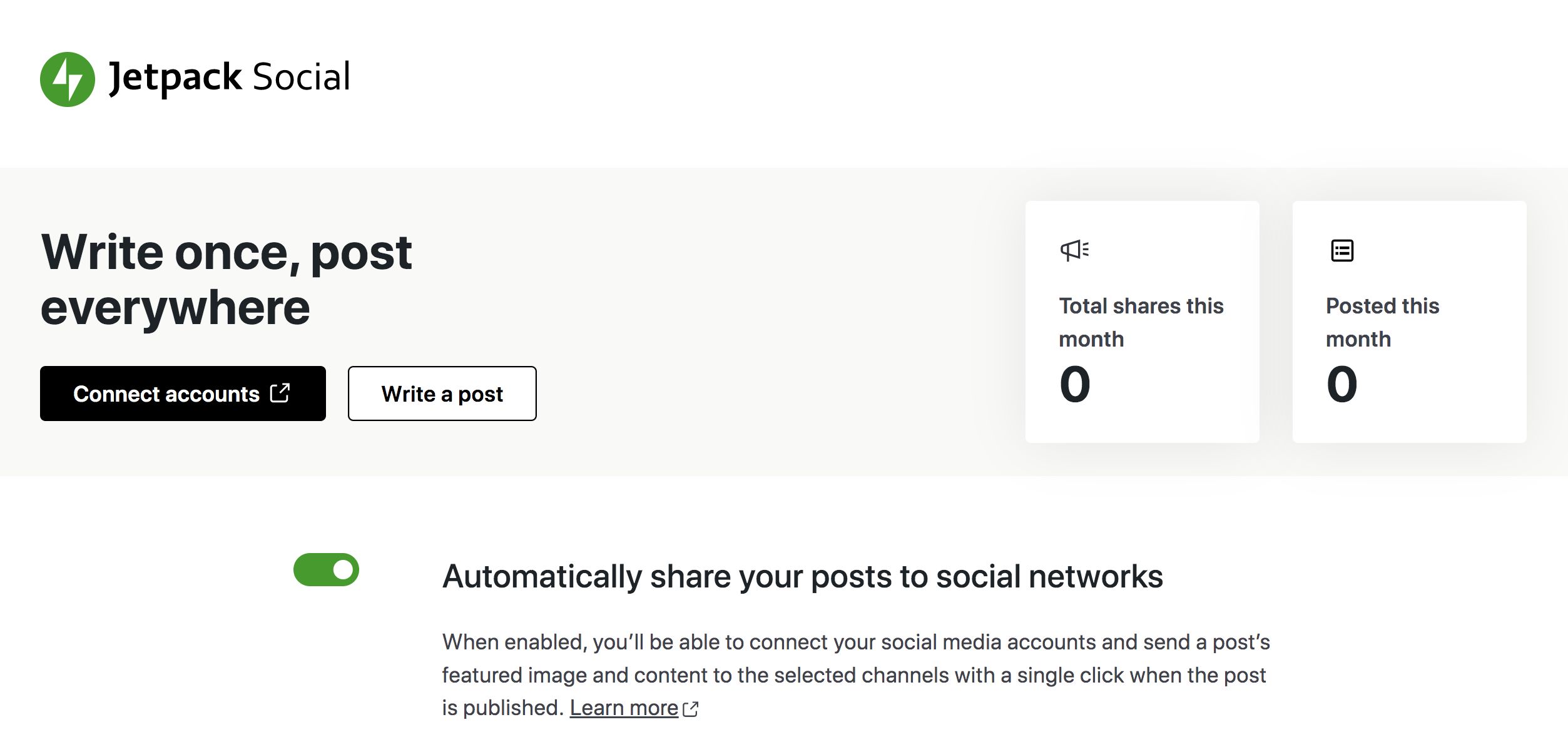
    Jetpack Social homepage with the text, "write once, post everywhere."

    When choosing tools, consider taking the following steps:

    • Research and compare different automation tools to determine which ones are the best fit for your organization.
    • Consider factors such as ease of use, cost, and the specific features offered by each tool.
    • Make sure your top choice integrates with your existing tools and systems.
    • Take advantage of free trials or demos to test out the tool before making a decision.
    • Consider how the automation tool will impact your team’s workflow and whether it will save enough time to warrant any expenses.
    • Make sure the automation tool you choose offers analytics and reporting capabilities so you can track your social media performance.
    • Take advantage of the support and resources offered by the tool to ensure you’re making the most of its features.

    7. Create a content calendar

    Once you have your brand guidelines and automation tools in place, it’s time to build a content calendar. This calendar should outline the content you plan to post on each of your social media platforms and when those posts should be distributed. This will help ensure that you’re consistently sharing engaging and relevant content. It will also make it easier to plan and schedule posts in advance.

    Having a content calendar in place can help you stay organized and avoid last-minute scrambling to create posts.

    To create a content calendar for your nonprofit:

    • Start by mapping out important events, campaigns, and milestones for your organization.
    • Plan content around these events in advance to make sure you are capitalizing on opportunities to engage with your audience and that your social media efforts are purposefully contributing to your goals.
    • Consider the different types of content you want to create and when each type of content is best shared.
    • Make sure you include a mix of promotional, educational, and engaging content in your calendar.
    • Use your brand guidelines to inform the tone, style, and messaging of your content.
    • Use analytics and insights from past posts to inform the content you include in your calendar.
    • Make sure you’re scheduling posts at optimal times for each platform.
    • Consider using a shared calendar or project management tool to keep your content calendar organized and accessible to your team.

    8. Leverage social media influencers and advocates

    Social media influencers and advocates can help spread your message and reach a wider audience. Partner with individuals who are passionate about your cause, have a large following on social media, and whose reputation will reflect positively on your organization. 

    To successfully partner with influencers and advocates, consider the following:

    • Research potential influencers and advocate partners by looking at their social media presence, following, and engagement levels. A smaller audience that’s heavily engaged is often better than a large group of followers who never pay attention. 
    • Reach out to individuals who align with your mission and values and see if they would be interested in partnering with you.
    • Create a clear agreement outlining the terms of the partnership, including the type of content you want them to create, the compensation you can offer, and the expected outcomes from the partnership.
    • Provide influencers and advocate partners with the resources and information they need to create effective content.
    • Make sure you’re tracking the impact of your influencer and advocate partnerships and adjusting your approach as needed.
    • Consider offering incentives to your influencer and advocate partners, such as exclusive access to events or early access to new campaigns.
    • Foster ongoing relationships with influencer and advocate partners to ensure that the partnership continues to be mutually beneficial.

    9. Integrate social media into your broader strategy

    Social media should be integrated into your broader communications and fundraising strategy. Make sure your efforts support your overall goals and objectives. For example, you can use social media to promote your fundraising campaigns, thank donors, and share updates on your progress.

    Things to keep in mind when integrating social media into your broader strategy:

    • Make sure your social media profiles are connected to your website, email, and other communication channels so that you can drive traffic and conversions from social media to other parts of your organization.
    • Develop a cross-promotion strategy that takes advantage of the strengths of each channel. For example, you can promote your social media channels through email and vice versa.
    • Use social media to build relationships with donors and supporters by responding to comments and messages, publicly recognizing their contributions, and sharing updates on the impact of their donations.
    • Use social media to promote fundraising campaigns and events by creating compelling visuals and videos that highlight the impact of the campaign and the reasons why people should donate.
    • Keep your supporters informed and engaged with regular updates on your progress by sharing success stories, impact updates, and other content that highlights the impact of their contributions.

    10. Analyze and adjust your social media strategy

    Finally, regularly analyze the success of your social media efforts and make adjustments. Continuously iterate and improve your strategy to ensure that you’re making the most of your social media presence. Use analytics tools to measure the reach and engagement of your posts and identify areas for improvement. This will help you make informed decisions about how to adjust your strategy and achieve your goals more effectively.

    It’s important to remember that social media is constantly evolving, and your strategy should be flexible and adaptable. Be open to trying new tactics, experimenting with different types of content, and adjusting your approach as needed. By continuously refining your strategy, you can ensure that your social media efforts are making the biggest impact possible for your nonprofit.

    Best practices for nonprofit social media management and content creation

    Social media is a powerful tool for nonprofits to engage with their audience, build relationships, and increase their impact. Here are 12 best practices for nonprofit social media management and content creation:

    1. Optimize your content for each platform

    To maximize the impact of your social media efforts, you should optimize your content for each platform. Consider the unique features and audience of each one and adjust your content accordingly. For example, on Instagram, visual content like images and videos tend to perform well, while on others, short, concise updates are often the most effective.

    Take the time to understand what generally works best for each platform, and experiment with different types of content to see what resonates with your specific audience.

    2. Experiment with different types of content

    Don’t be afraid to try new things. Experimenting with different types of content can help you find what works best for your audience and make the most of your social media presence. Try incorporating images, videos, live streams, and other types of content into your strategy to see what gets the most traction.

    Think about the different ways you can tell your nonprofit’s story, and consider how each type of content can help you achieve your goals. For example, visual content like images and videos can help create emotional connections with your audience, while live streams can help you engage with your followers in real time.

    3. Use storytelling to create emotional connections

    Storytelling is a powerful tool for creating emotional connections with your audience. Share stories that demonstrate the impact of your work and inspire others to get involved. Think about the different ways you can bring your nonprofit’s stories to life, and how you can use storytelling to engage and inspire your audience.

    Humanize your nonprofit and make a personal connection with your audience. Share stories about the people you serve, the impact of your work, and the challenges you face. Make sure your stories are relatable, inspiring, and memorable.

    4. Incorporate user-generated content from supporters and advocates

    Incorporating user-generated content from supporters and advocates can help build a sense of community and create a more authentic and engaging presence on social media. Encourage your followers to share their own stories and experiences related to your nonprofit’s cause, and feature this content on your social media channels.

    Consider using contests, challenges, and campaigns to encourage your supporters to share their own stories and experiences.

    5. Create social media content that’s accessible to all

    It’s essential to ensure that your social media content is accessible to all, including individuals with disabilities. Use alternative text for images and closed captioning for videos to ensure that everyone can access and enjoy your content. 

    Also, make sure your social media content is easily understandable, regardless of the language or culture of your audience. Use clear and concise language, and avoid jargon and technical terms whenever possible.

    Instagram post from Youth on Their Own, a nonprofit organization

    6. Use visual and video content to tell your nonprofit’s story

    Visual and video content are a powerful way to tell your nonprofit’s story and create emotional connections with your audience. By incorporating images, videos, and other types of visual content into your social media strategy, you can bring your story to life and engage your followers in new and exciting ways.

    Consider using a variety of types of visual content, including photos and videos of your staff and volunteers in action, graphics and infographics to explain complex concepts, and behind-the-scenes glimpses of your work. You can also showcase the impact of your work, share inspiring stories from your supporters, and connect with your audience on a deeper level.

    When creating visual content, focus on high-quality images and videos that clearly communicate your message. Use compelling captions, hashtags, and other creative elements to make your visual content stand out on social media.

    7. Leverage tools to automate social media posting

    Automating your social media posting can save you time and increase efficiency, allowing you to focus on creating and curating the most engaging content. There are a variety of tools available, including Jetpack Social, that can streamline your efforts.

    When choosing a tool for automating your social media posting, consider your goals, target audience, and resources. Make sure the tool you choose is easy to use and integrates seamlessly with your existing systems and processes.

    Once you have a tool in place, consider how you can put it to work to automate your social media — including scheduling posts in advance, creating and publishing content at optimal times, and tracking your performance and engagement metrics.

    By leveraging tools to automate your social media posting, you can increase your efficiency, save time, and make the most of your social media presence.

    8. Develop a social media ambassador program

    Developing a social media ambassador program is a great way to engage your supporters and encourage them to share your message with their own followers. People who are both passionate about your cause and have a large following on social media are incredibly valuable assets for your nonprofit.

    To develop a social media ambassador program, consider how you can involve your supporters and advocates in your existing efforts, and think about what types of recognition and rewards you can offer. You can also provide ambassadors with training and resources to help them effectively share your message.

    By working with the right people, you can make a bigger impact through your social media. And by recognizing and rewarding their contributions, you can create a sense of loyalty and teamwork that can further help your efforts thrive. 

    9. Recognize and thank supporters, donors, and partners

    Regularly recognizing and thanking your supporters, donors, and partners on social media is a powerful way to build a sense of community and strengthen your relationships with key stakeholders. Whether you’re thanking a donor for their contribution, recognizing a volunteer for their service, or acknowledging someone for their support, this is an important part of building a strong and engaged community.

    When recognizing and thanking your supporters, focus on personalizing your messages and making them feel valued. Use images and other types of visual content to increase the impact of your messages, and consider offering exclusive opportunities or rewards to those who are recognized.

    10. Highlight the work of your staff and volunteers

    Your staff and volunteers are the backbone of your nonprofit, and highlighting their work on social media can help create a more personal and engaging presence. By showcasing their work, you can create a more human and relatable presence on social media and connect with your followers on a deeper level.

    Plus, it can invigorate and encourage your team, so they remain productive and motivated in their day-to-day work. 

    Here are some ways to highlight the work of your staff and volunteers:

    • Share updates on what they’re doing. Whether it’s about specific projects or initiatives, or just a general overview of what they’re working on, talking about the work of your staff and volunteers can help followers get a better understanding of the impact of your nonprofit.
    • Highlight the impact of their efforts. Consider how you can showcase the impact of the work of your staff and volunteers. This could be in the form of stories from people whose lives have been positively impacted by your nonprofit’s work, or data and statistics that demonstrate the progress made by their efforts.
    • Share behind-the-scenes content. People love to get a behind-the-scenes look at organizations, and your staff and volunteers are a great way to give followers a sneak peek into your nonprofit. Consider sharing photos and videos of your team in action, or hosting a Q&A session with your staff or volunteers on social media.
    • Recognize and reward their efforts. Donors aren’t the only ones who deserve recognition. Regularly recognizing and thanking your staff and volunteers on social media can help build morale and encourage them to continue their great work. Consider how you can reward their efforts, whether it’s through shoutouts on social media, special events, or other forms of recognition.

    11. Respond to comments and messages promptly and professionally

    Responding to comments and messages is an essential part of social media management. By focusing on quick, respectful responses, you can build stronger relationships with followers and create a more engaging presence on social media.

    Here are tips to help you respond to comments and messages:

    • Train your team. Make sure your team is trained to handle comments and messages in a professional and consistent manner. This could involve creating a set of guidelines or providing training on how to handle difficult or sensitive situations. Newer members of your team should defer tricky responses to senior staff until they’ve gained full confidence.
    • Set a response time. Ensure that all comments are responded to in a timely fashion. Consider setting a target response time, such as within 24 hours, to ensure that you’re meeting the expectations of your followers.
    • Be proactive. Don’t wait for comments and messages to come to you — be proactive and reach out to your followers on social media. This could be in the form of asking for feedback, hosting Q&A sessions, or simply checking in with your followers to see how they’re doing.
    • Respond professionally. When responding to comments and messages, make sure you’re doing so in a professional and consistent manner. This could involve using a specific tone or style in your responses or making sure that your team is trained on how to handle difficult or sensitive situations.

    12. Highlight the work of other nonprofits and organizations

    Collaboration and community-building are key components of any successful nonprofit strategy, and social media is a powerful tool for achieving these goals. By highlighting the work of complementary nonprofits and organizations, you can demonstrate your commitment to the common good and help build relationships with other organizations. This can lead to increased opportunities for partnerships and joint initiatives, which can help you achieve shared goals and make a bigger impact.

    To get started, consider the following tips:

    • Identify other organizations that are making a difference. This can include nonprofits with similar missions, as well as organizations that are addressing related issues in your community.
    • Follow these organizations on social media and engage with their content. Share their posts, comment on their updates, and participate in their initiatives.
    • Collaborate on social media to achieve shared goals. Share each other’s campaigns, promote each other’s initiatives, and work together on joint projects.
    • Highlight the work of other organizations in your posts and updates. This can include showcasing their initiatives, sharing their success stories, and recognizing their contributions to the community you’re serving.
    • Consider hosting joint events or initiatives with other organizations. Work together on social media campaigns, live events, or fundraising initiatives. 

    Frequently asked questions about social media for nonprofits

    Do nonprofits need social media?

    Yes, social media is essential for nonprofits. It provides a platform for organizations to reach a wider audience, engage with supporters, promote their cause, and raise awareness about their work. Social media also offers an opportunity for nonprofits to build relationships with their stakeholders, share their impact, and develop a greater sense of community.

    What should a nonprofit post on social media?

    A nonprofit should post content that aligns with its goals and objectives, and is relevant and engaging to its target audience. Some examples of the types of content that nonprofits can post on social media include:

    • Updates on their work and impact
    • Stories and testimonials from beneficiaries and supporters
    • Behind-the-scenes videos that highlight the work of staff and volunteers
    • Calls to action and fundraising campaigns
    • Success stories and achievements
    • Behind-the-scenes content that provides a glimpse into the day-to-day work of the nonprofit
    • Inspiring quotes and messages
    • Relevant news and articles related to their cause
    • Images and videos that showcase their work

    How often should a nonprofit post on social media?

    The frequency of posting will depend on a variety of factors, including your goals, target audience, and resources. On average, it’s recommended that nonprofits post one to two times per day on each of their social media platforms. However, it’s essential to find the right balance between frequency and quality and not to compromise on the quality of your content for the sake of posting more frequently.

    When are the best times for nonprofits to post on social media?

    The best times to post on social media will vary depending on your target audience and the platform you’re using.

    On Facebook, the morning usually works best. On platforms like Instagram, users tend to be more active throughout the daytime hours. 

    Consider using a social media management tool, like Jetpack Social, to schedule your posts in advance and optimize for the best times.

    Jetpack Social: Fueling your nonprofit’s social media success

    With Jetpack Social, nonprofits can schedule and share their content across multiple social media platforms, auto-share their website content, and manage their social media presence from one convenient dashboard.

    If your nonprofit has a website on WordPress, then Jetpack Social is the perfect solution to help you achieve your social media goals. By leveraging the power of Jetpack Social, you can focus on what you do best — making a difference — while leaving your social media management in the capable hands of Jetpack.

    To learn more about Jetpack Social and start fueling your nonprofit’s social media success today, visit the following page: https://jetpack.com/social/

  • The 22 Different Types of Social Media Content (2023 Guide)

    Do you feel like your social media posts are stuck in an endless loop? Have you run out of new things to say and grown bored? Does it seem like you’re not getting any traction? 

    Don’t worry — these feelings are common among marketers and small business owners. Today we’re going to explore the world of social media content and provide you with 22 different types of content to help you engage your audience in new and exciting ways.

    22 types of social media content that can help you grow your brand in 2023

    1. Text-based posts

    These kinds of posts are like plain white bread — they’re easy and have their place, but can get boring after a while. So, think of creative ways to spice them up and add some personality and humor to your text-based posts.

    For instance, try incorporating jokes, puns, or funny anecdotes relevant to your brand or industry. You can also use emojis, and depending on the platform, play around with bold and italicized text, and various fonts to make your text-based posts more visually appealing.

    2. Blog posts and articles

    Sharing blog posts and articles from your own website is a great way to drive traffic and engagement. It allows you to showcase your expertise and establish your brand as a thought leader in your industry. 

    When sharing your own content, make sure it aligns with your brand’s messaging and provides value. You can also add commentary or insights to the shared content to provide additional value and spark conversations with your readers.

    Jetpack Social is a powerful tool that can help automate the process of sharing blog posts and website content on social media platforms such as Facebook, LinkedIn, and more.

    By connecting your WordPress site to Jetpack, you can easily set up automatic sharing of new blog posts and website content to your social media accounts. This can save you a significant amount of time and effort, allowing you to focus on creating new high-quality content and engaging with your audience.

    You can also schedule posts in advance, so you can plan and execute an effective social media content calendar without being constantly tied to a phone or computer. 

    Pro tip: You can share your blog posts and native content more than once. When you complete a new piece of blog content, use Jetpack Social to schedule social media posts to promote it every few months. When scheduling far into the future, just be sure to consider holidays and other things around future dates that might conflict with your messaging.

    3. Images (and their captions)

    A picture is worth a thousand words, but a clever caption can take your social media content to the next level. It’s akin to adding a dash of salt and pepper to your food — it can make a big difference. When creating captions for your images and photos, try to tell a story, convey a message, or ask a question that encourages engagement.

    This is also an opportunity to get your followers involved. Post a picture and ask them to write a caption and leave it in the comments. This can quickly turn into a fun and highly-engaging activity for everyone. 

    4. Stories and reels

    Short-form video content is all the rage these days — and for good reason. They give you a quick burst of energy and excitement. Plus, they’re a great way to showcase your brand’s personality.

    Try to keep your stories and reels short, sweet, and to the point. Use music, animations, and stickers to add some flavor to your content.

    5. GIFs and memes

    Humor is a powerful tool in the world of social media, and nothing gets a chuckle quite like a well-placed GIF or meme. Use GIFs and memes that are relevant to your brand, industry, and audience. You can also create your own custom designs to add a personal touch to your content and stand out in the social media landscape.

    Pro-tip: Sometimes memes and GIFs have a short shelf life. You don’t want to use an image that’s six months too late! And being an early adopter can pay off. If you or your team sees an opportunity while watching TV or browsing online, act quickly and post right away. Unlike promoting blog posts, you may not want to schedule memes and GIFs to repost months and months into the future. 

    6. Infographics

    Infographics provide valuable information in a visually-appealing format. Creating infographics that are easy to read and understand is crucial. Use colors, icons, and illustrations to make the content more engaging. You can also use them to explain complex concepts or data in a simple and digestible way.

    You may want to test formats to see what sizes work best to post on social media, or add the infographic to your website, then share previews on social media. This is another thing you can pre-schedule using Jetpack Social and promote several times a year. 

    Pro-tip: Infographics are a great example of content you can update each year to keep content fresh with minimal effort. Once you have an initial design created, you can simply update the stats each year. 

    7. User-generated content (UGC)

    Encourage your audience to create and share content related to your brand. Be sure to give proper credit to the UGC creators and ask for their permission before sharing their content. You can also hold contests or challenges to incentivize your audience to create more!

    Tweet from Day One, sharing a testimonial from a customer

    Social listening tools can help you spot people who have already naturally posted about your brand. Pick the best ones and reach out to them about using what they’ve created. Most people will be honored that you’d share their content, but you can offer a discount code or similar incentive if you need to. 

    Working with influencers who have a niche following in your industry is another great way to get creative, natural-looking content that’s likely to appeal to your audience. 

    8. Testimonials

    Sharing customer testimonials can help establish trust with potential customers and showcase the value of your products or services. Testimonials should be both authentic and highlight specific benefits or results. You can also include photos or videos of the customers to add a personal touch to the content. 

    While these might be reviews left naturally, you can also contact happy customers to record a formal interview and take video or audio snippets to use on social media. 

    WooCommerce video testimonial posted on Instagram

    You don’t need to have expensive production value when recording testimonials. Often, a genuine, Zoom-style recording is more trustworthy and authentic to followers. 

    9. Interviews

    Speaking of interviews — you don’t have to stick to customers as your subjects. Connect with industry experts or other thought leaders who can provide valuable insights. Their credibility will rub off on your brand, and they might benefit from reaching new people when you promote the end result. Though, sometimes, you may need to pay experts for their time. 

    Be sure to use your interview in as many ways as possible. Publish video snippets, share the entire interview, create an audio version with a podcast, add quotes to social media graphics, write a blog post with a nicely-edited summary and quotes from the interview, and design an infographic with top takeaways. 

    When conducting interviews, prepare thoughtful and relevant questions, and provide context for your audience. If interviews are well received, you can start an entire series or podcast to continue the momentum.

    10. Demos and tutorials

    You can create both live and pre-recorded demos of how your product works. These provide a less scripted way to showcase the benefits of what you have to offer than a highly-edited brand video or commercial. 

    Doing live demos opens you up to mistakes, but can be much more engaging. They allow you to take viewer questions and immediately incorporate feedback into the demonstration. 

    Make sure that the demos and tutorials are easy to follow and understand, and use visuals and step-by-step instructions to guide your audience through the process. 

    Well-produced tutorials as part of a help section on your website can serve as marketing pieces for people seeking to better understand your offer before committing. They can also ensure a good experience for new customers, so you minimize returns or cancellations and maximize positive reviews and referrals. 

    11. Webinars

    Webinars offer an engaging way to educate your audience on a specific topic or product and provide a platform for real-time conversations. Make sure to promote your webinars in advance and provide clear instructions for joining. After the webinar, provide additional resources and information to keep your audience engaged.

    Webinars are often thought of as a business-to-business tool. However, any company can put on a webinar if it offers an opportunity to provide value to your audience, position your brand more favorably, and demonstrate how your products or services can benefit viewers. 

    Usually, only a fraction of those who sign up for a webinar will actually attend. For this reason, an automated email follow-up program can help you maximize the impact you receive from subscribers who opted in to the webinar.  

    Pro-tip: Webinars can take a lot of work. Instead of putting them on yourself, look for opportunities to speak on other brands’ webinars to reach a new audience with less work. You might also consider partnering with a complementary brand or two, so you can pool resources for production, promotion, and speaker fees (bringing in a known guest can boost attendance, but is often costly).  

    12. Live streams

    Offering real-time updates, behind-the-scenes glimpses, or Q&A sessions with your audience through live streams is a powerful way to create engagement. Remember to announce the topic in advance, and interact with your audience throughout the stream. The live stream can also be saved for later viewing or repurposed into other formats.

    Some platforms may boost the reach of live content to help grow this part of the platform. So, going live may help you get in front of more people than normal. 

    13. Podcast episodes and audio snippets

    Podcasts offer an opportunity to create long-form content and establish your brand’s voice. Ensure that your podcast format and topic align with your brand’s values and messaging. Using audio snippets from the podcast as teasers or promotional content for social media can also help you get the most from your efforts. 

    One way to grow a podcast is to have well-known guest panelists join your episode or appear on someone else’s episode. This is where working with an influencer can lead to a multi-faceted campaign. Have them post about your brand, appear in some photos you can use on product pages and social media, and do an interview on your podcast to attract new listeners. 

    People who take the time to listen to your podcasts are likely to have strong loyalty and a high lifetime value as a customer. 

    14. Quotes

    Providing inspiration and motivation to your audience using quotes is a simple yet effective strategy. You can create your own or feature famous words from important people throughout history. You can even quote your customers, reviews from your site, and employees! 

    15. Contests and giveaways

    Engage your audience and increase brand awareness by offering contests and giveaways. Ensure that your contests and giveaways have clear instructions and guidelines, so participants can avoid confusion. Partnering with other brands or influencers can also increase the reach of your contest or giveaway.

    This is another place where sales and promotions can take a back seat. If you sell a B2B product to those working in a specific industry, you could post business advice and inspirational quotes throughout the week to stay top-of-mind and encourage your customers. This will help further your goals without constantly bombarding followers with sales pitches.

    16. Discounts and promotions

    Coupons — both digital and physical — still work to drive action. Providing exclusive offers to your social media followers can help them feel appreciated and like they’re part of an exclusive group. If you have a long sales process, giving coupon codes at the start might not yield results. 

    However, providing discounts to social followers, who are further along in the sales process, may be enough to turn them from onlookers to customers. Limited-time offers can create a sense of urgency, encouraging action from your audience.

    Learn more about using urgency in marketing your ecommerce store

    17. Quizzes, polls, and surveys

    Engage with your audience and gather valuable feedback by creating quizzes, polls, and surveys. They can be about something related to your business — â€which new design do you like best?” — or something in pop culture that’s loosely related but gets eyes on your profile. 

    Some social media platforms allow you to run polls and quizzes directly on them. However, for more detailed insights, consider something like Crowdsignal. Crowdsignal integrates perfectly with WordPress sites — it’s built by the people behind WordPress.com — and makes it easy to create all kinds of surveys and understand the results. 

    CrowdSignal survey analytics dashboard

    18. Teasers and announcements

    Social media is great for building anticipation and excitement for upcoming products, events, or promotions. Teasers provide enough information to pique your audience’s interest but don’t reveal every detail. You could even release more clues each day for a period of time or have folks guess what the announcement will be about. 

    Roll out special announcement graphics when the time is right, go live to break the news, or film a polished promo and release it to your social media followers before anyone else. 

    teaser for WordPress V6.2 on social media

    Teasers and announcements can also be part of a larger marketing campaign to build momentum and create buzz. Give some clues, but require people to subscribe to your newsletter to hear the news early. This creates excitement and could help build your email subscriber base.

    19. AMAs (ask me anything)

    Connecting with your audience and providing a platform for open and honest communication can be achieved through AMAs. You could go live on video or host a live chat through text. Be prepared to be a little edgy, honest, and even controversial with opinions to get interaction going. However, make sure to stay within the bounds of your brand guidelines and editorial standards. 

    20. Slide decks and presentations

    Sales teams have long used slide decks to make convincing presentations for prospects. But an in-person meeting isn’t the only useful place for these. Create easy-to-follow decks that can be shared on social media platforms. Allow people to browse through them at their own pace and include strong calls to action and clear next steps so intrigued followers feel confident reaching out to further their journey. 

    These don’t have to be all about sales, however. Release a five-slide deck featuring four new products and one great achievement from the past year. Put out a ten page presentation on improvements you made to sustainability efforts. Or share snippets about a new raw materials provider that brings new benefits for users. 

    There are lots of ways to use these kinds of go-at-your-own-pace materials to educate followers and improve their perception of your products, services, or overall brand. 

    21. Shoppable content

    Turning social media into a sales channel and driving revenue for your brand can be achieved through shoppable content. Ensure that your message is clear and concise, highlighting the benefits of your product or service. You can also use them to showcase new products or promotions, adding value to your audience.

    Use these kinds of posts with influencer content so that people can see something they love and act right away. 

    Learn more about social commerce.

    22. Ephemeral content

    Ephemeral (short-term) content, such as Instagram or Facebook Stories, is a great way to create a sense of urgency and provide exclusive content to your audience. It’s like having a limited-time offer — it creates a fear of missing out and encourages engagement because followers know they can’t come back in a few days to view it again. 

    To create impactful ephemeral content, ensure that it provides value to your audience and is visually attractive. Pair this with a limited-time discount code for a quick boost in sales. 

    Best practices for creating social media content

    Now that we’ve explored the different types of social media content, let’s take a look at some best practices for creating and sharing content on social media.

    1. Leverage automation to create and post content

    Tools like Jetpack Social offer a range of powerful features to help you streamline your social media work and save time.

    Jetack Social homepage with the tagline, "write once, post everywhere"

    One of the key features is the ability to auto-share your blog posts and website content on social media platforms. Once you connect your WordPress site to Jetpack Social, you can easily configure the settings to automatically share your new blog posts and website content on your social accounts. This means that every time you publish a new blog post or update your website, your followers will automatically be notified.

    In addition to auto-sharing, Jetpack Social allows you to schedule your social media posts in advance. Plan out your content for the coming weeks or months, schedule it to be posted at the optimal times for your audience, and rest a bit easier.

    You can also repost evergreen content, such as popular blog posts or articles, to keep your social media channels active and engaging.

    To lean more about Jetpack Social and how you can leverage its features, visit the following page: https://jetpack.com/social/

    2. Know your audience

    Understand who your audience is, what they like, and what motivates them to interact with your brand. Use this information to create content that resonates with them and provides value.

    The following tips will help you better know your audience:

    • Use site and social media analytics. Website and social media analytics tools gather data on your audience’s demographics, behavior, and engagement that you can use to better understand what content resonates with your audience and what topics or formats you should focus on. Jetpack Stats is a great option for basic information on your WordPress site. As you advance, you can utilize tools like Google Analytics and built-in data on social profiles. 
    • Monitor your competition. Keep an eye on your competitors’ social media accounts to see what content is resonating with their audience. Use this information to identify gaps in your own content strategy, and incorporate what you learn into future posts.
    • Conduct surveys and polls. Ask your audience directly for feedback and insights on their preferences and behavior. Surveys and polls can help you gather valuable data on your audience’s interests, opinions, and pain points.
    • Use buyer personas. Create buyer personas that represent your ideal customers based on demographic, behavioral, and psychographic data. This can help you create more targeted and effective content that resonates with your audience.
    • Engage with your audience. Respond to comments and messages, and interact with your audience on social media. This not only helps build relationships with your customers, but also provides valuable feedback and insights for your content strategy.

    3. Choose the right format

    Consider the type of content and message you want to convey, and choose the format that best suits it. For example, use images and videos to showcase products, and use polls or quizzes to gather feedback from your audience.

    Choose the right type of content and messaging by following these guidelines:

    • Experiment with different formats. Don’t be afraid to try new formats and styles to see what resonates with your audience. Test out different types of content, such as live streams or Instagram Reels, to see what works best for your brand and audience. Once you’ve settled on what works, continue to experiment. What worked best last year may no longer be the right option for the months ahead.
    • Keep it short and sweet. Social media users have short attention spans, so make sure your content is concise and to the point. Use visuals and headlines to grab attention and communicate your message quickly.
    • Use storytelling. Use storytelling techniques to make your content more engaging and memorable. Create a narrative around your brand or products, or use user-generated content to tell authentic stories.
    • Incorporate calls to action. Include clear calls to action in your social media content, such as encouraging visitors to sign up, comment feedback, or share their own content. This encourages engagement and helps drive traffic and sales.
    • Use appropriate tone and voice. Consider your brand’s tone and voice when creating social media content. Use language and style that aligns with your brand’s personality and messaging, and avoid using jargon or technical terms that may confuse or turn off your audience.
    • Use localization. Consider localizing your social media content to appeal to specific markets or regions. Use local language, cultural references, and images that resonate with your target audience.
    • Use data and insights. Use social media analytics and insights to guide your content strategy and optimize your content for maximum engagement and reach.

    4. Use compelling visuals

    Visuals are key to creating engaging social media content. Use high-quality images, videos, or graphics that align with your brand’s visual identity and messaging.

    Compelling graphic with a photo and visuals from Day One app

    Here are best practices to follow when creating visuals:

    • Use consistent branding. Use consistent colors, fonts, and design elements across all your social media content. This helps reinforce your brand’s visual identity and creates a cohesive look and feel. You might consider creating brand guidelines and editorial standards, so others on your team can more easily contribute new content that fits in with your ongoing style.
    • Optimize for different platforms. Optimize your visuals for various social media platforms, taking into account image and video size, aspect ratio, and resolution. This ensures that your visuals look their best on all platforms. A one-size-fits-all graphic might save a small amount of time, but will hurt your results and reduce your return on investment.
    • Use user-generated content. Incorporate user-generated content, such as customer photos or videos, into your social media content. This not only helps showcase your products or services, but also adds authenticity and credibility to your brand.
    • Use humor and creativity. Use humor and creativity to make your visuals stand out and grab attention. This can help make your brand more memorable and increase conversations with your audience.
    • Use captions and text overlays. Use captions and text overlays to provide context and information about your visuals. This can help your audience understand your message and increase engagement.
    • Use video. Use video to create dynamic and engaging content that showcases your products or services. This can include product demos, behind-the-scenes footage, or customer testimonials.

    5. Write engaging captions

    Captions provide context and additional information for your social media posts. Use them to provide value, tell a story, or ask a question that encourages interactions.

    Expert tips:

    • Keep it concise. Keep your captions short and to the point and make sure they’re easy to read and understand.
    • Use storytelling. As opposed to alt text — which should briefly describe a visual for those who can’t see it — use captions to add to the “story” of the post, not just repeat what’s already available. 
    • Use emojis and hashtags. Use emojis and hashtags to add personality and context to your captions. This can help your posts stand out and make them more discoverable on social media. This isn’t appropriate for every brand or for every post, so use some discretion with emojis.
    • Provide value. Use captions to provide value to your audience, such as tips, insights, or information about your products or services. This helps build trust and credibility with your audience.
    • Encourage engagement. Use captions to ask questions, encourage feedback, or invite your audience to take action, such as liking or sharing your post. This can increase engagement and reach on social media.
    • Use a call to action. Use captions to include a call to action, such as visiting your website, signing up for a newsletter, or making a purchase. This can help drive traffic and conversions for your business.

    6. Use appropriate hashtags

    Hashtags can help increase the reach of your social media posts and make them more discoverable. Use relevant and specific hashtags that align with your content and brand.

    Here are best practices to follow when using hashtags:

    • Research and use popular hashtags. Research popular hashtags that are relevant to your content and industry, and use them in your posts. This can help increase the visibility of your posts and make them more discoverable to a wider audience. On platforms like Instagram, you can start by searching for a hashtag yourself and it will provide an estimated number of posts that have used that same one.
    • Use niche hashtags. Use specific and niche hashtags that target your audience and increase the relevance of your posts. This can help attract more engaged and targeted followers.
    • Create your own branded hashtag. Create your own branded hashtag that represents your brand and encourages user-generated content. They’re great for building brand awareness and engagement and creating a sense of community around your brand. Remember, though, branded hashtags are unlikely to increase your reach for new followers.
    • Use a mix of hashtags. Use a mix of popular, niche, and branded hashtags in your posts to reach a wider and more targeted audience. This will contribute to increased visibility and interactions.
    • Don’t overdo it. Use a moderate number of hashtags in your posts, and avoid overusing or spamming them. This can hurt the credibility of your brand and decrease engagement with your audience.
    • Use hashtags on different platforms. Use hashtags on different social media platforms, but be aware of the varying hashtag trends and practices. For example, Twitter and Instagram have different character limits and hashtag usage, so make sure to adjust your strategy accordingly.
    • Test and optimize. Test different hashtags and strategies to see what works best for your brand and audience. Use social media analytics to measure the performance of your hashtags and optimize your work over time.

    7. Encourage engagement and UGC

    Interact with your audience by responding to comments and messages, and encourage UGC by holding contests or challenges. This not only increases engagement but also helps build a sense of community around your brand.

    To encourage engagement and user-generated content, consider these action items:

    • Ask questions. Use your captions or posts to ask questions and encourage your audience to share their thoughts or opinions.
    • Respond to comments. Respond promptly and respectfully to comments on your posts, and engage with your audience to build relationships and trust.
    • Use polls and quizzes. Use polls and quizzes to gather feedback from your audience and encourage engagement. This can also provide valuable insights into your audience’s preferences and behavior.
    • Hold contests or challenges. Hold contests or challenges that encourage UGC and engagement, such as photo contests or caption challenges. 
    • Share user-generated content. Share user-generated content, such as customer photos or reviews, on your social media accounts. This not only helps showcase your products or services, but also adds authenticity and credibility to your brand.
    • Use incentives. Use incentives, such as discounts or prizes, to encourage engagement and UGC. This can motivate people to participate and increase the success of your campaigns.

    8. Post at the right time

    Consider the time of day and day of the week when your audience is most active on social media, and schedule your posts accordingly. This helps increase the visibility of your content.

    Here are tips to help you post at the right time:

    • Use social media analytics. Use social media analytics tools to track your audience’s activity and engagement patterns on different platforms. This can help you identify the best times to post and optimize your posting schedule. In Facebook Insights, for example, you can go to the Posts tab and scroll down to When Your Fans are Online to learn when the majority of your followers are active — by both day of the week and time of day.  
    • Test different posting times. Test different posting times and analyze metrics to determine the best times for your brand and audience. This can vary depending on your industry, audience demographics, and time zones.
    • Consider different time zones. Consider the time zones of your audience and schedule your posts to reach them at the most appropriate times. Posting about breakfast when it’s already early afternoon for a large portion of your visitors can make you seem out of touch and scripted. Plus, it will reduce interactions and reach and limit the amount of return you get for your efforts. 
    • Use scheduling tools. Use scheduling tools, such as Jetpack Social, to schedule your posts in advance and ensure that they’re published at the right time. This can save time and streamline your social media content creation process.
    • Focus on peak hours. Focus on posting during peak hours, when your audience is most active on social media. This can help increase the visibility of your content and ensure you reach a larger audience.
    • Post consistently. Post consistently and regularly to maintain engagement with your audience and keep your brand top of mind. Consistency works to build a loyal following on social media.

    9. Post daily

    Consistency is key when it comes to social media. Try to post daily to keep your audience engaged and your brand on the top of their minds.

    Here are some tips to help you post more consistently:

    • Use auto-posting and scheduling tools. Use automation tools, such as Jetpack Social, to schedule your social media posts in advance and auto-share all new articles and blog posts published on your website. This can help you save time and streamline your content creation process.
    • Create a content calendar. Create a social media content calendar to plan your social media posts in advance and ensure you have a consistent stream of content to publish. This can help you stay organized and on track with your posting schedule.
    • Repurpose content. Repurpose existing content, such as blog posts or videos, into social media posts to save time and keep your audience engaged. This can help you create a variety of content without constantly creating new content from scratch.
    • Use a mix of content formats. Use a mix of different content formats, such as images, videos, or infographics, to keep your content fresh and engaging. This can also help attract different types of audiences and increase your reach.
    • Monitor engagement. Monitor your metrics, such as likes, comments, and shares, to understand what types of content resonate best with your audience. Use this data to optimize your social media content strategy over time.
    • Stay up-to-date. Stay up-to-date with the latest trends and news in your industry, and share your thoughts about what’s going on. Sometimes, you can share posts or news from other sources that aren’t competitors.

    10. Repurpose content

    Repurpose existing content in different formats or on different platforms to increase its reach and engagement. For example, turn a blog post into a video or a podcast episode into a series of social media posts.

    Here are convenient ways to fuel your content repurposing strategy:

    • Identify evergreen content. Identify evergreen content, such as tutorials or how-to guides, that can be repurposed for social media. This type of content is relevant and valuable to your audience over time, and can be repackaged in different formats to keep it fresh.
    • Use a social media content calendar. Some content, like a “2022 gift buying guide,” can be updated each year with just a bit of work. When you first create and share a post like this, go ahead and schedule the following year’s post in advance with notes to revise the existing post before you start promoting it again.
    • Use different formats. Repurpose your content in different formats, such as images, videos, or infographics, to appeal to different types of audiences and increase engagement. This can also help you reach a wider audience on different social media platforms and lets you use content more than once without seeming redundant to your followers. 
    • Experiment with different platforms. Experiment with repurposing your content on different social media platforms, such as Instagram or Twitter, to increase its reach and engagement. Each platform has its own strengths and audience, so it’s important to tailor your content to each one.
    • Optimize for each platform. When repurposing content for different platforms, optimize it for each platform’s specific requirements and best practices. For example, on Instagram, you might need to create square images or use hashtags to increase discoverability.

    11. Measure and analyze results

    Track the performance of your social media content using analytics tools, and use the insights to optimize your strategy and create more effective content.

    Here are best practices to follow when tracking and measuring performance:

    • Set goals. Set specific goals for your social media content, such as increasing engagement or driving traffic to your website. This can help you measure your progress and determine what’s working and what’s not.
    • A/B test. A/B test different versions of your social media content, such as different images or captions, to determine what performs best with your audience. This can help you optimize your content for maximum engagement and impact.
    • Monitor your competition. Monitor your competitors’ social media activity and performance to identify opportunities and areas for improvement. This can also help you stay up-to-date with the latest trends and best practices in your industry.
    • Refine your strategy. Use your analytics data to refine your social media strategy over time. This might involve adjusting your posting schedule, trying new content formats, or targeting specific audiences.
    • Stay flexible. Stay flexible and adaptable with your social media strategy. Social media is constantly evolving, so it’s important to be open to new ideas and approaches.
    • Use data to inform content creation. Use your analytics data to inform your content creation process. This can help you create more effective content.

    Frequently asked questions about social media content

    What are some common mistakes to avoid when creating social media content?

    Posting too often or too little. Finding the right posting frequency can be tricky, but it’s important to strike a balance. Posting too often can overwhelm your audience and lead to them unfollowing you, while posting too little can cause your account to lose momentum and relevance.

    Instead, experiment with different posting frequencies and monitor your engagement metrics to find the sweet spot that works best for your audience.

    Focusing too much on promotion. Social media is not just a platform for self-promotion. It’s important to create content that provides value to your audience and spend time engaging with followers and other accounts.

    Consider creating a mix of promotional and non-promotional content. Share industry news, post behind-the-scenes photos, and ask questions that encourage discussion and engagement.

    Ignoring negative comments. Negative comments and feedback can be tough to handle, but ignoring them can do more harm than good. Responding to negative comments can help show your audience that you care and are committed to providing great customer service.

    Have a plan in place for responding to negative comments. Address the issue politely and professionally, and try to find a solution that satisfies the customer.

    Ignoring data. Social media provides a wealth of data that can help you optimize your content and strategy. Ignoring this data can cause you to miss out on important insights and opportunities. Use social media analytics tools to monitor your engagement metrics, and then adjust your content and strategy based on that information.

    How can I effectively leverage user-generated content in my social media strategy?

    User-generated content (UGC) is a powerful way to engage your audience and build a sense of community around your brand. Here are some actionable tips for effectively leveraging UGC in your social media strategy:

    Encourage UGC. Make it easy for your audience to create and share UGC by running contests, challenges, or giveaways. Ask them to share photos or videos of themselves using your product or service or to share their thoughts and opinions on a particular topic.

    Showcase UGC. Once you have UGC, showcase it on your social media accounts. Share the content and give credit to the creator. This not only helps increase engagement but also shows your audience that you value their input and participation.

    Monitor and moderate. Be sure to monitor and moderate UGC to ensure it aligns with your brand values and messaging. Avoid reposting content that could be offensive.

    Repurpose UGC. Repurpose UGC for other marketing initiatives, such as email marketing campaigns, website content, or ads. This can help you extend the life of the content and increase its reach.

    What are practical ways to repurpose social media content across different platforms and channels?

    Repurposing content is a great way to extend the life of your social media content and reach new audiences. Here are eight practical ways to repurpose social media content across different platforms and channels:

    1. Turn blog posts into social media posts. Take key points from your blog posts and turn them into bite-sized social media posts. This can help you promote your blog content and drive traffic to your website or simply fill your social media content calendar with interesting content.

    2. Repurpose videos into GIFs. Convert short video clips into GIFs, which can be used on social media platforms like Twitter or Instagram.

    3. Turn social media posts into blog posts. Compile a series of related social media posts into a longer-form blog post. This can help you repurpose content while providing additional context and value.

    4. Use infographics on different platforms. Create infographics that can be used on multiple platforms like your website, social media, and email marketing campaigns. Or, host the “full” infographic on your website and create custom-sized teasers for each platform that can link back to the full thing.

    Pro-tip: Pull individual stats or sections from infographics to use on their own for social media posts. For example, if you create an infographic with “26 ways to improve marketing efficiency,” you could drip out one way every other week for an entire year!

    WordPress VIP Facebook post sharing a stat from an infographic

    5. Repurpose testimonials into social media posts. Turn customer testimonials into social media posts using quotes or excerpts from the original testimonial. This can help build social proof and increase trust with your audience.

    6. Create a video series. Repurpose a longer video into a series of shorter videos that can be shared on social media or on your website.

    7. Turn podcasts into blog posts. Transcribe your podcast episodes and turn them into blog posts. This can help you reach a new audience and repurpose content.

    8. Share behind-the-scenes content. Repurpose behind-the-scenes content, such as photos or videos, from your social media accounts to your website or email marketing campaigns.

    What are the key benefits of creating a social media content calendar?

    Creating a social media content calendar can help you stay organized and consistent with your social media strategy. Here are five key benefits of creating a social media content calendar:

    1. Better organization. A content calendar allows you to plan and organize your social media content in advance, ensuring that you don’t miss any important dates or events.

    2. Consistency. A content calendar can help you maintain a consistent posting schedule, which is important for building a loyal audience.

    3. Better quality content. Planning your content in advance allows you to create higher-quality content that aligns with your brand messaging and goals.

    4. Increased efficiency. A content calendar can help you streamline your content creation process, allowing you to focus on other aspects of your business.

    5. Better tracking. A content calendar can help you track your content performance and adjust your strategy accordingly.

    How can I automatically share website content and blog posts on social media?

    Sharing your website content and blog posts on social media can help you reach a wider audience and drive traffic to your website. 

    Jetpack Social allows you to schedule and automate your social media posts in advance, including posts promoting your website content and blog posts. You can also use it to automatically promote new posts on social media as soon as you publish them.

    Jetpack Social: Share smarter, not harder, with automated social media posts

    Are you ready to take your social media game to the next level? Jetpack Social can help.

    With over one million posts shared every day, Jetpack Social offers an easy-to-use solution for scheduling and automating your social media posts, freeing up your time to focus on other aspects of your business.

    With Jetpack Social, you can:

    • Auto-share your content: Automatically share your new content, articles, and blog posts without needing to do it manually.
    • Schedule posts in advance: Plan your social media content in advance, and Jetpack Social will take care of the rest.
    • Repost evergreen content: Keep your social media channels active with evergreen content that can be reposted at regular intervals.
    • Integrate with WordPress: Jetpack Social seamlessly integrates with your WordPress site, making it easy to manage all aspects of your online presence in one place.

    It’s more important than ever to have a strong social media presence. Jetpack Social can help you achieve that with less effort. So, what are you waiting for? Try Jetpack Social today and start sharing smarter, not harder.

    To learn more, visit: https://jetpack.com/social/

  • How to Create a Winning Social Media Content Calendar for 2023

    Are you tired of constantly feeling overwhelmed by your social media content creation process? Sick of scrambling at the last minute to come up with ideas that aren’t even engaging your audience? Well, fear not because today we’re going to talk about how to create a social media content calendar that will transform your approach in 2023.

    What is a social media content calendar?

    Before we dive into the nitty-gritty, let’s get back to the basics. A social media content calendar is a strategic document that outlines your planned social media content for a specific period. It includes the topics, formats, dates, times, and platforms where you will post your content. In other words, it’s a blueprint for your social media marketing efforts. Let’s take a look at the benefits of having a social media content calendar.

    The importance and benefits of a social media content calendar

    A content calendar is an important part of fulfilling any social media content strategy. It will help you: 

    • Improve your time management. Time is money, and brainstorming ideas on the fly is a great way to waste both. A content calendar helps you plan your content in advance, which saves you time, and ensures that you post regularly.
    • Achieve more consistency. Your audience craves consistency; it’s a key factor in building trust and loyalty. By planning your content ahead of time, you can ensure that your posts flow regularly, and keep your audience engaged.
    • Increase engagement. You want your content to stand out, and planning ahead helps you create posts that are more engaging instead of scrambling at the last minute to just put out the bare minimum. This, in turn, leads to better results.
    • Align with your business goals. Without a clear vision of your business goals, your social media efforts could be in vain. A social media content calendar helps you align your posts with other important dates for marketing campaigns and business objectives, ensuring that your content is contributing to a cohesive message and unified goal.

    What to do before creating your social media content calendar

    Before you start creating your social media content calendar, let’s take a step back and look at what you need to do first.

    1. Identify your best and worst performing social media content

    Start by analyzing your past social media posts to determine what content performed well and what didn’t. This will help you create more effective posts and avoid repeating past mistakes. Look at which posts received the most likes, shares, comments, and conversions, and take notes of what made them successful. Conversely, pay attention to which posts didn’t perform well, so you can steer clear of similar content in the future.

    2. Analyze your competition’s social media content strategy

    Research your competitors’ social media presence to get inspiration and identify gaps in their strategy. This will help you create unique and engaging content that stands out. Look at the types of content they post, the frequency, and the tone of voice they use. This will help you come up with fresh ideas and create content that resonates with your audience.

    3. Develop a general content theme or message

    Create a general theme or message that will guide your content creation process. This will help you create a consistent brand image and ensure that your content is aligned with your business goals.

    4. Map out your customer journey

    Create an outline of the customer journey to identify the touchpoints where you can engage with your audience on social media. This will help you create posts that are aimed at people throughout a variety of stages in the customer lifecycle instead of only focusing on acquisition or retention.

    5. Integrate automation tools into your publishing process

    Consider using automation tools like Jetpack Social to automate your social media publishing process. This will save you time and ensure that your posts are consistent. Jetpack Social helps you implement your calendar by scheduling posts in advance. You can also have it automatically post to your profiles when you publish new content, so it works in tandem with the rest of your content plan.

    Instagram feed with jewelry and design

    How to create a social media content calendar for your business

    1. Determine the best post types and formats

    To create a winning social media content calendar, it’s essential to identify the best post types and formats that work for your audience. This can include blog posts, videos, infographics, GIFs, memes, and more. 

    To help determine this, look at your competitors and what types of posts are most successful for them. Review your previous posts and draw comparisons to over and underperforming posts. 

    Learn more about which social platforms and post types are best for your business. 

    2. Identify the best times and days to post

    Posting your content at the right time helps you maximize engagement. Identify the times and days when your audience is most active on social media, and schedule your posts accordingly. Keep in mind that this can vary depending on the platform, so it’s important to research each one separately. 

    One way to determine the best times to post is by testing different times and days and analyzing the engagement metrics. This will help you to determine the best posting schedule for your specific audience. 

    Additionally, some platforms may give you insights for your individual page. Facebook, for example, provides a chart to let you know the days and times when the largest number of your followers can be reached. 

    3. Plan your posting frequency

    Posting too frequently or too infrequently can both harm your social media strategy. Too few posts can lead to a lack of engagement, while too many can lead to followers feeling overwhelmed or a diminishing reach per post. This can lower the return on investment you receive on a per-post basis. 

    Experiment to find the right balance for your audience and platform. As a general guideline, for example, Twitter has a shorter lifespan for Tweets, while Facebook and LinkedIn have longer-lasting posts. So, you may want to post throughout the day on Twitter and only once per day (or even every couple of days) on Facebook. 

    4. Create a quarterly calendar template

    Creating a quarterly calendar template is a crucial step in managing your social media content effectively. This template acts as a blueprint for your social media strategy for the upcoming months, helping you stay organized and plan ahead.

    To create a quarterly calendar, start by assessing your content strategy and determining the key themes and topics you want to cover. These themes should be aligned with your business objectives and target audience.

    Next, divide your quarterly calendar into weeks and assign specific themes and topics to each week. This will help you create a consistent flow of content and ensure that you don’t run out of ideas.

    It’s also important to keep in mind any upcoming events or holidays that may be relevant to your brand. Additionally, consider including a mix of content formats, including images, videos, and blog posts, to keep your content fresh and engaging.

    Finally, be sure to regularly review and adjust your quarterly calendar as needed based on performance metrics, feedback from your team and audience, and changes to industry trends. This will help you stay flexible and adaptable, allowing you to continuously improve your social media content strategy over time.

    5. Fill your calendar with content ideas

    Once you have your template in place, it’s time to start filling it in with content ideas. This is where your customer journey map and general content theme will come in handy.

    Start by brainstorming ideas for each platform based on your audience’s preferences and the types of content that have performed well in the past. Don’t be afraid to get creative and experiment with new formats and ideas.

    It’s also a good idea to include a mix of promotional and non-promotional content. While it’s important to promote your products or services, your audience also wants to see content that provides value and entertainment.

    6. Create compelling visual content for each post

    Visual content leads to more engagement than text alone. Therefore, it’s important to create compelling visual content for each of your social media posts. This could include images, videos, infographics, or anything else that’s relevant. Make sure your visuals are high quality, on-brand, and attention-grabbing to increase engagement.

    7. Schedule your social media posts in advance

    Scheduling your social media posts in advance can help you stay organized and save time. By using a social media scheduling tool, you can plan out your content calendar in advance and schedule your posts to go live at the optimal times. This can also help ensure that you maintain a consistent posting schedule, which is important for keeping your followers engaged and growing your audience. Additionally, scheduling in advance ensures that your content is well-planned and well-executed.

    How to measure the ROI of your social media content calendar

    After using a social media content calendar for a while, it’s important to assess its effectiveness. By measuring the return on investment (ROI) of your social media content calendar, you can determine whether your strategy is working, identify areas for improvement, and make data-driven decisions. Here are a few metrics to track when measuring the ROI of your social media content calendar:

    • Engagement: Look at metrics such as likes, comments, shares, and click-through rates to see how your audience is engaging with your content. Are they interacting with it in the ways you intended? Are you seeing an increase in engagement over time?
    • Reach: Measure the size of your audience and how far your content is spreading. Is your reach expanding or contracting? 
    • Conversions: Are your social media efforts leading to conversions, such as website traffic, email signups, or sales? Track these metrics to see if your social media content is driving action from your audience.
    • Cost: Look at the cost of creating and executing your social media content calendar. How much time and money are you investing? Do the results justify your efforts? 

    Best practices for social media content calendar management

    Managing a social media content calendar can be a complex process, but by following these best practices, you can streamline your workflow and maximize the impact of your content.

    1. Collaboration and communication

    Establish clear roles and responsibilities for each team member involved in the content calendar. Create a streamlined communication process to ensure everyone is on the same page. Set goals and objectives for your social media content, and ensure everyone is aware of them. Schedule regular meetings with your team to discuss progress and results.

    2. Consistency and flexibility

    Consistency is key to maintaining engagement with your audience. Set a consistent posting schedule that works for your audience and keep it updated. However, be flexible and adaptable to changes in your strategy, audience behavior, and industry trends. Be open to experimenting with different formats, topics, and posting times to see what works best for your audience.

    3. Performance tracking and analysis

    Continuously track and analyze your social media metrics to assess the effectiveness of your content. Identify areas for improvement, and make data-driven decisions. Use analytics tools to track engagement rates, reach, and conversions. Analyze the data to identify trends, measure progress, and adjust your content strategy accordingly.

    analytics on the screen of tablet

    4. Continuous learning and improvement

    Stay up to date with the latest social media trends and best practices. Attend conferences and webinars to learn from experts in the industry. Experiment with new strategies and formats, and always look for ways to improve your content and workflow. Encourage your team to share ideas, learn from each other, and strive for continuous improvement.

    By following these best practices, you can streamline your workflow and maximize the impact of your content. Remember, managing a social media content calendar is an ongoing process that requires continuous improvement and experimentation. Keep a close eye on your metrics, adjust your strategy when necessary, and always be willing to learn and adapt.

    Frequently asked questions

    How can I come up with social media content ideas?

    Coming up with social media content ideas can be a challenge, but there are several strategies you can use to generate new ideas. Start by researching your audience and competitors to see what types of content they’re engaging with. You can also brainstorm content ideas based on trending topics, industry news, and popular hashtags.

    Another effective strategy is to repurpose existing content. For example, you can turn a blog post into a social media graphic or create a video based on a podcast episode. Don’t be afraid to get creative and experiment with new content formats and ideas.

    How can I ensure my social media content is engaging and effective?

    There are several factors that contribute to engaging and effective social media content. First, make sure your content is visually appealing and on-brand. Use high-quality images, videos, and graphics to capture your audience’s attention and convey your message.

    Second, focus on creating value for your audience. Provide educational or entertaining content that your followers will find useful or enjoyable. You can also use social media to directly ask your audience for their feedback, opinions, and ideas.

    Finally, make sure your content is consistent and aligned with your brand messaging and values. Use your content calendar to plan a cohesive and strategic content strategy that aligns with your overall marketing calendar.

    How can I determine the best times and days to post on social media?

    The best times and days to post on social media can vary depending on your audience and industry. However, there are some general best practices to follow. For example, posting during peak times, such as weekdays during lunchtime and early evening, can help increase your reach and engagement.

    You can also use your social media analytics to see when your audience is most active and engaged. Experiment with different posting times and days to see what works best for your specific audience and content strategy.

    How frequently should I post on social media?

    The ideal posting frequency for social media can vary depending on your business and audience. However, it’s generally recommended to post at least once per day on each platform to maintain a consistent presence and keep your audience engaged.

    You can also experiment with different posting frequencies to see what works best for your audience and content strategy.

    What is a good WordPress plugin for automating social media sharing?

    When it comes to automating social media sharing on WordPress, there are several great plugins available. One of the best options is Jetpack Social, which is a plugin that enables you to automatically publish your content to various social media platforms like Facebook, LinkedIn, and more.

    Jetpack Social homepage

    With Jetpack Social, you can also schedule your posts to be published at the best times for your audience, and you can even customize your social media messages for each platform. This means you can craft unique messages for Facebook, LinkedIn, and other platforms, which can help increase engagement and make your content stand out.

    In addition to social media sharing, the Jetpack plugin (which comes with the Jetpack Social feature as something you can turn on) also offers other features that can help improve your social media strategy. For example, it includes a variety of social media blocks that enable you to display feeds directly on your site, making it easier for visitors to follow and engage with you on social media.

    Jetpack Social: Automated social media posting from the WordPress dashboard

    If you’re looking for an efficient way to manage your social media content calendar, Jetpack Social is just the solution you’ve been searching for. This powerful plugin, designed by the experts at Automattic, allows you to automate your social media posting, saving you time and effort.

    Jetpack Social offers a streamlined process for scheduling and sharing your social media content from your WordPress dashboard. You can create and schedule your posts in advance, so you never have to worry about missing a deadline or publishing at an inconvenient time. And, because Jetpack Social is integrated with your WordPress site, you can automatically share your latest website content on social media with just a few clicks.

    Visit https://jetpack.com/social/ to learn more about Jetpack Social and start automating your social media posting today.

  • 24 Social Media Tips for Businesses Looking to Maximize ROI

    Let’s get one thing straight: social media marketing is not a golden ticket. It won’t solve all your business problems, and it won’t make you an overnight success. However, if you’re willing to put in the time and effort, social media can be a powerful tool for building relationships, establishing credibility, and growing your business.

    In this post, we’re going to share 24 social media tips to help you maximize results, efficiency, and ROI for your business.

    1. Start with a strong strategy and clear goals 

    It’s time to put on your thinking caps and get strategic. Starting with a strong social media strategy and clear goals is essential to avoid wasting your precious time and resources on ineffective tactics. Here are some tips to get you started:

    • Define your target audience. Who are you trying to reach? Determine the demographics, interests, and behaviors of your target audience. This will help you create content that resonates with them and drives engagement. Don’t be afraid to get specific — knowing your audience inside and out is key to success.
    • Determine your unique value proposition. What sets your brand apart from the competition? Determine your unique value proposition and use it to guide your content and messaging. Maybe you offer the best customer service in the industry, or your products are sustainably sourced. Whatever it is, make sure your audience knows why you’re special.
    • Set specific, measurable goals. Define specific, measurable goals that align with your overall business objectives. Want to increase website traffic, generate leads, or drive sales? Set a clear goal and track your progress to ensure you’re moving in the right direction.
    • Choose the right platform. Don’t waste your time on platforms that your target audience doesn’t use. Determine which social media platforms your audience uses most frequently, and focus your efforts on those platforms. Running an ecommerce business? Here’s how to choose the right social media platforms for your store.
    • Develop a content strategy. What types of content will you create? How often will you post? What’s the tone and voice of your messaging? Developing a solid content strategy for social media is key to staying organized, consistent, and aligned with your goals.
    • Allocate resources. Determine the resources, including time and budget, you’ll need to execute your social media strategy. Remember, social media can be a time-consuming endeavor, so make sure you’re allocating enough resources to do it right.
    • Perform a competitive analysis. Research your competitors and their social media presence. Determine what types of content they’re sharing, how often they post, and what seems to be resonating with their audience. Use this information to inform your own strategy and differentiate from the competition.

    Don’t forget, a strong social media strategy is a living, breathing thing that requires constant evaluation and refinement. Keep your goals in sight and regularly review your progress to make sure you’re on track. 

    2. Create content that speaks to your target audience

    Clearly defining your target audience is essential for creating content that resonates with them and drives engagement. 

    Here are some tips to help you find the mark with your content:

    • Conduct market research. Use market research to gather data on the demographics, interests, and behaviors of your target audience. This can include surveys, focus groups, or even social media analytics. The more data you have, the better you can understand your audience.
    • Create buyer personas. Get in the shoes of your customers and create detailed buyer personas that represent their characteristics, pain points, and preferences. These personas should include information such as their age, gender, interests, challenges, and goals. This will help you understand their motivations, pain points, and preferences.
    • Tailor your messaging. Speak their language, and address their pain points, so they know you get them. Think of it like speaking their love language — it’s all about making a connection.
    • Use social listening. Join in or review public conversations to gather insights about needs and preferences. This can include monitoring hashtags or keywords related to your brand or industry, and reviewing posts and comment threads. You may even want to join groups related to your niche to understand how your target audience interacts and the kinds of things that really capture attention.
    • Create content that solves their problems. Address the pain points and challenges of your target audience in your content. Offer solutions, tips, and advice that can help them overcome their problems and improve their lives. You want to be the hero in their story!

    Remember, when you know your audience, you can create content that resonates with them, and that’s when you can really find success. 

    3. Be authentic and humanize your messaging

    Being authentic and human in your messaging is essential for building relationships and establishing trust with your audience. Social media is a platform for connecting with people, not just selling to them. When you show the human side of your brand, you build rapport and establish credibility with your audience.

    Here are five tips for being authentic and human in your messaging:

    • Be genuine. Don’t try to be something you’re not or pretend to have values that don’t align with your brand. Your audience can tell when you’re not being genuine, so it’s important to be true to yourself and your brand.
    • Show your personality. Your brand has a unique personality, and you should showcase it in your messaging. Use humor, storytelling, and personal anecdotes to connect with your audience. This helps them relate to you on a personal level.
    • Use real-life examples. One of the best ways to be authentic is to use real-life examples and case studies to demonstrate the value of your products or services. By showcasing real people who have benefited from your brand, you establish credibility and build trust with your audience.
    • Engage with your audience. Social media is all about two-way communication, so it’s important to engage with your audience. Respond to comments, questions, and concerns in a timely and professional manner. Don’t simply copy + paste standardized responses — craft unique answers for every situation. This shows that you value their input and are committed to building relationships.
    • Show appreciation. Lastly, don’t forget to show appreciation for your audience. Thank them for their support and highlight their contributions to your brand. This creates a sense of community and makes your audience feel valued and appreciated.

    Remember, people are eager to do business with brands they trust, and by being authentic, you establish that trust. 

    example of a look behind the scenes of Offerman Woodshop
    Example of a social media post from Offerman Woodshop that looks behind the scenes

    4. Embrace storytelling to create emotional connections

    Embracing storytelling is a powerful way to create emotional connections with your audience and make your brand more memorable.

    Here are some tips to help you leverage storytelling in your social media marketing:

    • Identify your brand’s story. What makes your brand unique? Is there an interesting story behind your company’s founding? Do you have a mission or values that guide your business? Use this to guide your messaging and content.
    • Use visual storytelling. Humans are visual creatures. Use images and videos to tell your brand’s story. This will help you convey emotion more effectively than text alone.
    • Use customer stories. Your customers are a vital part of your brand’s story. Share their experiences to showcase the impact of your products or services. This not only creates an emotional connection with your audience but also demonstrates the value of your offerings.
    • Share behind-the-scenes glimpses. Give your audience a glimpse behind the curtain to humanize your business and create a sense of authenticity. Share photos of your team at work, your production process, or your workplace culture.
    • Identify your audience’s pain points. What are the pain points and challenges of your target audience? Use storytelling to offer solutions and help them overcome their problems.
    • Use narrative structure. Use narrative structure to create a compelling and engaging story. This includes elements like setting, characters, conflict, and resolution.

    5. Inject humor into your social media presence

    Using humor is a great way to create a more approachable and relatable brand. Humor can help you stand out from the competition and build a strong emotional connection with your audience. However, it’s important to ensure that your humor aligns with your brand values and voice.

    These tips will help inject humor into your social media presence:

    • Define your brand’s humor style. Just like your brand has a unique voice, it should also have a unique sense of humor. Determine what style of humor aligns with your brand values and voice, and use it consistently across your social media platforms. Whether it’s dry humor, sarcasm, or playful humor, make sure it resonates with your audience.
    • Highlight brand values. Whether it’s humor that shows your commitment to sustainability, social responsibility, or customer service, it can help communicate one of your brand differentiators without coming across as salesy. 
    • Avoid controversial or offensive humor. While humor can be a powerful tool, it’s important to avoid using humor that could be controversial or offensive. This could damage your brand’s reputation and alienate your audience. Always ensure that your humor is respectful and inclusive.
    • Use memes and pop culture references. Memes and pop culture references are a great way to inject humor into your social media content. They can help you communicate your message in a fun and engaging way. 
    • Use visuals. Visuals like GIFs, cartoons, and infographics can be a great way to inject humor into your social media content. 
    • Be self-deprecating. Don’t be afraid to poke fun at yourself or your brand. This can help humanize your business and make you more relatable to your audience. Self-deprecating humor can also show that you don’t take yourself too seriously.
    • Be timely. Use humor to capitalize on current events or trends. This can help your brand stay relevant and showcase your wit and creativity. However, be careful not to exploit sensitive or tragic situations for humor.
    • Use humor sparingly. Humor is a powerful tool, but it’s important to use it sparingly and ensure that it doesn’t overshadow your brand’s messaging or goals. Use humor to supplement your content, not to distract from it.

    Keep in mind that humor is subjective, and what’s funny to one person might not be funny to another. So, always test your content with a small sample of your audience before sharing it widely. With the right balance of humor and strategy, you can make your social media presence more engaging and memorable.

    6. Create a social media calendar

    Are you ready to plan and schedule your social media content like a pro? Let’s dive into some tips to help you create a social media calendar that ensures consistency, frequency, and organization.

    • Choose a calendar format that works for you. Are you a spreadsheet guru or a paper planner aficionado? Choose a format that aligns with your work style and preferences.
    • Determine your posting frequency. How often will you post on each social media platform? Determine the optimal frequency for each one based on your audience’s preferences and behavior. Then, schedule your posts accordingly.
    • Plan your content in advance. Brainstorm ideas for content themes or series, plan seasonal or holiday content, or create a content bucket list.
    • Include important dates. Don’t forget to include important dates and events in your calendar, such as product launches, promotions, or holidays. This will help you stay organized and prepared for upcoming events.
    • Develop a content mix. Variety is the spice of life, and the same goes for your social media content. Develop a content mix that includes a variety of content types, such as images, videos, infographics, blog posts, and user-generated content. This will keep your audience engaged and entertained.
    • Adjust your calendar as needed. As you track your social media performance, be prepared to adjust your calendar based on what’s working or to stay aligned with updated business goals. Be flexible to keep your social media strategy on track.
    • Use social media management tools. Finally, use social media management tools like Jetpack Social to schedule your posts in advance. This will save you time and help you stay organized.

    A well-planned social media calendar, and a pinch of automation with tools like Jetpack Social, is the key to success. 

    Jetpack Social sharing options

    7. Use social media automation tools 

    Social media automation tools can save you time and ensure a consistent posting schedule. Automation tools help you manage your social media accounts, schedule posts, and analyze your performance.

    Check out these tips for using social media automation tools:

    • Be selective in your choice. Don’t just pick any automation tool. Choose ones that are compatible with your social media accounts and that will help you achieve your specific goals. Jetpack Social is an example of a social media automation tool that allows you to schedule and share content across multiple platforms from one central location.
    • Schedule ahead. With automation tools, you can schedule posts in advance, making sure you have a consistent posting schedule without having to be glued to your phone 24/7. It’s like setting your social media on autopilot, giving you more time to do other things.
    • Analyze your performance. Use automation tools to track your performance, engagement rates, and follower growth. 
    • Use social listening. Social media listening tools can monitor conversations about your brand or industry and provide valuable insights into what people are saying about you and what’s trending with your most valuable audiences. 

    With the right automation tools, you can streamline your social media strategy and free up more time for the important things in life.

    8. Experiment with posting times and frequencies 

    Audiences have different habits and preferences, so it’s important to test strategies and find what works best for your brand.

    These tips will help you find the right cadence for your strategy:

    • Get experimental. Get out of your comfort zone and try new things. Don’t be afraid to mix up your content, try different posting times and frequencies, and see what resonates with your audience.
    • Use data to guide your experiments. Use social media analytics to track engagement rates, reach, and other important metrics. This will help you identify what’s working and what’s not.
    • Consider your audience’s behavior. Keep your audience’s behavior and preferences in mind when experimenting. For example, if you’re targeting a global audience, you may need to post at different times to accommodate varying time zones. You can use analytics tools to determine when your audience is active. Facebook Insights, for example, has a section for When Your Fans Are Online, that graphs activity by days of the week and time of day.
    • Embrace the unexpected. Don’t be afraid to try something unexpected or even risky. Going live for a midnight FAQ session could help you stand out from all the noise at peak hours.

    You’re unlikely to find a set day of the week and time to post that simply works forever. Audience behavior shifts and times change — literally. Always keep measuring and adjusting your frequency and posting schedule to maximize engagement. 

    creative graphic on Facebook for Aunt Fannie's cleaning products
    Example of a high-quality, branded graphic from Aunt Fannie’s

    9. Invest in high-quality visuals

    Investing in high-quality visuals is essential for grabbing your audience’s attention and conveying information quickly. Images and videos are more engaging and shareable than text alone, making them a valuable addition to your social media content.

    Get inspired to create beautiful visuals for your social media with these tips:

    • Use high-quality photos. Use high-quality images that are relevant to your brand and messaging. No blurry photos, please! Make sure your images are crisp, clear, and visually appealing. Whether it’s product photos or lifestyle images, make sure they tell a story and evoke emotion. Don’t settle for a dark shot taken with a cell phone. Instead, hire a pro, use a stock image service, or even send your products to a company that specializes in product photography. Learn more about taking professional product photos.
    • Use videos. Videos showcase your brand’s personality and convey information in a more engaging way. Create videos that highlight your products, give a behind-the-scenes look at your business, or showcase customer testimonials. And don’t forget to have fun with it — humor goes a long way!
    • Use infographics. Infographics are a great way to present complex information. Use them to communicate your brand’s message in a visually-appealing manner, and be creative with your designs!
    • Use branding elements. Make sure to incorporate your brand’s colors, fonts, and logos into your visuals to maintain consistency across all of your platforms. This will help build brand recognition and create a cohesive look.
    • Invest in quality equipment. Investing in quality equipment, like cameras and editing software, can make a big difference. Plus, it shows your audience that you’re serious about your brand and willing to invest in it!
    • Optimize visuals for each platform. Make sure to optimize your visuals for each social media platform to ensure they display correctly and are engaging for your audience. This means using specific dimensions, aspect ratios, or file types for each platform.

    Go forth and create some beautiful visuals! Remember, quality over quantity, and always stay true to your brand’s voice and values.

    10. Provide educational content

    You don’t need to be an expert at everything to provide value to your audience. Just think about what your audience needs and the areas where you have unique knowledge that can help meet those needs. And, if all else fails, lean on others for their expertise. Conduct interviews and compile the advanced knowledge of multiple contributors in a single place. 

    Here are some tips to help educate and engage your audience: 

    • Identify your audience’s needs. It’s crucial to understand your audience’s pain points and needs. What are they struggling with and how can you help? Use this information to create a plan for how-to guides, tutorials, or webinars to address these topics.
    • Share industry insights. Discuss and share the latest trends to show your audience that you’re a thought leader in your field. This could be in the form of blog posts, white papers, or case studies. 
    • Collaborate with influencers. Partner with influencers in your industry to co-create educational content. This is a great way to reach new audiences and build trust with your existing followers. Plus, it’s always more fun to work with others.
    • Create evergreen content. Creating evergreen content means making something that will remain valuable and relevant to your audience for a long time. Think of beginner’s guides or glossaries that provide a foundational understanding of your industry or topic.
    • Host Q&A sessions. Hosting Q&A sessions on social media or via live streaming is a fantastic way to engage with your audience in real time and build community.
    • Repurpose existing content. Don’t let your old work go to waste! Repurpose existing content into new formats or update older pieces to ensure they remain relevant and valuable. This could mean turning a blog post into a video or updating an outdated how-to guide.

    11. Utilize user-generated content 

    User-generated content not only helps your brand appear more genuine and relatable, it’s a great way to have your customers do a lot of the work for you! Just as people may trust a personal recommendation more than an advertisement, they often respond better to user-generated content than an overly-polished ad. It can help you showcase your brand’s authenticity and personality while also building a loyal group of unofficial brand ambassadors.

    Here are some tips to help you get the most out of user-generated content:

    • Encourage customers to share. Customers may be shy or won’t naturally think to share content unless you encourage them to do so. Make it easy for them by creating unique hashtags or hosting photo contests.
    • Share customer success stories. Sharing success stories is a great way to humanize your brand and connect with your audience. Be sure to highlight the impact your products or services have had on your customers’ lives.
    • Partner with influencers. Engaging influencers for a paid campaign is an opportunity to build truly unique user-generated content that will be highly-relatable to subscribers.
    • Use social listening tools. Use social listening tools to monitor conversations about your brand. Identify the most engaging posts and ask for permission to repost them.
    • Respond to user-generated content. Responding to user-generated content, even if you don’t share it with your entire audience, shows appreciation for your customers and can encourage others to participate themselves. 
    a testimonial posted on the Instagram account of Dr. Scholls
    Example of a customer testimonial shared from Dr. Scholl’s

    12. Partner with influencers

    Partnering with influencers lets you leverage the reach and credibility of popular personalities in your niche. Influencers have engaged followings — from a few thousand to a few million people — and their endorsement is akin to a powerful recommendation from a personal friend or relative.

    Here are some tips to maximize your influencer marketing strategy:

    • Choose the right influencers. Look for influencers who share your values and have a following that matches your target audience. And remember, bigger isn’t always better. Don’t be fooled by an influencer’s follower count alone. Take a closer look at their engagement rate and the quality of their content.
    • Define the terms of the partnership. Be clear about what you expect from the influencer, what they can expect from you, and the compensation for their work. And make sure to get everything in writing so there are no surprises.
    • Set clear goals. Set specific goals for your influencer campaign, such as visits to your site, new followers for your brand account, or actual sales. This will help you measure success and adjust your strategy if needed.
    • Collaborate on content creation. Work with the influencer to create content that is both authentic to their style and aligned with your brand messaging. 
    • Give creative freedom. Trust your influencers to create content that resonates with their audience. They know their audience best, so give them some creative freedom to do their thing and let them shine in their own way.
    • Provide value. Offer something of value to the influencer beyond compensation, such as exclusive access to products or experiences. This can help incentivize them to create high-quality content and promote your brand even more.
    • Build long-term relationships. Don’t just work with an influencer once and move on. Building long-term relationships can help further engrain your brand with their followers, leading to more impactful results.
    • Measure the impact. Track engagement rates, website traffic, and sales to measure the impact of your influencer campaign. Use this data to adjust your strategy and optimize your results. Having them provide their audience with a unique promo code is a great way to do this. 

    13. Join forces with other brands

    Working with other, complementary brands is a proven way to cross-promote and reach new audiences. 

    Here are some tips that will help you make the most of your brand collaborations:

    • Choose the right partners. Choose partners who share your values, audience, and approach. It’s important to collaborate with brands that are complementary to your offerings and have engaged social media followings. 
    • Define the terms of the collaboration. Be sure to define the terms of the collaboration before you get started, including content requirements, compensation, and timelines. And don’t settle for a handshake — get everything in writing and make sure you’re both on the same page.
    • Establish common goals. Establish common goals with the other brand to ensure that both parties benefit from the collaboration. This could include increasing follower counts, gaining email subscribers, driving website traffic, boosting sales, and more.
    • Leverage each other’s strengths. Each brand has its own strengths, and combining them can create a more impactful collaboration. For example, if one brand has a strong social media presence while the other has a popular blog, consider cross-promoting on both platforms. Don’t be afraid to get creative and think outside the box!
    • Follow up and maintain relationships. Follow up with the other brand after the collaboration to evaluate the success of the partnership and maintain the relationship. Building long-term relationships can lead to more impactful collaborations in the future. 

    14. Collaborate with social media groups or communities

    Social media groups and communities are often highly engaged and can be a valuable source of information and feedback.

    Consider the following tips when collaborating with social media groups or communities:

    • Identify relevant groups or communities. Don’t just join any group that has a large following. You want to be intentional about where you invest your time and effort. Look for groups that are active, engaged, and have a narrow focus relevant to what you offer.
    • Join the group or community. Once you’ve found the right groups, it’s time to join the conversation. Offer valuable insights and information to establish yourself as a thought leader in your industry. Remember, you’re not there to promote your brand; you’re there to build relationships and provide value.
    • Collaborate on events. Consider reaching out to a group admin and offering to provide exclusive opportunities for members. Host a webinar or go live to answer questions. But remember, it’s not just about promoting your brand.
    • Pay attention to the rules. Each social media group has different rules that dictate your conduct within the group. Some only allow promotional content on certain days, or even ban it entirely. Make sure you’re familiar with the rules so you can create content that fits within them and avoid getting kicked out.
    • Reach out to admins and group creators. They may be open to collaborating with you for approved promotional posts or official recommendations. Group creators may want something in exchange or, at the very least, will want to vet that you’ll add true value to the community and won’t put off members. Building relationships with admins of large groups can open doors to new opportunities and provide insights you can’t get anywhere else.

    15. Monitor social media mentions 

    You probably get excited when someone mentions your brand on social media. However, this tip isn’t about the ego boost, but instead about engaging with people to spur further conversation or handle complaints.

    Keep a pulse on your brand’s reputation with these social media mention monitoring tips:

    • Use social listening tools. These tools allow you to monitor conversations about your brand, even if customers don’t directly use your handle or hashtag. You can set up alerts for specific keywords or phrases related to your brand and track them across multiple social media platforms. This way, you won’t miss any mentions and can respond promptly.
    • Personalize your responses. Don’t just copy and paste a generic response to every mention. Take the time to read and understand what the customer is saying and respond accordingly. This shows that you’re listening and care about their experience with your brand.
    • Use positive interactions to build relationships. When a customer has a positive experience with your brand, it’s an opportunity to turn them into a brand advocate. Take the time to thank them for their feedback, ask for their opinion on future products or services, or even offer them a discount on their next purchase. These little touches can go a long way in building a strong relationship with your audience.

    16. Engage with your followers in a timely and professional manner

    Social media is all about connecting with people. As a brand, it’s essential to foster meaningful, genuine interactions with your audience. 

    Here are some tips to help engage your audience:

    • Respond in a timely manner. When someone takes the time to comment, question or express a concern, they’re looking for a response. So, be sure to reply in a timely manner to show your followers that you’re present and listening.
    • Show personality. Let your brand’s voice shine through in your responses. Don’t be afraid to use humor, emojis, or even GIFs (when appropriate) to connect with your audience on a human level. Remember, people want to connect with people, not just computers.
    • Be helpful. Provide valuable information or resources to your followers whenever possible. This could be anything from a helpful how-to guide to a link to a blog post on a relevant topic. This shows that you’re not just there to sell, but to provide value to your audience.
    • Monitor and address negative feedback. We all know that not everyone is going to love your brand all the time. How you respond to negative feedback can make all the difference. Monitor your social media channels for any negative feedback and address it in a timely and professional manner. This shows that you take feedback seriously and that you’re willing to listen and make things right.

    17. Host contests and giveaways

    By offering prizes or rewards, you can encourage your audience to engage with your brand and build strong relationships with your followers.

    Boost your engagement and loyalty with these tips:

    • Choose the right prize. You want to choose a prize that aligns with your brand and is relevant to your audience. For example, if you’re a fitness brand, you could give away a free gym membership or a set of workout gear. This not only incentivizes engagement, but also helps you attract the right followers.
    • Define the rules. This includes entry requirements, timeline, and eligibility. Make sure that everyone knows what they need to do to enter and what they can expect if they win. Be clear and concise in your messaging to avoid any confusion.
    • Promote the contest or giveaway. Don’t just post about it once and forget it. Promote it on social media regularly to keep the buzz going. Use eye-catching graphics or videos to grab people’s attention and encourage them to participate.
    • Follow through on rewards. This is crucial for building trust and loyalty with your audience. Make sure you deliver rewards in a timely and professional manner. Don’t make people jump through hoops to claim their prize. The easier and more seamless the process, the better.
    • Have fun with it! Contests and giveaways are a great way to inject some fun and excitement into your social media strategy. Get creative with your prizes, rules, and messaging to make it more engaging for your audience.

    18. Offer time-limited discounts or flash sales

    Generate excitement with your audience and encourage action with short-term promotions. 

    Here are some tips for making the most of time-limited discounts and flash sales:

    • Use scarcity to your advantage. Set a clear end date for the promotion and emphasize that the offer is only available for a limited time. You can also limit the sale to a certain number of customers, purchases, or quantity of products. This creates a sense of urgency and encourages your followers to take action. 
    • Harness the power of exclusivity. Make it clear that the offer is only available to your social media followers. This makes them feel special and appreciated, which can lead to increased loyalty and engagement. Plus, it’s a great way to reward your followers for sticking around and engaging with your brand.
    • Offer tiered discounts. For example, you could offer a 10% discount to anyone who shares your post, and a 20% discount to anyone who refers a friend. This not only incentivizes engagement but also encourages your followers to spread the word about your brand.
    • Use social proof to build credibility. Share testimonials or reviews from customers who have taken advantage of your previous promotions. This can help build trust with your audience and encourage them to take advantage of the current offer. 
    • Personalize the offer. Use data from your social media analytics to personalize the offer for different segments of your audience. For example, you could provide a different discount to followers who have previously purchased from your brand versus those who are new to your social media page.
    • Follow up with your audience. After the promotion has ended, follow up with your audience to thank them for participating and encourage them to continue engaging with your brand on social media. You could even offer a sneak peek of upcoming promotions to keep them engaged in the long term.

    19. Share customer success stories and case studies

    You’ve probably heard the saying “show, don’t tell,” and that’s exactly what sharing customer success stories and case studies is all about. 

    Use the following tips to help demonstrate the value of your products or services: 

    • Choose the right stories. It’s important to choose stories with specific, measurable results that can demonstrate the impact of your offerings. This helps your audience understand the real-world value of your products or services.
    • Use a variety of formats. Use a variety of formats to share customer success stories, including blog posts, images, videos, and more. The more diverse the format, the wider the audience you can reach.
    • Include quotes and testimonials from the customer. This adds credibility and provides a personal touch to your success stories. A customer’s words can be much more powerful than anything you say about your own products or services.

    20. Humanize your brand

    It can be tempting to focus solely on promoting your products or services, but it’s important to remember that social media is a social platform. That means it’s about building connections and establishing trust with your audience. And one way to do that is by showcasing the people behind your brand.

    These tips will help you create a more personable and approachable brand image:

    • Showcase your employees. Use employee spotlights or day-in-the-life features to  highlight your team and their experiences. This can help your audience understand the people behind your brand and the values that drive your organization. Plus, it’s a great way to recognize your employees’ hard work and achievements.
    • Use behind-the-scenes content. Use behind-the-scenes content to showcase your brand’s personality and culture. This could include photos or videos of your team in action, or sneak peeks of new products or services. This gives your audience a glimpse into what it’s like to work at your company and can make your brand more relatable and approachable.
    • Tell stories. Use storytelling to highlight the human side of your brand. This could include stories about how your brand got started, or how your products or services have impacted the lives of your customers. 

    21. Create a social media crisis plan

    As much as we all love positive interactions on social media, negative feedback is bound to happen at some point. That’s why it’s important to be prepared and have a plan in place to handle potential crises.

    Here are some tips to get started:

    • Identify potential crisis scenarios. Think about the different scenarios that could arise on social media that might require a response. This could include negative reviews, customer complaints, or social media backlash.
    • Define your response strategy. Define your response strategy for each scenario, including who will respond, how quickly they will respond, and what they will say. This saves you a lot of time and effort during a real-life problem.
    • Monitor social media mentions. Monitor social media mentions to identify potential crisis situations as they happen. The earlier you can catch a potential crisis, the more effective your response will be.
    • Respond quickly and professionally. When negative feedback or backlash happens, it’s important to respond in a timely and professional manner. This can help you mitigate the impact of the situation and build trust with your audience. And if you’re lucky, you might even be able to turn a negative situation into a positive one.

    22. Conduct regular social media audits

    It’s important to evaluate your performance and identify areas for improvement so that you can optimize your strategy and achieve better results. But let’s face it, conducting a social media audit can be overwhelming. So, let’s break it down with these tips:

    • Define your goals. Define your goals and metrics for success, such as engagement rates, follower growth, or website traffic. It’s important to have a clear understanding of what you’re trying to achieve on social media before you start evaluating your performance.
    • Evaluate your content strategy. Take a deep dive into your content strategy and evaluate the type of content you’re sharing and the frequency of your posts. Are you sharing the right type of content for your audience? Are you posting enough or too often? These are all questions to consider.
    • Analyze your audience. Analyze your audience and identify opportunities to better engage with your target demographic. What are their interests, pain points, and needs? How can you better serve them on social media?
    • Conduct a competitive analysis. See how your social media performance stacks up against your competitors. What are they doing well, and where do you have room for improvement?
    • Schedule regular social media audits. Ensure that you’re consistently evaluating your performance and making improvements. It’s important to keep an eye on your social media strategy and make adjustments as needed to keep up with the ever-changing landscape.

    23. Be agile and adaptable

    Social media is constantly changing, and it’s important to be able to pivot and experiment with new ideas and formats to stay ahead of the curve. With these tips, you’ll be ready for whatever comes your way:

    • Stay up-to-date. This can include following industry leaders and publications, attending conferences, and monitoring relevant hashtags. The more you know, the better equipped you’ll be to adapt to new changes.
    • Experiment with new ideas. Try out new formats or trends to see if they resonate with your audience. But, don’t be afraid to fail. Embrace failure as an opportunity to learn and grow, and use those lessons to inform your future strategies. To get you started, here are 23 ideas for social media posts that you can integrate into your content strategy.
    • Embrace failure. Don’t be afraid to fail because, let’s face it, not every post will be a winner. Social media is a constantly evolving landscape, and what works today may not work tomorrow. Embrace failure as an opportunity to learn and grow, and use those lessons to inform your future strategies. In other words, don’t cry over spilled milk — instead, use it to make a delicious latte!
    • Stay true to your brand. While it’s important to experiment and stay current, don’t lose sight of your brand values and messaging. Make sure that any new formats or trends align with your overall brand strategy and communicate your unique value proposition.

    24. Don’t forget to have fun!

    Social media is not just about driving traffic to your website or increasing your follower count. It’s also about unleashing your creativity and building real connections with your audience.

    Here are a few tips to add some enjoyment to social media:

    • Use humor. Don’t take yourself too seriously. Let your hair down, crack a few jokes, and watch your engagement soar.
    • Showcase your brand’s culture and values. Give your audience a peek behind the curtain with behind-the-scenes content and employee spotlights. This will help them connect with your brand on a deeper level and feel like they’re part of your community.
    • Connect with your audience on a personal level. Respond to comments, engage in conversations, and show your followers that you care about them as individuals, not just as customers.
    • Create social media challenges. These can encourage your audience to engage with your brand in fun and creative ways. This could be anything from a photo contest to a scavenger hunt. 

    In conclusion, life’s too short to not have fun on social media. So, take a deep breath, let your creativity flow, and enjoy the ride!

    LinkedIn post from ISC Sales advertising a product
    Example of a LinkedIn post from ISC Sales

    Frequently asked questions about social media

    What are the benefits of social media marketing for businesses?

    Social media marketing offers a wide range of benefits for businesses, including:

    1. Increased brand awareness. Social media platforms provide businesses with the opportunity to reach a wider audience.
    2. Improved customer engagement. Social media allows businesses to engage with customers in real-time, responding to comments and addressing concerns promptly.
    3. Enhanced customer loyalty. Social media provides businesses with an opportunity to build stronger relationships with their customers, resulting in increased loyalty and repeat business.
    4. Increased website traffic. Social media can drive traffic to a business’s website through links and promotions.
    5. Greater visibility. Social media can help businesses increase their visibility on search engines, as well as on social media platforms.
    6. Cost-effective advertising. Social media advertising can be more cost-effective than traditional advertising methods, allowing businesses to reach a larger audience for less money.

    To maximize the benefits of social media marketing, businesses should have a clear strategy in place, set measurable goals, and consistently evaluate their performance.

    What are the best ways to create engaging content on social media?

    Creating engaging content on social media is essential for building a strong online presence and connecting with your audience. Here are some tips for creating engaging content on social media:

    1. Use visuals. Visuals, such as images and videos, are more likely to capture the attention of social media users than text-only posts.
    2. Keep it concise. Social media users have short attention spans, so keep your content concise and to the point.
    3. Use humor. Humor can help your content stand out and connect with your audience.
    4. Tell stories. Storytelling can create emotional connections with your audience and make your brand more memorable.
    5. Ask questions. Asking questions can encourage engagement and help you improve your content and brand.
    6. Use hashtags. Hashtags can help increase the visibility of your content and connect to users interested in specific topics.
    7. Provide value. Providing valuable information, such as tips or how-to guides, can establish your expertise.

    How often should businesses post on social media, and at what times?

    The frequency and timing of social media posts can have a significant impact on engagement and reach. However, there is no one-size-fits-all answer to this question, as the ideal frequency and timing will vary depending on the platform and your audience.

    As a general rule of thumb, businesses should aim to post at least once a day on platforms like Facebook and Instagram. It’s also important to consider the timing of your posts, posting when your audience is most active on the platform.

    To determine the ideal posting frequency and timing for your business, monitor your analytics and experiment with different strategies to see what works best.

    What are some effective strategies for growing your social media following?

    Growing your social media following can help you reach a wider audience and increase engagement with your brand. Here are some effective strategies for growing your social media following:

    1. Use hashtags. Hashtags can help increase the visibility of your content and connect with users interested in specific topics.
    2. Engage with your audience. Responding to comments and messages can build stronger relationships with followers.
    3. Partner with influencers. Partnering with influencers in your industry can help increase your reach and credibility on social media.
    4. Host giveaways. Hosting giveaways can incentivize engagement and get more users to follow your account.
    5. Cross-promote on other platforms. Cross-promoting your social media accounts on your website, email newsletter, and other platforms can help increase your following.
    6. Consistently provide valuable content. Consistently providing valuable content can help establish your expertise and build trust with your audience, resulting in increased engagement and followers.

    How can businesses measure the success of their social media marketing efforts?

    Measuring the success of your social media marketing efforts is essential for evaluating the effectiveness of your strategy and making improvements. Here are some metrics to consider:

    1. Engagement rate. Engagement rate measures the number of likes, comments, shares, and other interactions on your posts, providing insight into the effectiveness of your content.
    2. Follower growth. Follower growth measures the number of new followers on your social media accounts, indicating the growth of your audience and the effectiveness of your strategy.
    3. Click-through rate. Click-through rate measures the number of clicks on links in your social media posts, indicating the effectiveness of your calls-to-action and the engagement of your audience.
    4. Conversion rate. Conversion rate measures the number of users who complete a desired action, such as making a purchase or signing up for a newsletter.
    5. Impressions and reach. Impressions and reach measure the number of users who see your posts, providing insight into the visibility of your content and the size of your audience.

    By regularly monitoring these metrics and making adjustments to your strategy as needed, you can optimize your social media marketing efforts and achieve your goals.

    What are common mistakes businesses make when using social media for marketing?

    Social media marketing can be a powerful tool for businesses, but there are several common mistakes that can hinder the effectiveness of your strategy, including:

    1. Over-promoting. Focusing solely on promoting your products or services can come across as spammy and turn off your audience.
    2. Neglecting engagement. Neglecting to engage with your audience, respond to comments and messages, and build relationships can limit the effectiveness of your strategy.
    3. Inconsistent posting. Inconsistent posting can make it difficult to build momentum and connect with your audience on social media.
    4. Ignoring analytics. Ignoring your analytics and failing to evaluate your strategy regularly can prevent you from making data-driven decisions and optimizing your performance.
    5. Failing to tailor content for each platform. Failing to tailor your content for each platform and audience can limit the effectiveness of your strategy and reduce engagement.

    What are some common misconceptions about social media marketing that businesses should be aware of?

    There are several common misconceptions about social media marketing that businesses should be aware of, including:

    1. Social media marketing is free. While social media platforms are usually free to use, effective social media marketing often requires investment in resources such as time, tools, and advertising.
    2. More followers are always better. While a large following can be beneficial, it’s more important to focus on growing a highly-engaged audience that fits your niche market. 
    3. You need to be on every platform. While it’s important to be present on the platforms your audience uses most, it’s not necessary to be active on every platform.
    4. Social media marketing is easy. While social media marketing can be a powerful tool, it requires consistent effort, creativity, and strategic planning to achieve success.

    What are some ways businesses can use social media to drive website traffic and sales?

    Social media can be an effective tool for driving website traffic and sales. Here are some ways businesses can use social media to achieve these goals:

    1. Share links. Sharing links to your website or blog can drive traffic to your site and increase the visibility of your content.
    2. Use call-to-actions. Including clear calls-to-action in your social media posts can encourage users to click through to your website and take desired actions, such as making a purchase.
    3. Run promotions. Running promotions or offering exclusive discounts to your social media followers can incentivize engagement and drive sales.
    4. Use social media advertising. Social media advertising can be an effective way to reach a larger audience.
    5. Partner with influencers. Partnering with social media influencers in your niche can help increase your reach.
    6. Utilize user-generated content. Sharing user-generated content, such as customer reviews and testimonials, can help build trust and drive traffic to your website.
    7. Host contests and giveaways. Hosting contests or giveaways on social media can encourage engagement.

    By using these strategies and consistently engaging with your audience on social media, you can increase website traffic and drive sales for your business.

    How can businesses use social media to build brand awareness and credibility?

    Social media can be an effective tool for building brand awareness and credibility. Here are some ways businesses can use social media to achieve these goals:

    1. Consistently post high-quality content. Posting high-quality content that aligns with your brand voice and values can help build credibility.
    2. Engage with your audience. Engaging with your audience on social media by responding to comments, messages, and mentions can foster relationships.
    3. Partner with influencers. Partnering with social media influencers in your niche can help increase your reach and credibility.
    4. Share customer success stories. Sharing customer success stories and case studies can help demonstrate the value of your products or services and increase brand credibility.
    5. Use social proof. Using social proof, such as customer reviews and testimonials, can help build trust.

    How can businesses integrate user-generated content into their social media marketing strategy?

    User-generated content (UGC) can be a powerful tool for businesses to increase engagement and build credibility on social media. Here are some ways businesses can integrate UGC into their social media marketing strategy:

    1. Encourage customers to share their experiences. Encouraging customers to share their experiences with your products or services on social media can generate UGC and increase engagement.
    2. Share customer reviews and testimonials. Sharing customer reviews and testimonials can help build credibility and encourage others to engage with your brand.
    3. Host a contest. Hosting a contest can encourage engagement and generate content that can be used in your social media marketing.

    By integrating UGC into your social media marketing strategy, businesses can increase engagement, build credibility, and showcase their brand in an authentic way.

    customizing a message for social media using Jetpack Social

    How can businesses effectively manage their social media presence across multiple platforms?

    Managing a social media presence across multiple platforms can be challenging, but with the right tools and strategy, it can be done effectively. Here are some tips for effectively managing your social media presence across multiple platforms:

    1. Use a social media management tool. Using a social media management tool, such as Jetpack Social, can help streamline your social media management and make it easier to post consistently across multiple platforms.
    2. Tailor content for each platform. Tailoring your content for each platform and audience can increase engagement and effectiveness.
    3. Utilize automation. Utilizing automation tools, such as scheduling posts in advance, can save time and ensure a consistent posting schedule.
    4. Monitor analytics. Regularly monitoring your social media analytics can help you identify what’s working and what’s not, and make adjustments to your strategy accordingly.

    By using these strategies and leveraging the right tools, businesses can effectively manage their social media presence across multiple platforms and achieve their social media marketing goals.

    Jetpack Social: Social media automation for businesses using WordPress

    Are you struggling to keep up with the demands of managing your social media accounts? Do you feel like you’re constantly juggling multiple tasks, leaving you with little time to focus on growing your business?

    Jetpack Social is the answer you’ve been looking for. This powerful social media sharing plugin for WordPress is the ultimate solution for businesses that want to streamline their social media management.

    You can focus on what really matters — creating great content that resonates with your audience. Jetpack Social takes care of the rest, automatically sharing your content on your social media channels and giving you a chance to schedule posts in advance.

    So, if you’re ready to take your social media strategy to the next level, visit the following page to learn exactly how Jetpack Social can help your business: https://jetpack.com/social/

  • Social Media Branding: How to Elevate Your Strategy in 11 Steps

    Are you struggling to make your mark on social media? Do you feel like your brand is getting lost in the endless stream of cat videos and memes? Fear not because we’ve got your back. In this article, we’re going to give you eleven tips to help you nail your social media branding strategy and stand out from the crowd. But first, let’s explore what social media branding is because and why it’s important.

    What is social media branding?

    Social media branding is all about defining who you are. It’s not about reaching as many people as possible or furthering your sales goals, but instead, properly representing your brand in terms of imagery, language, and attitude or approach. If you’re just like everyone else, you’re never going to stand out. If you try to be all things to all people, you’re going to confuse everyone. 

    It’s all about creating an image and identity on social media platforms that aligns with your brand’s values and objectives.

    This involves creating and sharing content, visuals, and messages that resonate with your target audience. By having a clear and consistent branding strategy, businesses can establish trust and credibility with their customers, stand out from competitors, and ultimately, drive more sales.

    Why is branding important on social media?

    In short: it helps you stand out and get noticed. Your social media presence is a reflection of your brand, so it’s important to make sure that it’s consistent with your values, personality, and tone. By doing so, you can establish a strong online presence, connect with your target audience, and build trust and credibility with your customers.

    Eleven tips to nail your social media branding strategy

    1. Know your audience like the back of your hand

    Before you start crafting your social media branding strategy, it’s important to know who you’re talking to. Do some research and figure out your target audience’s needs, interests, and behaviors.

    What social media platforms do they use the most? What type of content do they engage with? What tone and voice do they respond to? This knowledge will help you create a social media content strategy that resonates with your audience and helps you stand out.

    2. Align brand positioning and audience insights

    Once you know who you’re talking to, it’s time to align your brand positioning with what you’ve learned. What makes your brand unique from other popular accounts your audience follows? How can you address your audience in ways that’s different from any competitors targeting the same audience? 

    brand color options on a table in front of a laptop with Pinterest on the screen

    3. Choose colors, typography, and imagery that align with your brand

    Consistency is key when it comes to social media branding. You should choose colors, typography, and imagery that align with your brand. If you have a brand guide already established, stick to the color palette and specifications found there. 

    If you don’t, take some time to explore what colors and styles will resonate with the audience you already identified. Do they want something professional and trustworthy? Cool and innovative? Calming and comforting? 

    Once you’ve established this, be consistent across all your channels. Your audience should be able to instantly recognize you on your website, Facebook profile, Instagram feed, and YouTube channel.

    4. Make your social media visuals distinct

    It’s okay to occasionally jump on the most recent trend or put your spin on a relatable meme. But if all you’re doing is copying competitors and other popular accounts, you’re not giving people a reason to follow you

    Your visuals should be distinctive and stand out in a crowded social media landscape. It’s worth investing in high-quality visuals, including images, graphics, and videos. This might mean hiring a designer and supplementing with stock images. 

    Consider free or paid stock image sites, and learn how to make basic edits in a tool like Canva.  

    5. Choose and leverage the most appropriate social networks

    You don’t need to be present on every social media platform. Instead, you should identify the ones that your target audience uses most and prioritize those. This helps you make much better use of your time and money.

    Not sure how to choose? WooCommerce has a great guide to choosing social media platforms, and it’s helpful whether you run an ecommerce store or any other type of site.

    6. Build and showcase a compelling brand story

    Your brand story is a powerful tool that can help you differentiate your business from your competitors. Storytelling is a proven way to move beyond facts and features of what you’re selling and transition to building an emotional connection with your audience. This can not only move people further along the customer journey, but improve long-term loyalty with your existing base. 

    To create an outline for your story, think about why your company was started. What problem were the founders trying to solve? What important goals did they have for improving the lives of their target audience? Then think about who has been involved along the way, the challenges they faced, where you are today, how you’re making a difference for your audience, and where you hope to be in the future. 

    Learn more about creating a brand story. 

    7. Establish a clearly identifiable brand voice and tone

    The same way every person has a unique voice and tone, your brand should, too. Having a consistent voice and tone across all your social media profiles is crucial for building brand recognition and loyalty. Your voice should represent your company’s personality, values, and style of communication, and should align with your audience’s preferences.

    When defining your voice and tone, consider your brand personality, the emotions you want to evoke, and the language and style you would like to use. For instance, if you’re a fun and playful brand, you may use a conversational and lighthearted tone, while a more professional brand may be more formal and informative.

    Some companies create editorial guidelines to help them remember the kinds of phrases they want to use, words they’d prefer to avoid, and inspiration for new, creative ideas.

    person browsing Instagram on a computer

    8. Be consistent with your messaging and content themes

    Consistency is key when it comes to social media branding. Your messaging strategy should define the topics and themes you’ll cover and how you’ll present them to your audience.

    To ensure consistency, you can create a social media content calendar and plan your posts in advance. This will help you stay organized and avoid any last-minute confusion. It can also help you identify topics you’ve failed to cover and if you’re over-using any one kind of media or message.

    9. Leverage influencers and brand ambassadors

    Influencer marketing has become a popular way for brands to increase their reach and credibility on social media. It’s like having a famous friend vouch for you. By collaborating with influencers and brand ambassadors, you can tap into their audience and leverage their recognition to promote your brand.

    When choosing influencers, consider their relevance to your company and their audience’s demographics and interests. You can also use social media monitoring tools to find people who are already talking about your brand or related topics.

    Influencers tend to be popular because they’re highly creative, super engaging, and incredibly relatable. And though there are a number of mega-influencers who can reach millions, there are plenty of influencers with smaller, niche audiences whose followers are just as, if not more, loyal. Plus, influencers with smaller audiences are more accessible for smaller or new brands with limited budgets. 

    Aligning your brand with the right partner can provide an instant boost in credibility and — because influencers have such distinctive, creative voices — significantly help you in establishing your brand identity. Learn more about influencer marketing.

    10. Engage and communicate as your brand

    It’s not enough to simply post content and wait for the likes to roll in. You need to actively engage with your followers and communicate with them. Respond to comments, messages, and mentions promptly and professionally.

    Participate in relevant conversations and add value to your audience’s social media experience. By engaging with your audience, you can build stronger relationships and increase your brand’s visibility and credibility.

    Brands’ comments on competitors’ posts have become incredibly funny and memorable in recent years and audiences tend to respond quite strongly. 

    11. Find opportunities for humor and authenticity

    Finally, to truly elevate your social media branding, look for opportunities to inject humor and authenticity into your content. People are more likely to engage with content that’s funny, relatable, and genuine.

    Finding the right balance between professionalism and authenticity can be tricky, but it’s worth the effort. Look for ways to humanize your brand and connect with your audience on a more personal level. This could involve sharing behind-the-scenes glimpses of your team, highlighting your company culture, or even sharing a funny meme or GIF.

    How to measure and evaluate your social media branding strategy

    After implementing your social media branding strategy, it’s important to measure its effectiveness and make necessary changes. Here are some steps you can take to measure and evaluate your social media branding strategy:

    1. Set goals and KPIs

    Before you start measuring, define what you want to achieve with your branding strategy. Do you want to increase brand awareness, engagement, or conversions? Set measurable, time-bound goals and key performance indicators (KPIs) to track your progress.

    2. Monitor your social media analytics

    Social media platforms provide valuable insights into your performance. Track your engagement rates, follower growth, click-through rates, and other relevant metrics. Analyze which types of content and posts perform the best and use this information to refine your strategy.

    3. Monitor your brand mentions

    Track what people are saying about your brand on social media. Monitor mentions and relevant keywords and analyze the sentiment and tone of each.

    4. Conduct surveys and polls

    Ask your audience for feedback and insights. Conduct surveys and polls to gather information about your brand perception, audience preferences, and opinions.

    5. Compare yourself to competitors

    Monitor your competitors’ social media performance and compare it with your own. Analyze what they’re doing differently and see if you can incorporate any of their successful tactics into your own strategy.

    6. Review your content strategy

    Analyze the performance of your content and see which types of posts are resonating with your audience. Review your content calendar and see if it’s aligned with your brand positioning and messaging strategy.

    7. Measure ROI

    Calculate the return on investment (ROI) of your social media branding efforts. Compare the cost of your social media marketing activities with the revenue or leads generated from it.

    By following these steps, you can measure and evaluate your social media branding strategy and make necessary changes to improve its effectiveness.

    Frequently asked questions

    How can social media branding help you stand out from your competitors?

    Let’s face it: the competition is fierce out there. That’s where social media branding comes in. By showcasing your brand’s personality, values, and mission, you can set yourself apart from the competition and attract loyal customers.

    What are some common mistakes to avoid when creating a social media branding strategy?

    One of the biggest mistakes is not knowing your target audience well enough. Imagine trying to throw a party without knowing who’s coming — it’s bound to be a disaster. So take the time to get to know your audience and what makes them tick.

    Another mistake is not establishing a consistent voice and tone across all social media channels. This can be confusing and undermine trust with loyal followers.

    How can you use customer feedback to improve your social media branding strategy?

    By monitoring feedback on social media channels and through customer service channels, you can gain valuable insights into what your followers like and dislike about your brand. Customer feedback is a direct and crucial line to the pulse of your audience. Use this information to refine your branding strategy and make adjustments to better align with your audience’s expectations.

    How can you utilize user-generated content to strengthen your social media branding?

    By encouraging your followers to create and share content featuring your brand, you can increase brand awareness and engagement. You can build an entire community that’s excited to spread the word about your company!

    User-generated content also allows you to showcase your brand’s personality and values through the eyes of your customers, making it a powerful tool for building trust and authenticity

    How can you ensure that your branding message is consistent across all social media channels?

    Consistency is the name of the game when it comes to social media branding. To ensure that your branding message is consistent across all social media channels, you need to establish clear guidelines, including your voice and tone, visual identity, and messaging.

    The result will be a playbook that everyone on your team can follow. You should also create a social media content calendar to plan and schedule your posts in advance.

    And don’t forget to use a social media management tool like Jetpack Social to help you maintain consistency by automating your posts.

    Jetpack Social: Elevate your brand with automated social media posts

    If you’re feeling overwhelmed by the thought of implementing your social media branding strategy, fear not!

    Jetpack Social is here to save the day. With this powerful social media sharing plugin for WordPress, you can automatically post your website content to social media. 

    One of the best features of Jetpack Social is its auto-posting capability. You can easily share your website content on all of your social media platforms with just one click, freeing up time for you to focus on creating more amazing content. And if you prefer to have more control over your social media presence, you can always schedule your posts in advance, choosing the best time to share your content with your audience.

    But that’s not all. With Jetpack Social, you have the power to customize your posts for each social media platform you choose to share on. This means that you can tailor your message and image to fit the unique voice and tone of your brand.

    So, what are you waiting on? Elevate your brand’s social media game with Jetpack Social, and let it do all the heavy lifting for you. With this superhero on your side, you’ll be able to take your brand to new heights and make your voice heard in the noisy world of social media.

    Try Jetpack Social now and see the difference it can make for your brand: https://jetpack.com/social/

  • How to Grow Social Media Followers for Your Business (16 Ways)

    Growing your social media following can seem difficult, but it’s a critical task for businesses of all sizes. With the right approach, it’s possible to attract a loyal following and build a strong presence on social media. In this article, we’ll explore 16 effective ways to grow your social media followers and engage with your audience.

    Why social media followers matter

    Social media followers are the lifeblood of your social media strategy. They’re the ones who engage with your content, share your posts, and help spread the word about your brand. Having a large and engaged following can help you build brand awareness, attract new customers, and increase loyalty. So, it’s important to focus your social media marketing efforts on growing your following and engaging with your audience.

    The psychology of social media and why people follow brands

    People follow brands on social media for a variety of reasons. Some follow to stay up-to-date on the latest products and promotions, while others want to get a behind-the-scenes look at the company. People are attracted to content that’s entertaining, informative, or emotionally resonant. So constant sales pitches or simply repeating what others have already done won’t get you much attention. 

    One key factor is the need for social proof. People are more likely to follow a brand that has a large and engaged following, as it signals that they’re popular and trustworthy. Plus, it’s more fun to join in on what’s already a lively discussion taking place in the comments. In this way, there’s a snowball effect where, as your following grows, the pace at which you add new followers may increase. 

    Whatever the reason, understanding the psychology of social media can help you craft a content strategy to find more followers.

    How to increase your social media following (16 effective steps)

    1. Create authentic content that resonates with your audience

    Authenticity is key to building a strong social media presence. People are attracted to content that feels genuine and honest. So, it’s important to create content that speaks to your audience and reflects your brand’s values.

    To create authentic content:

    Conduct research on your target audience: Research your target audience to understand their needs, interests, and pain points. 

    Keep your content relevant and timely: Stay up-to-date with the latest trends and news in your industry and create content that is relevant and timely. This will show your audience that you are a thought leader in your industry and are knowledgeable about the latest trends.

    Publish user-generated content: User-generated content is a powerful way to showcase the experiences of your customers and build trust with your audience. Encourage your followers to create and share content related to your brand, and share their content with your followers.

    Use humor and personality: Adding humor and personality to your content can make it more engaging and memorable. Showcasing your brand’s personality can also help build a connection with your audience.

    Experiment with different formats: Experiment with different formats, such as videos, infographics, and blog posts, to keep your content fresh and engaging. This will help you attract new followers and keep your existing followers engaged.

    2. Encourage and share user-generated content

    User-generated content (UGC) is like free media for your brand. UGC is genuine media created by your followers, such as photos, videos, or reviews. This type of content acts, again, as social proof, showing potential followers that people love what you’re doing.

    user-generated content in the form of an Instagram post from Veer

    To make the most of UGC and encourage more:

    Showcase your customers: Showcasing your customers and their experiences with your brand is a powerful way to build trust and credibility with your audience. Feature customer testimonials, success stories, and reviews on your social media channels.

    You may have to reach out proactively to obtain your earliest examples. However, once others see what you’re sharing, they’ll be more encouraged and confident in creating content on their own.

    Host social media challenges: Host social media challenges that encourage your followers to create and share UGC related to your brand. For example, you could ask your followers to share photos of themselves using your product or service and award the best ones with a prize.

    Repurpose UGC: Repurpose UGC across your social media channels and other marketing materials to showcase your brand’s community and build social proof. Sharing a post once doesn’t preclude you from using it again a few months later or including it in your email newsletter.

    Engage with UGC creators: Engage with users who create and share UGC related to your brand. Respond to their comments and messages, and thank them for their support.

    3. Maintain a consistent, distinguishable brand image

    Your brand image is like your fingerprint. It’s what sets you apart from the competition and makes you recognizable to your followers. Maintaining a consistent brand image is critical for building brand recognition and attracting new followers.

    To foster a consistent, memorable brand image:

    Develop a strong brand personality: Developing a strong brand personality can help differentiate your brand from the competition and make it more memorable. Consider what values and traits you want your brand to be associated with and infuse them into your content and messaging.

    Use a consistent visual theme: Use consistent colors, fonts, and imagery that align with your brand’s values and personality. For example, if your brand is focused on sustainability, use nature-inspired imagery and colors.

    Create a social media content calendar: Creating a social media content calendar can help ensure that your content is consistent and flows together to help advance your brand toward a common goal.

    Monitor your brand mentions: Monitoring your brand mentions on social media can help ensure that you’re being portrayed accurately and fairly across all channels. Respond to any negative mentions when appropriate, but stay away from starting a back-and-forth squabble, as it can further diminish your brand’s professionalism in the eyes of followers. 

    Perhaps even more importantly, respond to positive mentions and get involved in fun conversations. 

    4. Post regularly 

    Consistency is key when it comes to social media. Posting regularly helps you stay top-of-mind with your followers and attract new ones. Ideally, you should aim to post at least once a day on each social media platform to keep your followers engaged.

    To make the most of posting regularly:

    Use a content calendar to plan in advance: A content calendar is a great tool for planning your social media posts in advance. It allows you to organize your content by theme or topic, schedule your posts, and ensure that your content is aligned with your overall content strategy. When creating a content calendar, consider your audience, brand identity, and goals, and make sure to leave room for flexibility and spontaneity.

    Use tools like Jetpack Social to automate your posts: With Jetpack Social, you can schedule your posts across multiple social media platforms, and auto-share content on social media directly from your WordPress site. By automating your social media posts, you can save time, stay consistent, and increase your social media presence.

    Vary the type of content you post: Switching between images, videos, and text-based posts can give you more material to work with and helps you use the same idea more than once without annoying your audience.

    Experiment with post frequency: While posting daily is a good goal, find the right balance for your brand and the platforms you use. Experiment with different posting frequencies to find the sweet spot. It will likely be different for various channels.

    Focus on quality over quantity: While posting regularly is important, quality should always come first. Focus on creating high-quality content that adds value to your audience. If you’re looking for inspiration on what to create, you’ll enjoy this list of social media post ideas for businesses trying to stand out.

    Jetpack Social homepage

    5. Leverage automation tools to create and share faster

    Social media can be time-consuming, but there are tools that can help you automate your workflow and improve efficiency. One of the best is Jetpack Social, a powerful social media plugin for WordPress that allows you to plan, schedule, and auto-post your social media content.

    With Jetpack Social, you can:

    Easily share your content on social media: Jetpack Social allows you to share your social media posts across multiple channels with just one click. This feature saves you time and ensures that your content is reaching the widest possible audience.

    Schedule your posts in advance: With Jetpack Social, you can schedule your social media posts in advance, so you don’t have to worry about posting in real time. You can schedule posts for specific days and times, ensuring that your content is posted when your audience is most active.

    Use the auto-post feature to save time: Automatically share your blog posts on your social media channels as soon as they are published on your website. This means that your social media channels will always be up-to-date with your latest content.

    To learn more about Jetpack Social, visit the following page: https://jetpack.com/social/

    6. Integrate gamification in your content strategy

    Gamification is the use of game-like elements in non-game contexts. By integrating gamification in your social media content strategy, you can make your content more engaging and fun for your audience. Examples of gamification include quizzes, polls, and challenges.

    To successfully integrate gamification in your content strategy:

    Know your audience: Understanding your audience is critical for creating effective gamified content. Use social media analytics to identify your audience demographics, interests, and behavior, and tailor your gamified content accordingly.

    Keep it simple: While gamification can be a powerful tool for engaging your audience, it’s important to keep it simple and easy to understand. Avoid overcomplicating your gamified content, and make sure that the rules and objectives are clear.

    Use rewards: Rewards can be a powerful motivator for encouraging participation in gamified content. Consider offering prizes or discounts to participants who complete quizzes, polls, or challenges.

    Create a sense of competition: Competition can be a great motivator for encouraging participation and engagement. Create leaderboards or ranking systems that incentivize users to participate and share your content.

    Use storytelling: Storytelling can make your gamified content more engaging and memorable. Create a narrative that ties your gamified content together and makes it more meaningful for your audience.

    promotion of a product from Garantia on Facebook

    7. Share exclusive discounts and promotions with social media followers

    Everyone loves a good deal, and offering exclusive discounts or promotions to your social media followers is a great way to grow your audience and build customer loyalty. By offering a special deal or promotion, you can incentivize your followers to engage with your brand and share your content.

    To successfully use discounts and promotions on social media:

    Set clear objectives: Before sharing exclusive discounts and promotions with your social media followers, set clear objectives and goals for what you hope to achieve. Are you trying to attract new followers, increase sales, or build customer loyalty? Align your objectives with your overall social media strategy.

    Create a sense of urgency: Creating a sense of urgency can be a powerful motivator for encouraging your followers to take action. Consider setting a deadline for your promotions or creating limited-time offers to incentivize your followers to engage with your brand.

    Share your promotions: To ensure that your exclusive discounts and promotions reach as many people as possible, advertise them across all your social media channels. Use eye-catching visuals and persuasive copy to grab your followers’ attention and encourage them to take action.

    Monitor your results: Monitoring your social media analytics is critical for understanding the effectiveness of your exclusive discounts and promotions. Use your analytics to track engagement, conversions, and ROI, and adjust your promotions accordingly.

    Use social proof: Social proof is another proven way to motivate followers to take action. Consider sharing testimonials or reviews from satisfied customers who have taken advantage of your exclusive discounts or promotions.

    8. Run social media contests and giveaways

    Contests and giveaways are a powerful way to increase engagement and attract new followers. By offering a prize or incentive, you can encourage your followers to participate and share your content.

    To maximize the potential of contests and giveaways:

    Choose the right type: There are many different types of contests and giveaways that you can run on social media, including photo contests, caption contests, and trivia contests. Choose a type that’s relevant to your brand and will resonate with your audience.

    Use a social media contest tool: Social media contest tools can help you create and manage your giveaways more efficiently. Tools like Gleam or Rafflecopter can help you set up your contest or giveaway, choose a winner, and track results.

    Follow legal guidelines: Make sure that you follow all legal guidelines when running a contest or giveaway on social media. Be clear about the rules and guidelines, and make sure that you comply with all applicable laws and regulations.

    Analyze your results: Reviewing your social media analytics is critical for understanding the effectiveness of your contest or giveaway. Use your analytics to track engagement, conversions, and ROI, and adjust your strategy accordingly.

    9. Leverage interactive content like polls and quizzes

    By creating content that requires interaction, you can encourage your followers to engage with your brand and share your content.

    To leverage interactive content:

    Make it relevant: Interactive content should be relevant to your brand and your audience. Make sure that your content aligns with your brand’s values and messaging, and tie it into the rest of your content calendar or take advantage of current events when you can.

    Keep it short and sweet: People have short attention spans, so make sure that your interactive content is short and easy to digest. Keep your quizzes and polls to just a few questions, and use visuals and infographics.

    Keep it fun: Interactive content should be fun and engaging. Use humor and personality to make your content more enjoyable for your audience, and encourage them to share it with their friends and followers.

    10. Collaborate with influencers your audience follows

    Influencer marketing involves partnering with popular social media accounts to promote your brand to their followers. By connecting your brand with influencers that your audience follows, you can increase your reach and dramatically improve your reputation.

    For a successful influencer collaboration you should:

    Choose the right influencers: The key to successful influencer marketing is choosing the right influencers to partner with. Look for those who align with your brand values and target audience, and whose followers are likely to be interested in your products or services.

    Build relationships: Influencer marketing is all about building relationships. Take the time to build a relationship with the influencers you would like to partner with, and be sure to communicate clearly and professionally throughout the collaboration process.

    Provide clear guidelines: To ensure that your influencer collaborations are successful, provide clear guidelines and expectations for the content you want the influencer to create. This includes guidelines around messaging, tone, and branding, as well as any legal or regulatory requirements.

    Measure and analyze results: To determine the ROI of your influencer collaborations, track and analyze the results of your campaigns. This includes metrics like engagement rates, reach, and conversions, as well as any feedback from the influencer or their followers.

    Follow ethical guidelines: Influencer marketing is subject to various ethical guidelines and regulations, and it’s important to follow these guidelines to maintain the integrity of your brand and the influencer’s audience. 

    customer story on Instagram from Hydatem8

    11. Use social media to showcase customer success stories

    Customers are the lifeblood of your business, and showcasing their success stories can be a powerful way to build customer loyalty and attract new followers. By highlighting the success of your customers, you can demonstrate the value of your products or services and build trust with your audience.

    To get the most value from sharing customer success stories:

    Choose the right customers: Not all customer success stories are created equal. Look for customers who have achieved tangible and measurable results from using your products or services, and who can provide a compelling story.

    Use visual content: Use high-quality visuals to help bring your customers’ stories to life, and to make them more engaging and shareable.

    Make it personal: When sharing customer success stories, it’s important to make them personal and relatable. Use storytelling techniques to create a narrative that draws your audience in and makes them care about your customer’s success.

    Highlight your brand’s role: While your customers are the heroes of their success stories, it’s important to showcase how your products or services played a key role in their success, and how your brand’s values and mission align with theirs.

    Encourage engagement: To make the most of customer success stories, encourage your followers to engage with the content. This includes asking questions and sharing their own success stories. 

    12. Create and share original memes and GIFs

    Memes and GIFs can be a fun and effective way to increase engagement and attract new followers. 

    To create and share original memes and GIFs:

    Know your audience’s tastes: Before creating memes and GIFs, it’s important to understand your target audience and what type of humor or messaging will resonate with them. Use data from your social media analytics to gain insights into your audience’s preferences and behaviors.

    Keep it relevant: When creating memes and GIFs, stay up-to-date with current events and trends to ensure that your content remains relevant and timely. Use social listening tools to monitor conversations and trending topics in your industry.

    Use high-quality visuals: While memes and GIFs are often associated with low-quality or amateur content, using high-quality visuals can help your content appear more professional. Use tools like Photoshop or Illustrator to create custom graphics and animations.

    Avoid offensive or controversial content: While humor can be a powerful tool for engagement, avoid offensive or controversial content that could harm your brand’s reputation. Always review your posts carefully and seek feedback from colleagues or trusted advisors.

    Be consistent: To make the most of memes and GIFs, maintain a consistent brand image and tone of voice. Use your brand style guide to ensure that your content aligns with your visual identity and messaging.

    13. Use relevant and trending hashtags

    Hashtags are great for increasing visibility and attracting new followers.

    To make the most of hashtags:

    Use them in a strategic way: Rather than simply adding hashtags to your posts, use them in a strategic way to increase engagement and attract new followers. Take the time to determine which hashtags your audience uses on a regular basis, along with their popularity. Typically, you’ll want a balance between hashtags that are popular, and ones that you’re likely to stand out for.

    Tailor them to each platform: Different social media platforms have different rules and best practices for using hashtags. For example, Instagram allows up to 30 hashtags per post, while Twitter recommends using no more than two or three hashtags per tweet. 

    Adjust and optimize your strategy: Like any other social media strategy, it’s important to monitor and adjust your hashtag strategy over time to ensure that it is effective. Use social media analytics to track the performance of your hashtags and make adjustments as needed to improve engagement and reach.

    14. Tie your brand or product into current events and trends

    Tying your brand or product into current events or trends can be a powerful way to increase engagement and attract new followers. 

    To tie your brand or product into current events and trends:

    Be timely: Set up alerts for news and trending topics in your industry, so you can capitalize on a trending conversation.

    Create shareable content: When you tie your brand into current events and trends, make sure you create shareable content. This means creating content that is visually appealing, easy to read, and provides value to your audience.

    Don’t force it: While it’s important to stay relevant and timely, it’s also important not to force your brand or product into a conversation where it doesn’t fit. Be authentic and genuine in your approach, and make sure your content adds value to the conversation.

    Use humor carefully: Humor can be a powerful way to make your content more engaging, but it’s important to use it carefully. Make sure your humor is appropriate for your brand and audience, and avoid offensive or controversial jokes.

    Experiment with different formats: Try different formats for tying your brand into current events and trends. For example, you could create a blog post, a social media post, a video, or an infographic. Experiment with different formats to see what works best for your audience.

    How-to video for a floral arrangement from FLWR

    15. Create and share interactive video content

    Video content is becoming increasingly popular on social media, and interactive video content can help you increase engagement and attract new followers. 

    To win with this kind of content: 

    Use live video to engage with your audience in real-time: Platforms like Instagram, Facebook, and Twitter offer livestreaming features that allow you to interact with your followers in real-time. You can use live video to answer questions, provide demonstrations, or host Q&A sessions.

    Create video tutorials or how-to guides: Educational content is a great way to provide value to your audience of existing customers, demonstrate the benefits of your products to prospective customers, and further showcase your expertise in the industry. 

    Use video testimonials to highlight customer satisfaction: Video testimonials can build trust with your audience and demonstrate the value of your products or services. Reach out to satisfied customers and ask them to record a short video testimonial that you can share on your social media channels.

    Use native video on each social media platform: Many social media platforms have their own native video features, and using them can help increase your reach and engagement. For example, Facebook’s algorithm favors native video content, so creating and sharing videos directly on the platform can help boost your visibility.

    16. Utilize employee advocacy programs to amplify social media reach

    Employee advocacy programs involve encouraging your employees to promote your brand on social media. By utilizing your employees as brand ambassadors, you can amplify your social media reach and attract new followers. This can also improve company morale and foster employee loyalty. 

    To utilize employee advocacy programs:

    Define clear goals: Before starting your employee advocacy program, define your goals and what you hope to achieve. This will help you measure the success of the program and determine its effectiveness.

    Choose the right social media platforms: Determine which social media platforms are most relevant to your business and where your employees are most active. Focus on these platforms to maximize the impact of your program.

    Train employees: Provide your employees with the necessary training and resources to promote your brand effectively. This includes teaching them how to create content, use social media tools, and engage with followers.

    Provide incentives: Offer incentives to encourage employees to participate in the program. This could include prizes, recognition, or financial rewards.

    Encourage participation: Encourage your employees to participate in the program by making it easy and fun. Provide regular updates and share success stories.

    Recognize and reward success: Recognize and reward employees who achieve success through the program. This will encourage others to participate and help to create a positive culture of advocacy within your organization.

    How to track and measure social media follower

    Tracking and measuring your followers is critical for understanding the effectiveness of your social media strategy. By monitoring your analytics and metrics, you can identify areas for improvement and optimize your efforts for maximum engagement and growth.

    To track and measure your social media followers, consider the following metrics:

    • Follower count: The number of followers you have on each social media platform.
    • Engagement rate: The percentage of followers who engage with your content.
    • Reach: The number of unique users who see your content.
    • Impressions: The number of times your content is viewed.

    Also, make sure to:

    Set specific goals: Before you start tracking your metrics, it’s important to set specific, measurable goals for your social media strategy. This will help you determine which metrics to focus on and evaluate whether your strategy is working.

    Use analytics tools: Most social media platforms offer built-in analytics tools that allow you to monitor performance. 

    Analyze your competitors: Analyzing your competitors’ social media presence can provide valuable insights into what’s working in your industry. Look at their follower count, engagement rate, and the types of content they’re posting.

    Experiment with different types of content: Don’t be afraid to experiment with different types of content to see what resonates with your audience. Track the engagement rates and reach of each type of content to determine what works best for your brand.

    Regularly evaluate and adjust your strategy: Social media is constantly evolving, so it’s important to regularly evaluate your strategy and make adjustments as needed. Use your metrics to identify areas for improvement and optimize your strategy for maximum engagement and growth.

    By effectively tracking and measuring your social media followers, you will be able to gain valuable insights into the effectiveness of your social media strategy and optimize it for success.

    Frequently asked questions

    What are social media followers?

    Social media followers are users who have chosen to subscribe to a brand’s or individual’s social media account and see more of their updates and content. Followers can engage with the content by liking, sharing, or commenting on the posts. 

    Growing a large following is important for brands if they want to maximize the return on their investment because it leads to more impressions for each post and a greater number of people eventually making a purchase for the first time or continuing to buy from the company. 

    Are social media followers and likes the same thing?

    No, social media followers and likes are not the same thing. While followers are users who have subscribed to a brand’s or individual’s social media account, likes are a measure of engagement on individual posts. Likes can come from both followers and non-followers who come across the post on their social media feeds.

    While likes are a good indication of engagement, brands shouldn’t focus on these alone. Followers are important as they represent a loyal audience that’s interested in the brand. Companies should focus on creating content that resonates with potential followers and encourages them to engage with your posts.

    Why are social media followers important?

    Social media followers are essential for building brand awareness, attracting new customers, and increasing customer loyalty. A strong social media following can help a brand establish a personal connection with its audience and create a community of engaged users. Followers can also act as brand ambassadors and share the brand’s content with their followers, which can help attract new customers.

    What are some common mistakes businesses make when trying to grow their social media following?

    Common mistakes businesses make when trying to grow their social media following include:

    • Buying followers: While it may be tempting to buy followers to boost your follower count, it’s not a sustainable strategy. Bought followers are usually fake accounts or bots that don’t engage with your content. It looks nice at first, but won’t actually help you achieve a return on your investment. Buying followers can even be a violation of a social media platform’s terms of service and get you removed from the platform.
    • Focusing on quantity over quality: It’s better to have a small, engaged audience than a large, disengaged one. Focus on creating high-quality content that resonates with your audience instead of trying to attract as many followers as possible. If you get great engagement, even with a small audience, more followers will likely follow. 
    • Not engaging with their audience: Social media is a two-way conversation. Don’t just post content and expect your audience to engage with it. Respond to comments and messages, and use social media to interact with your audience.
    • Not optimizing their social media profiles: Your social media profile is often the first thing users see when they come across your brand on social media. Make sure your profile is complete, visually appealing, and accurately represents your brand.

    How often should I post on social media to maximize my reach and engagement?

    The optimal posting frequency for social media varies depending on the platform. Your brand may want to post once per day on Instagram, LinkedIn and Facebook, and several times per day on Twitter. However, the most important thing is to maintain a consistent posting schedule that works for you and your audience.

    Experiment with different posting frequencies to determine what works best for your brand and your audience. Use analytics to measure the effectiveness of your social media strategy and make adjustments accordingly.

    What are some tips for engaging with social media followers and building a loyal community?

    Engaging with social media followers and building a loyal community is critical for creating a strong social media presence. Here are some tips for engaging with your social media followers and building a loyal community:

    • Respond to comments and messages: Make sure to respond to comments and messages from your followers to show that you value their feedback and engagement.
    • Use social media in interactive ways: Ask questions, run polls, and share user-generated content to keep your followers engaged.
    • Show appreciation to your followers: Show appreciation to your followers by thanking them for their engagement, offering exclusive promotions or discounts, and featuring them in your content.
    • Collaborate with influencers and other brands: Collaborating with influencers and other brands can help you reach new people and improve your reputation in the eyes of niche audiences. 

    Engaging with your social media followers and building a loyal community takes time and effort, but it’s essential for building a strong social media presence. 

    Growing your social media following can be a challenging task, but it’s an essential part of any brand’s marketing mix. By following the tips and strategies outlined in this article, you can position your brand for long-term success. And remember, it’s about building a community of engaged and loyal followers who love your brand!

    Jetpack Social: Plan, schedule and auto-post your social media content

    Whether you’re a business owner, blogger, or marketer, Jetpack Social can help you optimize your social media strategy and save time. With its user-friendly interface and powerful automation tools, Jetpack Social makes it easy to plan, schedule, and auto-post your social media content in just a few clicks.

    With Jetpack Social, you can streamline your social media strategy directly from your WordPress dashboard, and focus on creating high-quality content that resonates with your audience. To learn more about the plugin, and how it can help you grow your social media following, visit this page: https://jetpack.com/social/

  • An Update on Jetpack Social and Twitter

    On April 3rd, Twitter suspended our access to the Twitter API without warning. As a result of this, Jetpack Social connections to Twitter are currently not working, and it is not possible to share a post on Twitter. Other Jetpack functionalities that depend on Twitter are also affected.

    Any Jetpack Social connections to other platforms (Tumblr, Facebook, and LinkedIn) are unaffected and can be used as usual.

    We want you to know that we’re on top of this and working hard to find a solution. We’ll keep this post updated as we get more information.

    We’re sorry for any inconvenience this may have caused. Thanks for being patient with us as we work to get everything back up and running.

  • Jetpack 11.9 – Improvements for Social Sharing Buttons and Form Block

    This month we have worked on several improvements to enhance your Jetpack experience, including further enhancements to the Social Sharing Buttons and Form Block.

    Share your blog posts on Mastodon with improved Jetpack Social Sharing Buttons

    We made some design and performance updates on our Social Sharing Buttons for a better user experience, including a new sharing button for Mastodon.

    You can customize your Social Sharing Buttons by following these steps:

    • Go to the Jetpack dashboard in WP Admin.
    • View the Settings menu and click on Sharing page.
    • Enable Add sharing buttons to your posts and page option.
    • Click on Configure your sharing buttons.

    Once you’ve activated the Sharing feature, you can also go to  Settings > Sharing to enable a sharing button:

    As you can see in the video above, the button does a few things:

    1. You can pick between just the icon, icon + text, text only, or a button with a colorful logo and the text.
    2. When sharing, your visitors will first have to enter the Mastodon instance where they’d like to share the post.
    3. You can edit the message, but by default, the message will include the post title and URL, and tags will be added as hashtags at the end.

    Field style syncing for the Form Block

    We introduced a new Sync Fields Style option for the Form Block to provide you greater flexibility in customizing your forms’ designs. You can enable this option from the block settings in your editor:

    Updated Stats dashboard design

    We are now defaulting to an updated modern design for the Jetpack Stats dashboard to help provide valuable insights and grow your site.

    If you have feedback on the updated design, please share your thoughts on this survey. And if you prefer to continue using the traditional stats for now, there is a toggle in the Traffic section of the Jetpack settings.

    Automattic Certified as a Most Loved Workplace

    Our parent company Automattic has been certified as a Most Loved Workplace by Best Practice Institute research and analysis. The Most Loved Workplace validation provides the most comprehensive look at workplace sentiment for organizations today. To learn more about Automattic’s certification and read why folks love working here, visit our page on Most Loved Workplace.  

    We continue to grow and have some exciting open positions at Automattic, including in Engineering, Product, Marketing, Business Development, HR, Customer Support, and more. Work for us, from anywhere: https://automattic.com/work-with-us/.

    A big thank you to everyone who contributed to this release:

    Adnan Haque, Adrian Moldovan, André Kallehauge, Antony Agrios, Artur Piszek, Bogdan Nikolic, Brad Jorsch, Brandon Kraft, Christian Gastrell, Clemen, Damián Suárez, Daniel Bachhuber, Daniel Post, Dave Martin, Douglas Henri, Dylan Munson, Fernando Fernandes, Francesco Bigiarini, Gergely Márk Juhász, Grant Kinney, Ian Ramos, Igor Zinovyev, Jason Johnston, Jason Moon, Jasper Kang, Jeremy Herve, Jeremy Yip, John Caruso, Karen Attfield, Kevin L, Kosta, Kuba Birecki, Linas Valiukas, MILLER/F, Matias Ventura, Matthew Reishus, Miguel Torres, Nate Weller, Nauris Pūķis, Osk, Peter Petrov, Piotr Stankowski, Rafael Agostini, Renato Augusto Gama dos Santos, Robert Felty, Rustam Shaikh, Samiff, Sergey Mitroshin, Sérgio Gomes, Siobhan Bamber, Steve D, Tom Rhodes, Vishnu Gopal, bindlegirl, dkmyta, gogdzl, jcheringer, nunyvega, ouikhuan, simonktnga8c, thingalon, vikneshwar

  • 23 Social Media Post Ideas for Businesses Looking to Stand Out

    Social media has become an integral part of modern business. It provides an unprecedented opportunity for businesses to connect with their customers and build a loyal following. However, with so many competing voices on social media, it’s harder than ever to stand out.

    In this article, we’ll share 23 social media post ideas that can help your business stand out on social media. First, we’ll cover some basics by defining the different types of social media posts. Then, we’ll highlight the importance of automation before sharing two dozen social media post ideas you can use right away!

    The different types of social media posts

    There are a variety of types of social media posts that businesses can use to engage their audience and stand out on social media. These include text, image, video, live video, and more. Each type of post has its own unique strengths and can be used in different ways to stand out on social media:

    • Text posts are a great way to share information and updates with your audience. They’re quick and easy to create, and you can use them to share news, updates, and other important information.
    • Image posts allow you to share visual content with your audience. They can be used for product images, infographics, and other types of visual content.
    • Video posts can be used to share product demos, tutorials, and other types of promotional content.
    • Live video posts let you connect with your audience in real time. They can be used to host live Q&A sessions, product demos, and other types of live content.

    The importance of automation in a social media posting strategy

    Managing and maintaining a consistent presence across multiple platforms can be a daunting task. This is where automation comes in. Automating certain aspects of your social media strategy can not only save you time and energy, but also help you reach a wider audience and increase engagement.

    One of the best ways to automate your social media strategy is through the use of social media sharing plugins. Jetpack Social is a great option for businesses running their sites on WordPress.

    settings for Jetpack Social

    With Jetpack Social, you can easily share your content across multiple platforms, including Facebook, Twitter, and LinkedIn with just one click. Additionally, Jetpack Social allows you to schedule posts in advance, so you can create a content calendar and ensure that your accounts are always active, even when you’re not. This allows you to focus on other important tasks while still maintaining a strong social media presence.

    Overall, automation is a key component of any successful social media strategy. By using a plugin like Jetpack Social, businesses running their sites on WordPress can easily automate their social media efforts, save time, and increase engagement. To learn more about Jetpack Social, visit Jetpack.com/social/

    Stand out on social media with these 23 post ideas

    1. Share your blog’s content on autopilot

    One of the easiest ways to keep your social media accounts active and engaging is by maintaining an active blog. By consistently creating valuable and relevant content on your blog, you’ll have a steady stream of new material to share across your social media channels.

    Each time you publish a new blog post, you can share it on your social media accounts, along with a brief summary and a call-to-action to encourage readers to visit your website.

    By using a solution like Jetpack Social, you can automatically share your blog content across multiple social media platforms, saving you time and effort.

    2. Show your product in an unexpected situation

    Showing your product in an unexpected situation can help to create a sense of intrigue and interest around your brand. For example, showcasing your outdoor gear in an urban setting or your fashion brand on a hiking trail can be a great way to stand out.

    3. Launch a recurring series (daily, weekly, etc.)

    Launching a recurring series can be a great way to build an audience and keep them engaged. This can be a daily or weekly series of posts that provide valuable information, tips, or entertainment, such as a “Tip of the Day” or “Throwback Thursday.”

    4. Make a meme your audience will relate to

    Memes are a great way to connect with your audience and build a feeling of community. By creating a meme that your audience can connect with, you can create a sense of connection and engagement.

    When crafting your meme, however, make sure to consider your audience. Are they likely to understand the joke? Could it be offensive in any way? Memes tend to have a short shelf life. So jumping on a trend that’s several years old may not get you the attention you anticipate. 

    Pro-tip: You don’t need a background in graphic design to create this kind of post. Use an online meme generator like this one to save time!

    5. Share customer interviews and testimonials

    Sharing customer interviews and testimonials is a great way to showcase your brand’s value. It helps to build trust and credibility with your audience and can be a powerful way to stand out on social media.

    6. Answer commonly-asked questions

    Posting frequently asked questions (FAQs) and answering them is a great way to provide value to your audience. This can help overcome sales objections and customer service questions before potential people even reach out, saving staff and employee time and bolstering the confidence followers have in your brand.

    FAQ section on Heggerty's YouTube channal

    But what questions do you ask? If you have a customer service or support team, find out what they encounter most often. Check your contact form submissions, social media comments, and direct messages. You can even send out a survey via email or ask social media followers what they’d like you to answer. 

    7. Share behind-the-scenes content

    Sharing behind-the-scenes content can help to give your audience a glimpse into the inner workings of your business. It’s a clever way to highlight the processes, ingredients, and quality of care that set you apart. It also humanizes your brand when people get to know the team behind the products or services you offer. This is particularly helpful for premium brands who may need to justify why their offerings cost more than competitors. 

    8. Post product demos and tutorials

    Product demos are an excellent way to show all the different use cases for your items. Perhaps they can be used in unexpected ways, opening the possibilities up to a whole new audience! 

    They also provide valuable content for those who have already purchased. Perhaps someone bought your espresso maker and can’t quite figure out how to use one specific feature. If you share a video walking them through the steps, it might keep them from returning it while simultaneously showing potential customers how easy your product is to work with. Plus, it provides opportunities to present new options — like espresso beans — to existing customers for recurring business. 

    There’s a reason there are so many late-night infomercials with product demos — they work! And social media is a great place for the modern day equivalent without the need to purchase expensive air time. 

    9. Showcase user-generated content

    User-generated content (UGC) is a great way to relate to a variety of potential customers. These days, people are hyper-vigilant, and even resistant to advertising. They know about stock footage and aren’t as impressed by models. 

    Instead, when you highlight content created by real users, authentic fans of your brand, people are often much more receptive. Plus, you can save significantly on production costs and potentially turn the contributor whose content you used into a super-fan or brand ambassador for life. 

    user-generated content on Veer's Facebook page

    Here are some ways to encourage UGC for your brand. 

    10. Align yourself with a cause that’s important to your audience

    Supporting a cause that your audience can identify with helps you connect with them and build a sense of community.  You can contribute to a fundraiser and ask others to do the same. Highlight the work your staff is doing as volunteers. Organize a fundraiser or open your doors or resources for use by like-minded members of your audience. There are all kinds of ways to contribute positively to the world, help or encourage others to do the same, and improve your brand positioning. 

    Pro-tip: Find something you and members of your team are truly passionate about. Don’t come across as braggadocious and don’t only support causes for the publicity. Followers can tell, and it can do more harm than good. 

    11. Run exclusive promotions (only for your social media audience)

    Exclusive promotions act as a reward for your social media followers, letting them know that you appreciate them and building engagement at the same time. You might offer free shipping, throw a freebie or sample into orders placed by followers, or share a special discount code for a percent off their next order. And setting a time limit for promotions harnesses the power of urgency to drive sales quickly. 

    12. Host a contest or giveaway

    Hosting a contest or giveaway can be an exciting way to encourage comments and shares on your posts (some of the most important forms of engagement) without appearing desperate. In fact, it’s usually a super-fun process for both you and your followers. This often works best when the giveaway is something from your brand (not an unrelated, random prize) so that it serves as an advertisement for one of your most popular products. Those who don’t win might actually end up purchasing it for themselves, or as a gift, later on.

    Make sure to check with any rules for the social media platform you choose, but many contests involve having followers like, comment, tag a few friends, and share your post as a method of entry. You can then use an app or even a random number generator to select the winner. 

    13. Conduct polls and surveys

    Polls and surveys help you accomplish two things: increase engagement and learn what your followers are interested in. While you can publish polls on any platform, you’ll often see quick polls in Instagram stories. Sometimes these are fun — Pineapple on pizza: yes or no? — and other times they more directly ask for feedback — What flavors do you want to see on our Spring menu? 

    Regardless, these are excellent opportunities to find out what your followers want to see more (or less!) of on your account or in your products or services.

    14. Create infographics and data visualizations

    There are a number of programs with pre-built templates you can use to create fun graphics out of almost any fact or stat about your brand. One idea is to do a year in review. How many customers did you serve last year? How many different recipes did you try to find the perfect one? How many miles did your delivery trucks accrue? How many customer service requests did your team respond to?

    Quickly browse your site to find any numbers or facts. Even if they’re kind of random or simple, it’ll look more interesting in graphic form and can be a fun way to fill in gaps on your content calendar.

    15. Publish holiday-themed content

    People love the holidays! And we don’t just mean Christmas and New Years. You can also create fun and relevant content around Arbor Day and even National Pancake Day. 

    There are lots of ways to be creative here. Share how kids can create holiday crafts using your items. Showcase your products in holiday-themed decor. Or tie the holidays into a promotion or giveaway. 

    16. Share event and conference coverage

    Conferences and events bring together people from all over to learn about an industry or topic and connect with like-minded individuals. But not everyone can attend every conference! 

    So if you’re attending an event that you think your audience would find valuable, share what you’re learning with them. Live Tweet valuable quotes, take pictures, and post quick videos, as long as you stick to the recording/publishing rules of the convention. This will provide value, establish you as an expert, and show customers and clients that you’re investing in your growth.

    17. Virtual tours and 360-degree videos

    Virtual tours and 360-degree videos are a powerful way to showcase the features and benefits of your products. Of course, this will be somewhat industry-dependent. 

    Are you a realtor? Do you sell renovated camper vans? Do you offer staging services? Virtual tours are perfect. 

    If you sell complicated or custom products, 360-degree videos might also be an excellent option. Or, you could even share virtual tours of your workspace or warehouse.

    18. Podcasts and audio content

    ​​If you host a podcast — or were a guest on one — share intriguing clips on social media! You can also turn these into videos by simply overlaying the audio on top of a brand-related image or even just your logo. 

    The goal here is to reuse content in as many ways as possible. Yes, you want to encourage people to download and listen to your podcast, but pulling short clips for social media posts gives you another way to take advantage of the work you’ve already done.

    19. How-to guides that demonstrate expertise

    How-to guides help you share information, updates, and tutorials with your audience. Typically, you’d want to create guides on your website first, either as a blog post or as a digital download like a PDF. 

    What would make the most sense for your business? Perhaps it’s a digital cookbook of recipes that use your handcrafted spice blends. Maybe it’s an eBook about creating a household budget. Or perhaps it’s simply an instruction manual for assembling your product.

    Style Girlfriend free guide on their website

    Then, share these resources on social media and encourage followers to read them. You can also tie this into an email marketing strategy by asking for an email address to access the guide.

    20. Live video content (live streaming)

    With live video, you can connect with your followers in real time, making yourself and your business much more relatable. Host live Q&A sessions, demonstrate your products, or show a behind-the-scenes look at your process. When possible, announce your upcoming livestream ahead of time so that people can add it to their calendar.

    21. Employee spotlights

    Employee spotlights put a face and name behind your brand. Depending on the number of employees you have, you could turn this into a series, highlighting a different one every week or month. Share pictures and videos, ask questions, and even conduct a full interview if it makes sense for your business.

    22. Company milestones and updates

    You know those little celebrations you have in the office? The literal bulletin boards with media placements you’re proud of? The announcement at your founders meeting that you finally broke a huge sales goal? 

    Many of the things that are exciting to you, will be exciting to followers — especially those who are most connecting with and truly championing your brands. 

    No, you may not want to share that, “It’s been 4 days without an accident!” But did you just hit order number 1,000? Shout it out! 

    23. Breaking industry news

    This is, perhaps, one of the easiest ways to fill a content calendar. Since it’s not original content, it likely won’t have as far of a reach as other kinds of posts, but it keeps you on the minds of followers and maintains an active account. Set up Google Alerts with keywords related to your company (put your company name itself in there, too, so you can find out how folks are talking about you). Then, as particularly compelling stories come out, share them to your feed with a sentence or two about your thoughts.

    Frequently asked questions about posting on social media

    How can I make my social media posts stand out?

    To make your social media posts stand out, you can:

    • Use high-quality images and videos
    • Use engaging captions and calls-to-action
    • Use relevant hashtags and keywords
    • Engage with your followers and respond to comments
    • Use a consistent brand voice and aesthetic
    • Use different types of content, such as images, videos, and GIFs
    • Use interactive features, such as polls and quizzes
    • Use social media tools like Jetpack Social for scheduling, analytics, and tracking

    How often should a business post on social media?

    The frequency of social media posts will vary for each business depending on the industry and target audience.

    However, it’s generally recommended to post at least once a day on platforms like Facebook and Instagram, and more frequently on platforms like Twitter and TikTok. It’s also important to consider the engagement level, and adjust your posting frequency accordingly.

    Jetpack Social: the well-known secret to automating social media posts on WordPress

    Jetpack Social is a powerful plugin that enables businesses to share their website content on all of their social media channels from one place, through an automated “set it and forget it” system that’s easy to set up.

    Jetpack Social saves you time and effort by automating your social media sharing, so you can focus on creating high-quality content.

    Whether you’re a blogger, a merchant, or a small business owner, Jetpack Social is the perfect solution for automating your social media posting on WordPress.

    So, why wait? Try Jetpack Social today and take the first step towards building a stronger, more engaged social media presence.