EDITS.WS

Tag: wordpress

  • New Proposal Seeks to Update WordPress Release Process for Merging Gutenberg Features After Beta 1 Feature Freeze

    WordPress lead developer Andrew Ozz has published a proposal for the addition of a new “gutenberg-merge” ticket type that would formalize the latitude Gutenberg contributors have been given for committing code after Feature Freeze during the release cycle.

    Ordinarily, any new features and enhancements landing in the release are required to be committed before Beta 1 so they can be ready for testing. It used to be the case that tickets could be changed from “enhancement” to “task” right before Beta 1 as a rare exception for items that were not ready in time for beta and just needed a few more days to get committed.

    “The intent was to allow another two or three days, not a week or two,” Ozz said. “This exception used to happen quite rarely, perhaps a few times per year.

    “However lately this exception has become part of the standard release workflow. In recent years, it’s become common for 15 to 20 tickets for code coming from Gutenberg to be changed to tasks each release. The reason they are changed is not to give the developers a few more days to complete them. It is mostly to signify that they are going to be committed later.”

    Ozz contends that because the Gutenberg feature plugin is used on more than 300,000 site, including WordPress.com, and because 60% of users rapidly update to the latest version, that any features and enhancements coming from Gutenberg have already been tested.

    The comment section of the proposal is active with differing opinions. Several participants in the discussion did not agree that just because features are in the plugin does not mean that they have been adequately tested against the goals they were intended to achieve.

    “Something that worries me about how this could work is, that currently the level of documentation for features that land in core have a higher standard than Gutenberg merges,” Core contributor Fabian Kägy said. “Once we approach the beta 1 time the documentation team goes through all the features that were merged in that cycle, making sure there are dev notes for any changes that might impact users / developers. If this deadline is shortened this also means that it may become harder to uphold this standard.”

    Kägy also noted the challenges of plugin and theme developers testing their extensions against core in order to ensure compatibility with the latest version.

    “With this changed workflow the actual amount of time where you know with a pretty large likelihood what features will be part of a given core release becomes shorter, making it more difficult to ensure compatibly with a release in time of the release,” Kägy said.

    Core contributor Peter Wilson outlined two concerns with the proposal:

    • by treating Gutenberg as a special case, it will increase the conflict between those who primarily work in the WordPress-Develop repository and those who primarily work in the Gutenberg repository,
    • bypassing the feature freeze requirements for the editor goes against the contention that Core is Gutenberg and Gutenberg is Core.

    Wilson said the late merging of Gutenberg features has “been a source of conflict for several years.”

    “Bulk merges of Gutenberg features late in the cycle have also been an issue reported from both those who work primarily in the Gutenberg repo and those who work primarily in the WordPress-Develop repo,” he said. “For years incremental merges during the cycle have been advocated but never achieved per the comments in the linked post.”

    Wilson also disagrees with the proposal’s assertion that features developed in the Gutenberg repository are better tested in the feature plugin, as the goal of the Beta and RC periods are to test the release as a whole.

    “With Gutenberg as a plugin replacing core blocks with the plugin’s versions, testing the release as a whole doesn’t happen until after the editor changes merged in to WordPress-Develop,” Wilson said.

    “It’s only once Gutenberg is merged in to WordPress-Develop that the unit tests start running on various hosting providers running the test suite in a range of environments.”

    WordPress Core Committer Joe McGill encouraged the proposal’s authors to elaborate on the policies and expectations that will be applied to committing patches to tickets designated with the new ticket type.

    “For example, should all of these commits be completed before RC-1, unless a bug is discovered during the RC period—and only the fixes discovered be committed, or are there other rules in play?” McGill said. “Personally, I still think that we should aim to have code for any major new feature merged before the Beta-1 milestone, regardless of whether it’s being tested in the Gutenberg plugin or not.”

    The discussion is ongoing in the comments of the proposal. Although the proposed changes primarily affect core contributors, committers, and release leads, they also impact testers and WordPress’ plugin and theme developer community working to ensure compatibility ahead of a major release. Those who have feedback on how Gutenberg features are handled during and after “feature freeze” should jump in on the comments of the proposal.

  • WordPress vs Squarespace (2023) — The Crucial Differences

    WordPress began as a blogging platform nearly two decades ago and since then has evolved into a full content management system that rivals (if not surpasses) any web platform available. One of its strongest competitors in that arena is Squarespace, a sleek and polished website builder that offers professional-level design and function for those who have no web design or coding knowledge. In this article, we take a look at WordPress vs Squarespace head-to-head so that you can decide which would be the better fit for your website.

    A Note on WordPress

    wordpress dot org

    For this comparison, we’re going to be considering the .org version of WordPress rather than the .com. We have a great, full-length article diving into the major differences between the two for you to check out if that’s something you’re considering. Despite the similarities between WordPress.com and Squarespace as hosted web platforms, we feel that .org is by far the stronger product and will be what most people are choosing between when looking at WordPress vs. Squarespace.

    WordPress vs Squarespace: Who Are They For?

    Before we dive into features and specifics, we want to discuss the differences in who the platforms are marketing their services toward. This alone can make a difference for users because of who new features and quality-of-life upgrades are made for.

    WordPress, as a platform, offers a bit of everything for everyone. The Gutenberg block editor is a passable page-builder and excellent composer, developers can dive headfirst into the WP codebase and create plugins and themes with added functionality, and the third-party ecosystem means users of any expertise level can find the perfect themes, plugins, and features for their site with the right amount of research. Users do, however, have to find hosting and domain registration on their own and handle most of the configuration.

    squarespace homepage

    Squarespace, however, is a Software-as-a-Service (or SaaS) platform that includes hosting, design, domains, and support for a monthly fee. They market to site owners who want to use a page builder to easily design a site that looks as though a professional designer made it. (You don’t need any coding or design experience.) The style of Squarespace reminds me of the Tilda website builder, which we also reviewed. Within minutes of signing up, you can click a few times and have a working website online. You just need to then go through and adjust settings to make sure T’s are crossed, and I’s are dotted.

    1. Pricing (Is Squarespace or WordPress More Affordable?)

    One of the first and most important elements of choosing a website platform is the cost. How much is this thing going to run you in the long term and the short, and what features, bells, and whistles are included in that price?

    The Real Price of WordPress

    WordPress is open-source, downloadable software that you can install, host, and manage yourself. So, in theory, it’s free. But that’s not quite the case. Other recurring costs are necessary to keep a WordPress website online, such as the web host (like SiteGround or Pressable), the annual cost of a domain name, and theme/plugin licenses and memberships. WordPress is marketed as free, but it actually has a number of underlying costs that can hit your wallet deeply.

    However, those costs are variable per site. Some theme and plugin licenses are for a single site for a single year. Others are memberships that offer lifetime plans for a one-time cost, like we do here at Elegant Themes. It’s piecemeal and variable. You might pay anywhere between $5 per month for hosting, $10 per year for a domain, and $29.99 once for a theme. Or you might spend $99 per month on managed hosting, $250 per year on security platforms, $79 per month for Shopify (or hundreds on WooCommerce extensions), and that same $10 per year for that same domain name.

    But it’s definitely not free.

    How much does Squarespace cost?

    Squarespace, on the other hand, is a premium SaaS platform that users go into knowing it isn’t free. Much like WordPress.com, Squarespace is a premium, hosted web platform that helps people get sites up and running without technical expertise or design experience.

    wordpress vs squarespace pricing

    Because it is a SaaS platform, Squarespace is not free. While there are minimal costs for WordPress in terms of hosting and domain names, it’s possible users can get hosting for under $5 per month. With Squarespace, users can expect to pay at least $12 each month, if billed annually, and $40 to unlock each and every feature. Website owners choose from various tiers and pay based on what features they want to be enabled for their websites.

    Admittedly, not every site needs every feature. It is a stark contrast to WordPress–which, as open-source software, created a massive third-party ecosystem–whereas all Squarespace users have access to everything from the very beginning in one dashboard. Squarespace, however, charges for the convenience of having things instantly at your fingertips with no added configuration.

    WordPress Wix
    Pricing 🥇 Winner

    While it is technically free, you’ll eventually need to pay for hosting or services. The amount depends on what you want to spend.

    It’s a premium SaaS platform, so you pay monthly or yearly for the convenience with no additional configuration options.
    Choose WordPress Choose Squarespace

    2. WordPress vs Squarespace Design and Features

    One of the biggest draws to both WordPress and Squarespace is that they both offer tools for anyone to make a beautiful website without coding or design knowledge. Page-builders and themes like Divi come with layouts made by design professionals that WordPress users can import, and Squarespace offers exactly that with their templates. The way the website platforms handle these features, however, makes a big difference in the user experience.

    WordPress Themes

    wordpress themes

    At the core of WordPress sit themes, plugins, and widgets. Each fills a specific role in the functionality of your site, and making the most of their individual strengths and quirks is what sets a WordPress site apart from a Squarespace one (or any other CMS, really).

    Themes are the base of WordPress, being the visual foundation for the site as well as the functional one. Our own Divi provides a blank canvas for designers, onto which they can create anything they want using the packed-in page builder. Other themes may not offer a built-in page builder but instead have pre-designed pages that perform specific functions for certain types of users and look a certain way.

    WordPress Widgets and Plugins

    Plugins are simple apps and scripts that add new features to a site regardless of theme. WooCommerce adds an eCommerce shop to any WordPress site, and Yoast SEO helps any site, regardless of the theme, be able to track its search engine optimization. If there’s a feature that you want in WordPress, there’s a 99.9% chance a plugin exists for it.
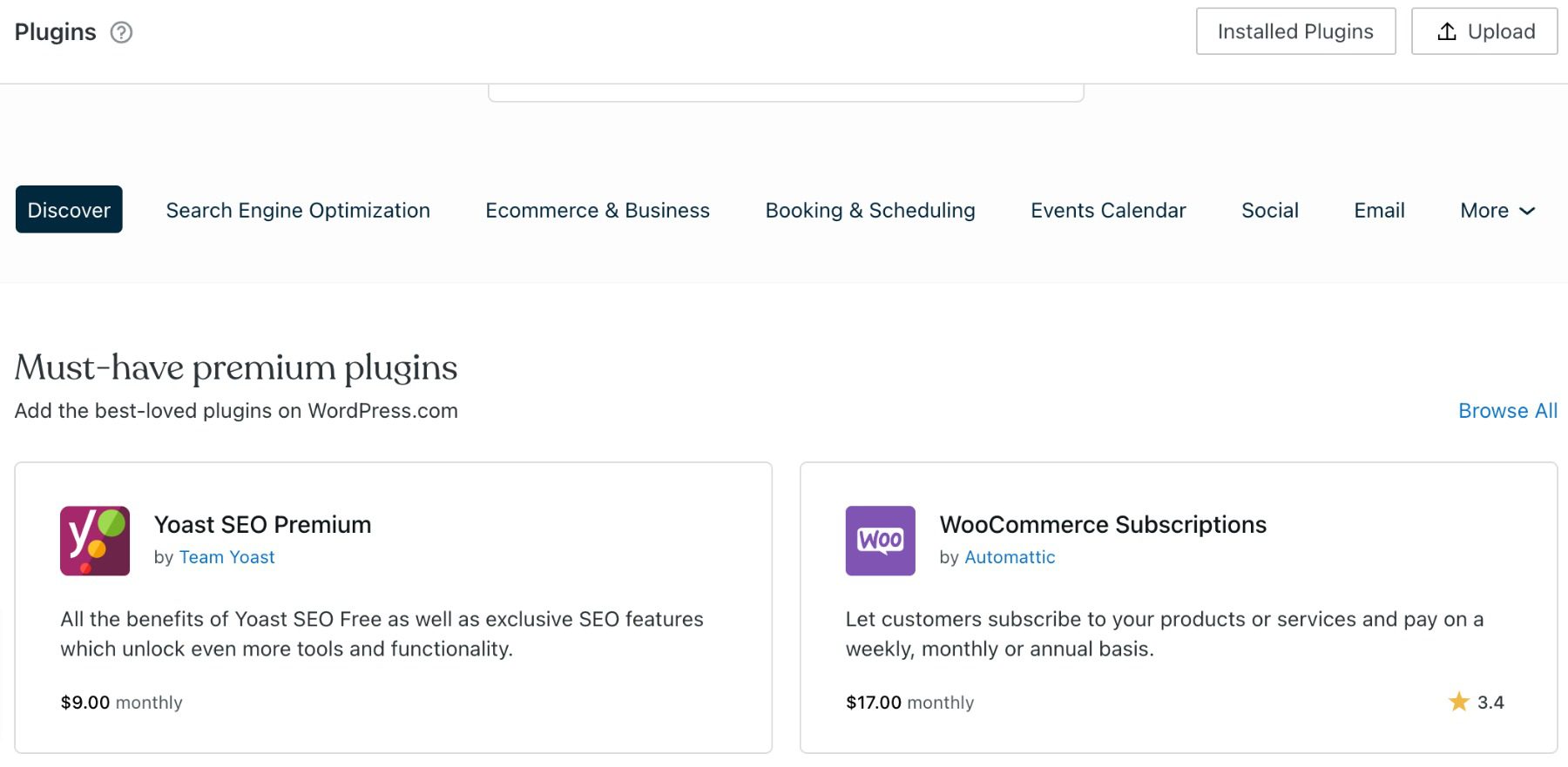
    plugins

    Widgets are also a big part of WordPress, letting you access and display the various features of your site. Maybe it would be recent posts in a sidebar or the SEO score in real-time as you write a post. Widgetized areas are customizable parts of the WP site, front-end and back, that you can set to do whatever you want. From code to drag-and-drop to set features, widgets can make up a good portion of a WP site’s real estate.

    These drag-and-drop plugins make your WordPress website editor similar to the basic web design tools that Squarespace uses:

    If you’re looking for more suggested plugins, check out one of our articles here.

    Squarespace Themes and Templates

    wordpress vs squarespace themes

    Squarespace themes are different than WordPress themes. Where WP themes come with features and functionality for the site, themes on Squarespace are purely aesthetic. But that’s not a bad thing. That’s great. That’s the point.

    The themes that you get with Squarespace are beautiful and made so that non-designers can find something that suits them and then get their content within that template without having to fuss with the specifics of design. That’s handled already. Squarespace offers significantly fewer theme templates vs WordPress. But the ones you can choose from have been curated and designed specifically for the platform and to work with specific kinds of sites (e-commerce, blogging, portfolio, etc.).

    In terms of plugin and widget corollaries, Squarespace differs quite a bit. You can’t fiddle with every gizmo like you can with WordPress, but Squarespace does that on purpose. They designed the platform so that you don’t have to. Instead of having to install and configure WooCommerce, there’s an e-commerce shop set up already in your Squarespace dashboard. You don’t have to find and configure analytics plugins or SEO because Squarespace has those integrated into the dashboard, too.

    The Squarespace Builder

    We do want to mention the Squarespace site builder is very similar to WordPress page builder plugins, and the default WP Gutenberg block editor. You can add sections and modules with ease, just by pressing a + button. However, the amount of customization that you get on the site at this point is severely limited. You can’t really adjust positioning or colors to fully custom levels. You may only have options such as Title and  Caption and Color Palette.

    This is intentional on Squarespace’s part, as they design the themes and templates, and modules for specific looks and features. This design is a major draw for many people to Squarespace, but we do want to point out that you are pretty much locked into these designs without true customization.

    WordPress Wix
    Design and Features 🥇 Winner

    The biggest draw to WordPress is the thousands of plugins, themes, and widgets you can use to customize your website.

    Squarespace gives users the chance to create aesthetically pleasing websites with ease, but doesn’t offer very many customization options.
    Choose WordPress Choose Squarespace

    3. Learning Curve and Ease of Use

    If the number of themes and plugins and amount of customization options in WordPress overwhelms you, you’re not alone. Loading into the admin dashboard for the first time can be a shock. Hopping into the Squarespace backend might also feel a bit overwhelming, with every tool for your site immediately available in the sidebar.

    Setting up any new website tools will come with a learning curve, but we want to take a close look at WordPress vs Squarespace to see how steep that curve goes and how quickly it evens out.

    WordPress Offers Full-Site Customization

    wordpress vs squarespace editing themes

    This is, in our eyes, the biggest draw for WordPress vs Squarespace: the ability to poke, prod, tweak, and turn each and every line of code to be exactly what you need it to be. If you’re a developer or designer, you can make WordPress do anything you want by digging into the codebase.

    However, those aren’t skills everyone has. If you don’t happen to fall into the category of folks who are comfortable tweaking PHP and JavaScript, WordPress can have a pretty steep learning curve.

    Admittedly, the theme/plugin/widget system helps ease the steepness of the curve, it still takes external research and effort to find the right suite of add-ons as a base for your site. If you come to WordPress as a fresh user with no prior knowledge of the ecosystem, it’s incredibly easy to get taken in by too-good-to-be-true claims from some third-party developers.

    If you do your due diligence, however, a WordPress site with a good theme and plugin combo will run smoothly and efficiently without trouble. You just have to put in the time to learn how to get to that point because to be quite honest, the UI and messaging to get started are nowhere near what they should be for new users.

    Squarespace Offers Curated Customizations

    squarespace design

    When it comes to starting out with Squarespace, the left side of the screen is a list of every part of your site, and the right side has a pop-up that directs you to begin customizing immediately. From site title and logo to fonts, colors, and media, the Squarespace introductory tutorial trumps WordPress in every way.

    squarespace design

    This kind of initial walkthrough significantly lowers the learning curve of the software because you don’t have to find anything on your own or worry about missing something fundamental. The platform takes you through it step by step.

    Because of that hand-holding and guidance, though, the breadth of customization options are rather limited. Depending on the chosen template (the Squarespace equivalent of a WordPress theme), you will have different on-page options to adjust and fill with your own content.

    squarespace page builder

    To edit individual pages on the site, Squarespace has a basic page builder. You won’t get the customization options from top-end WordPress page-builder plugins like Divi, but you will get to introduce or remove elements from the page, as well as adjust spacing and another basic formatting. In lots of ways, the Squarespace site builder is roughly equivalent to the Gutenberg block editor in capability and learning curve.

    Dashboard vs Dashboard

    Briefly, we also want to point out that the learning curve for the Squarespace dashboard is relatively flat. While it can be overwhelming to see everything all at once, the list of features doesn’t grow often, if at all. It’s fast, it’s intuitive, and it doesn’t take a BS in computer science to know what the options do. Users can edit and change everything they want on the same page quickly and without page loading. For users who want a no-nonsense, understandable, easy-to-use place for all their features, Squarespace is it.

    dashboard for squarespace vs wordpress

    In direct comparison, the WordPress admin dashboard leaves a lot to be desired. This isn’t to say that the dashboard isn’t effective or usable. It absolutely is. And you can dig in and customize it however you need. But as your site grows, so does the dashboard.

    wordpress dashboard example

    When you install new plugins, they add their features to the dashboard somehow. This means that everything is ready and waiting for you at all times. But it also means that you have to learn a new configuration that’s not always intuitive regularly, too.

    WordPress Wix
    Ease of Use WordPress can be daunting when your first getting started. It takes a bit of research and know-how to get comfortable with the platform. 🥇 Winner

    Squarespace offers a handy tutorial that can get you acclimated quickly. It’s simple, basic, and effective.

    Choose WordPress Choose Squarespace

    4. Content Ownership and Your Data

    Data is one of the hottest commodities in the world, so making sure that you’re in control of yours is paramount to running a successful site. With that in mind, you have to know how your data is going to be used and stored by the companies you trust with your website. Let’s compare WordPress vs Squarespace.

    Your Content and Data on WordPress

    WordPress installations are yours, always have been yours, and always will be yours. Content that you put on that website can be exported and used anywhere (within its licensing and copyright, that is) without the worry of interference.

    This goes for your domain name and web address, too. If you register it separately from your web host (which we recommend that you always do), no one can say that you can’t sell that URL or move it to a different host. It’s yours to do with what you want.

    Not all platforms are like that, and some will fight you tooth and nail to keep you on their platform through some pretty shady means (but not Squarespace, actually). With WordPress, that’s not even a concern, and we feel that is a very important point to make.

    You do need to make sure, however, that your host is trustworthy with your data, too, as they’re the ones ultimately in charge of what happens to it.

    Your Content and Data on Squarespace

    You can export your content from Squarespace and move it elsewhere if you want. You do own the content and images (again, as per licensing). Squarespace has a series of import/export tools for content and details that you include on your site, and their Terms of Service (as far as we’ve been able to read) don’t include any hidden clauses that anything you put on their platform belongs to them.

    You can even transfer a domain name registered through them to any other registrar. This is important because the URL you choose is one of the most important parts of owning a website. The main issue we’ve found with their domain service is that even if you use their “free” domain registration, it renews at $20 to $70 from then on out, depending on your TLD (.com, .org, .tv, etc.). For a typical .com, that’s a lot. There is certainly an upcharge here. But again, that’s part of a SaaS platform that handles these things on your behalf.

    In general, the main part of your Squarespace account that you don’t own and have control over is the design and templates that you use. Those belong to Squarespace, so if you move to another platform, then you must do a redesign using a different theme. This is normal. The same thing happens if you were to move to Squarespace from WP. You couldn’t use your Elegant Themes membership to bring Divi along with you, for instance.

    WordPress Wix
    Content & Data Ownership 🏳 Draw

    WordPress has and will always let you keep your data and content and has tools to be exported should you leave the platform.

    🏳 Draw

    Squarespace let’s you keep all of your data and content, but keeps access to it’s templates, which is a standard practice.

    Choose WordPress Choose Squarespace

    5. E-commerce

    For many sites, the make-it-or-break-it feature is being able to run a fast, reliable, and efficient storefront through the website. Both WordPress and Squarespace are great options for this. But they do have their own idiosyncrasies when it comes to how that is handled and what features are available.

    WooCommerce on WordPress

    You have a number of options for e-commerce on WordPress, but by and large, you will probably be using WooCommerce. It’s the biggest player on the field. And for good reason. Like WordPress itself, WooCommerce is free software that you can download, install, and configure relatively quickly.

    Upon installation, WooCommerce walks you through the process of setting up your store. You just follow along, making sure all the details are right before you even get taken to the shop and products.

    In terms of aesthetics, the shops and products that you can make with WooCommerce look great, and you can download plugins that adjust pretty much every aspect of the shop. Even Divi has a series of modules dedicated to tweaking your WooCommerce store’s design until it’s perfect.

    Like the rest of WordPress, though, WooCommerce has a series of hidden fees in terms of most non-base extensions and features having an extra cost. We also have to mention that the learning curve for the UI is pretty steep.

    woocommerce learning curve

    Even so, the power and extensibility you get with WooCommerce are worth the effort and the potential additional costs of extensions and add-ons. But at its base, the only fees and costs are from the payment processors. In reality, though, you will have a range of small costs as you figure out what features you need.

    Squarespace Commerce

    The Squarespace e-commerce solution is in the dashboard under the heading Commerce. Clicking it the first time will bring up a wizard not unlike the one that WooCommerce uses, taking you through the process of setting up physical goods, payments, digital options, and other details.

    You will choose a store template for your site. However, the options are rather limited. In most cases, your store will be a grid of product images, and you will be able to customize elements such as text alignment, aspect ratio, width, and spacing. This is similar to the default WooCommerce shop, with which you don’t get customization, either. However, you have options to extend that in Woo but not on Squarespace.

    wordpress vs squarespace ecommerce

    Squarespace e-Commerce pricing

    The learning curve for Squarespace commerce is relatively low, as the entire process of setting up and even adding more products is quick and painless. The user experience of selling on the Squarespace e-commerce platform is much nicer than WooCommerce. But that comes at the trade-off of pretty limited options for displaying your products.

    You won’t, however, run into extra costs if you use Squarespace for an e-commerce platform. Everything that you need to run the store itself is packaged in with your monthly cost. However, the lowest tier of Squarespace’s features doesn’t include e-commerce. For that, you will need to pay $18 per month. Which isn’t out of line at all when compared with competitors like Shopify.

    WordPress Wix
    e-Commerce 🥇 Winner

    WooCommerce is a great free tool that has become a standard for the WordPress community. There is a ton of customizability options that are available to help you create your ideal store. But, it can be a bit challenging to learn and the add-ons do come with a small fee.

    The learning curve for e-commerce with Squarespace is low and simple to get started with. However, there isn’t a lot of customization options and running a store will cost an increased monthly fee.
    Choose WordPress Choose Squarespace

    WordPress vs Squarespace

    When considering a WordPress vs Squarespace site, it comes down to what you are in the market for in terms of your website, what your budget is, and what your experience level with websites might be.

    Head to head, Squarespace offers a far more refined experience with a lot of the hassles of owning and managing a website taken care of for you. Squarespace has a lower learning curve, a slicker interface, and a solid support team for its all-in-one SaaS platform. From e-commerce to portfolios to blogging and more, Squarespace integrates it somehow into its platform. For someone who wants a professional website with as little friction as possible, Squarespace is the way to go.

    WordPress, though, offers complete autonomy and customization but has a mildly confusing interface and a moderate learning curve. Every feature a site owner could need, however, is readily available. You just have to find the theme or plugin that provides it. In some ways, WordPress can feel like the Wild West. But in reality, the piecemeal way themes, plugins, features, and such are handled makes it so that every type of site owner is catered to somehow. If you want to work on your website until it is pixel-perfect in every regard, WordPress is the way to go. From SEO tools to Social Media plugins, WordPress has something for you.

    Final Comparison

    In the end, WordPress vs Squarespace boils down to whether you want a beautiful, walled garden with less customization or a garden plot that will be just as beautiful by getting a little dirt on your hands. We don’t think one platform is necessarily better than the other. They’re just better for different kinds of site owners.

    WordPress Wix
    Pricing 🥇 Winner

    While it is technically free, you’ll eventually need to pay for hosting or services. The amount depends on what you want to spend.

    It’s a premium SaaS platform, so you pay monthly or yearly for the convenience with no additional configuration options.
    Design and Features 🥇 Winner

    The biggest draw to WordPress is the thousands of plugins, themes, and widgets you can use to customize your website.

    Squarespace gives users the chance to create aesthetically pleasing websites with ease, but doesn’t offer very many customization options.
    Ease of Use WordPress can be daunting when your first getting started. It takes a bit of research and know-how to get comfortable with the platform. 🥇 Winner

    Squarespace offers a handy tutorial that can get you acclimated quickly. It’s simple, basic, and effective.

    Content & Data Ownership 🏳 Draw

    WordPress has and will always let you keep your data and content and has tools to be exported should you leave the platform.

    🏳 Draw

    Squarespace let’s you keep all of your data and content, but keeps access to it’s templates, which is a standard practice.

    e-Commerce 🥇 Winner

    WooCommerce is a great free tool that has become a standard for the WordPress community. There is a ton of customizability options that are available to help you create your ideal store. But, it can be a bit challenging to learn and the add-ons do come with a small fee.

    The learning curve for e-commerce with Squarespace is low and simple to get started with. However, there isn’t a lot of customization options and running a store will cost an increased monthly fee.
    Choose WordPress Choose Squarespace

    WordPress vs Everything

    One more thing. Before you make your final decision on your website platform…are you curious to see how WordPress stacks up against its other biggest competitors? We did the hard work and compared WordPress vs. everything else so that you don’t have to! Most recently, we reviewed WordPress vs. Weebly, and I think you will be interested to see the results.

    If you’re looking for specific plugins to help WordPress become even more powerful, we recommend the following:

    Having said that, Squarespace still provides a great set-and-forget website-building tool.

    We hope you’ve enjoyed this WordPress vs Squarespace comparison! What is your position on WordPress vs Squarespace? Why do you feel that way?

    The post WordPress vs Squarespace (2023) — The Crucial Differences appeared first on Elegant Themes Blog.

  • WooCommerce vs Shopify (2023) — Which One Is Best?

    WooCommerce vs. Shopify is a tough match-up. Shopify claims that over 1,700,00 businesses use its platform. WooCommerce, on the other hand, has more than five million active installations. That means we’re talking about two eCommerce giants, each taking an entirely different approach to helping you build an online store.

    In this article, we will compare WooCommerce vs. Shopify regarding setup, payment processing, customizability, and price. Along the way, we’ll tell you which eCommerce platform excels in each area to help you decide which option best fits you.

    Let’s get to it!

    WooCommerce vs. Shopify: Hosted vs. Self-Hosted eCommerce

    Although both Shopify and WooCommerce can help you create an online store, they offer very different user experiences. The primary difference between the two options is that one is self-hosted, and the other is hosted.

    Here’s what that means:

    1. WooCommerce. WooCommerce is a WordPress plugin. You can install the Content Management System (CMS) on any server of your choice, are entirely free to edit the WooCommerce and WordPress code, and can use both tools for just about any type of project you want.
    2. Shopify. Shopify is a Software-as-a-Service (SaaS) platform. It provides you with hosting, eCommerce software, maintenance, and support. That means less control over your store, but an easier setup process.

    WooCommerce itself is free. However, you still have to pay a monthly or yearly fee for hosting the WordPress website that’s using WooCommerce (unless you run your own server). In return, the combination of WooCommerce and WordPress gives you complete freedom when it comes to your eCommerce projects:

    WooCommerce

    Shopify as a platform is all about providing businesses with easy-to-use tools for launching an online store. As a hosted platform, it combines all of the features you’ll need in one package:

    Shopify

    Due to its nature, Shopify is a less flexible platform than WooCommerce. However, that’s not necessarily a bad thing, as we’ll explore throughout the rest of this article.

    Setting Up a Store in WooCommerce vs. Shopify

    If this is your first time setting up an online store, you’ll want to know how difficult (or simple) each platform makes that process. Let’s start with WooCommerce.

    WooCommerce

    As we mentioned earlier, WooCommerce is a WordPress plugin. This means that before you get to work on your store, you have to go through a series of steps, including:

    1. Finding a web host
    2. Signing up for a hosting plan
    3. Installing WordPress
    4. Finding and installing the perfect WooCommerce theme
    5. Setting up WooCommerce

    This process doesn’t take much time if you’re already familiar with WordPress and you have a web host in mind. However, if this is your first time looking for a web host, you’ll need to budget plenty of time for research.

    Installing WordPress is a painless experience, and in many cases, your web host will do it for you. In addition, some WordPress hosting services offer “eCommerce” or WooCommerce plans, which is a fancy way of saying that they’ll pre-install WooCommerce and some other useful tools for you.

    Once you get to work with WooCommerce, the plugin will launch a wizard that will help you configure your store and set up some basic pages for it:

    Setting up a store using WooCommerce

    After your store is ready to go, you can start adding products. The plugin adds a Products tab to your site’s dashboard and lets you use the WordPress editor to set up new products for your store:

    Adding products to WooCommerce

    Adding new products to WooCommerce is simple, but it’s not as “visual” a process as with other eCommerce platforms.

    Shopify

    With WooCommerce, you have to go through several steps to get your store up and running. When you’re using Shopify, the process boils down to two parts:

    1. Signing up for a Shopify account
    2. Configuring your store

    When you log in for the first time, Shopify will ask you a few basic questions about what kind of project you’re working on:

    Launching a new Shopify store

    Shopify will also ask you for some personal information, which it needs to process your store’s payouts. As soon as you get to the dashboard, you’ll be able to start adding products. Overall, the Shopify product editor offers a more streamlined experience than WooCommerce does:

    Adding a product in Shopify

    Both Shopify and WooCommerce enable you to add a lot of details for each product in your store. You can specify prices, set up Stock Keeping Unit (SKU) numbers, track stock, configure shipping, and more.

    One standout feature that Shopify offers is built-in basic Search Engine Optimization (SEO) options for products:

    Working on a product's SEO in Shopify

    To get that same functionality in WooCommerce, you have to use an SEO plugin. With the right tool, you’ll get access to a lot more features than what Shopify offers out of the box.

    WordPress
    Setting up a Store 🥇
    Winner
    Shopify excels in this category because its simple regardless of your technical experience.
    WooCommerce is easy to setup as well, but it’s especially easy if you have experience with WordPress.
    Choose Shopify Choose WooCommerce

    Verdict: If you’re familiar with WordPress, setting up WooCommerce and adding products will be a walk in the park. On the other hand, if you’re new to eCommerce, Shopify offers a much more streamlined setup experience.

    Configuring Payment Options in WooCommerce vs. Shopify

    An online store can only be successful if you offer payment options that your customers want to use. You’ll want to have access to as many options as possible, so you can pick the best ones for your store.

    WooCommerce

    With WooCommerce, you get access to several payment processors out of the box. The plugin lets you choose from several options during the setup wizard, including Stripe and PayPal. However, you can always enable additional methods through the WordPress dashboard:

    Setting up WooCommerce payment methods

    If you want to set up additional payment methods, you can always browse the WooCommerce “extensions” store. Extensions are simply plugins that add new functionality to WooCommerce, such as support for additional payment processors:

    WooCommerce payment extensions

    These add-ons enable you to integrate almost any payment processor you want into your store. The downside is that a lot of WooCommerce extensions are pay-to-play, and they can get fairly expensive.

    Shopify

    Shopify also supports a broad range of payment processors. The platform promotes PayPal as its main option, but it also gives you access to several third-party providers and what it calls “alternative payment methods”.

    Configuring Shopify to work with third-party providers is simple. The platform will offer you a list of options, and it explicitly tells you which are not available in your country:

    Configuring Shopify payments

    When you add a new payment option, Shopify will inform you if you need to create an account and how to connect it with your store. It also tells you how much that specific payment processor charges in fees, which is very useful.

    As we mentioned briefly, Shopify also supports some alternative payment options. Among those, you’ll find payment processors that enable customers to pay using cryptocurrency and local payment options in their regions:

    Configuring alternative payment methods in Shopify

    It’s also worth noting that all of these options are built into Shopify. Unlike with WooCommerce, you don’t need to pay for extensions that add specific payment processing options to your store. Shopify does offer extensions (free and paid), which it calls “apps”, but not for this functionality.

    WordPress
    Configuring Payment Options 🥇 Winner
    Shopify offers you most of the options you’ll need directly out the gate, but doesn’t offer the more specific extensions.
    WooCommerce comes with a few standard payment options but, has the bonus have having an extensive plugin library.
    Choose Shopify Choose WooCommerce

    Verdict: If you’re looking for very specific payment processing options, WooCommerce extensions can be your best bet. However, Shopify gets a thumbs-up for incorporating so many options without requiring additional tools. Out of the box, however, both eCommerce solutions give you access to the basic payment processors that most stores use (such as Stripe and PayPal).

    Customizing Your Store with WooCommerce vs. Shopify

    If you want to make your store your own, you’ll need the ability to add new features and change its style. In that area, both WooCommerce and Shopify offer some impressive options.

    WooCommerce

    Customizability is where WooCommerce shines. Since you’re using WordPress, you can customize your website and store it in almost any way you can imagine. WordPress offers thousands of themes and plugins (both premium and free) that enable you to add new and exciting functionality to your projects.

    For example, you can look for WordPress themes that integrate with WooCommerce out of the box. Some themes, such as Divi, enable you to use advanced visual builders to customize your store and product pages:

    Customizing your store using Divi

    With WooCommerce, you have a level of freedom to customize your store that hosted platforms such as Shopify simply can’t match. You can even alter your site’s foundational code (or hire a developer to do so for you).

    The trade-off for that freedom is that you’re always learning something new about how to use WordPress and WooCommerce. If that sounds like a good deal to you, then WooCommerce’s customizability is its primary selling point.

    Shopify

    Shopify offers a broad range of customization options for its users. You get access to an app library that gives you plenty of options for adding new functionality to your store:

    Adding apps to Shopify

    Just as with WordPress, some of Shopify’s apps are free, and some are premium. However, the selection of apps is magnitudes smaller than what you’ll get with WordPress and WooCommerce. Also, where premium WordPress plugins usually charge you for a yearly license, most paid Shopify apps work on a monthly subscription model.

    As far as themes go, Shopify offers a modest selection of free options:

    Free Shopify themes

    When it comes to premium themes, the selection is much broader. However, Shopify themes tend to be much more expensive than their WordPress and WooCommerce counterparts, with most starting at around $180.

    WordPress
    Customizing Your Store Compared to WooCommerce, Shopify provides a limited set of customization choices that come at a higher price point. 🥇 Winner
    WooCommerce’s unparalleled customization capabilities make it a particularly compelling in this category.
    Choose Shopify Choose WooCommerce

    Verdict: The level of freedom that WordPress and WooCommerce offer is unmatched. Shopify is a customizable platform, but due to its hosted nature, it can’t compete with WooCommerce. Moreover, WooCommerce and WordPress are so popular that there are almost no features you can’t add to your store using plugins.

    How Much Does WooCommerce vs. Shopify Cost?

    Ultimately, the biggest deciding factor between WooCommerce vs. Shopify will likely be your budget. With that in mind, here is the basic pricing you’ll be looking at:

    WordPress
    eCommerce Software Included with each plan 🥇 Winner
    Free
    Plans $29, $79, and $299 per month plans Free
    Setup fees Included with each plan None and some web hosts set up WooCommerce for you
    Hosting Included with each plan Hosting plans start at around $5 per month
    Domain name Not included – .com domains start at around $15 per year Included with some web hosting plans
    Store and website maintenance Included Depends on your hosting provider and plan
    Plugins and apps On average, monthly app subscriptions start at around $5-20 On average, premium plugins start at around $10-20 for yearly licenses
    Themes Official premium themes start at $180 On average, premium themes start at around $29
    Choose Shopify Choose WooCommerce

    On paper, WooCommerce is the cheapest option out of the two. You can set up WordPress and WooCommerce for less than $20, including hosting and a domain. With Shopify, you need to spend at least $29 for its basic plan and then pay extra to register a domain.

    If you want to use Shopify apps, those costs can add up quickly too. Monthly subscriptions will end up costing far more than yearly fees for premium WooCommerce extensions. However, it’s worth noting that you don’t need to use premium themes, extensions, or apps for either platform – it’s all up to you.

    WooCommerce Deep Dive

    If you’re interested in learning more about what WooCommerce has to offer, you can check out some of our articles like WooCommerce vs. Magento or our article on the real cost of using WooCommerce.

    Whether you’re a seasoned WooCommerce user or just starting, these articles will provide you with valuable insights and best practices to take your store to the next level.

    WooCommerce Vs. Shopify: The Final Comparison

    Choosing between WooCommerce and Shopify can be a challenge. WooCommerce is by far the more flexible option, but it also takes longer to fully master than Shopify does. If you’re entirely new to eCommerce and you want an experience that’s as easy as possible, Shopify is a safe bet.

    WordPress
    Setting up a Store 🥇 Winner
    Shopify excels in this category because its simple regardless of your technical experience.
    WooCommerce is easy to setup as well, but it’s especially easy if you have experience with WordPress.
    Configuring Payment Options 🥇 Winner
    Shopify offers you most of the options you’ll need directly out the gate, but doesn’t offer the more specific extensions.
    WooCommerce comes with a few standard payment options but, has the bonus have having an extensive plugin library.
    Customizing Your Store Compared to WooCommerce, Shopify provides a limited set of customization choices that come at a higher price point. 🥇 Winner
    WooCommerce’s unparalleled customization capabilities make it a particularly compelling in this category.
    Price Shopify necessitates a minimum of $29 for its basic plan, and you must pay an additional fee to obtain a domain. Moreover, expenses for Shopify apps can accumulate rapidly. 🥇 Winner
    For under $20, you can establish a WordPress and WooCommerce site, which includes hosting and a domain.
    Choose Shopify Choose WooCommerce

    On the other hand, if you’re comfortable tinkering with your store, WordPress and WooCommerce offer a wealth of customization options that are unmatched. More importantly, it can be much cheaper to set up a WooCommerce store, which makes it a great entry-level option.

    Do you have any other questions about WooCommerce vs. Shopify? Let’s talk about them in the comments section below!

    Featured Image via olesia_g / shutterstock.com

    The post WooCommerce vs Shopify (2023) — Which One Is Best? appeared first on Elegant Themes Blog.

  • How to Enable / Activate WordPress Plugins from the Database

    Are you looking to enable or activate plugins from the WordPress database?

    If you are unable to access your WordPress admin area and need to activate a plugin to restore your access, then you can do that from the WordPress database.

    In this article, we will show you how to easily activate your WordPress plugins using the database.

    How to enable/activate WordPress plugins from the database

    When Should You Activate WordPress Plugins Using Database

    A number of common WordPress errors can prevent a website owner from accessing the WordPress admin area. In most of those situations, the user is looking to deactivate WordPress plugins without admin access.

    However in some situations, a website owner may need to activate certain plugins to restore access to their WordPress website.

    For example, let’s assume an error is stopping you from accessing your WordPress dashboard, and you have found a plugin that can fix that error.

    Luckily, WordPress stores the active plugins information in your WordPress database. This means you can manually enter this information directly in the database and tell WordPress to activate a plugin.

    The only condition is that the plugin must be installed on your WordPress site. Which means that it should be present in the plugins folder on your WordPress website.

    With that being said, let’s see how you can easily enable/activate a plugin using the database.

    Step 1. Find Your Database Name Using the Hosting Control Panel

    To activate your WordPress plugins using phpMyAdmin, first, you need to find out your WordPress database’s name.

    Now, to find the name of your database, you need to log in to your web hosting dashboard. For this tutorial, we will be using Bluehost.

    If you are using a different hosting company, then your WordPress hosting dashboard may look slightly different.

    Once you are on the cPanel, scroll down to the ‘Files’ section and click the ‘File Manager’ option.

    Click at the file manager

    This will open up the File Manager in a new window. Here you simply need to locate and click the public_html folder from the left column.

    This will open up all the files that are stored in the public_html folder. Now, you simply need to locate and click the folder with your site’s name on it present under the ‘Name’ column.

    Go to the publich_html file and find your site name

    Some users may instead see their WordPress files and folders installed inside public_html folder.

    After you have opened up your WordPress site’s file, locate the wp-config.php file under the ‘Name’ section and right-click on it.

    This will open up a menu where you need to select the ‘View’ option.

    Click View

    This will open up the wp-config.php file in a new window where you can locate your database details.

    We recommend that you copy and paste your database details including username and password into a notepad on your computer.

    Database details

    Now you’ve successfully found your database’s name, let’s move to our next step.

    Step 2. Locate Active Plugins Option via PhpMyAdmin

    After you have found out the name of your database, you need to go back to your WordPress hosting control panel.

    Once there, scroll down to the ‘Databases’ section and click the ‘phpMyAdmin’ option.

    Click the phpMyAdmin option in the cPanel

    This will launch the phpMyAdmin app in a new browser tab.

    Note: Before you make any kind of changes, please make sure to create a complete backup of your database. It will come in handy if anything goes wrong with the process.

    Next, you simply need to click the ‘Database’ tab from the navigation menu present at the top of the page.

    Now, simply locate your WordPress database and click on the browse button to expand it.

    Click the Database tab from the navigation menu

    This will show your WordPress database tables.

    Here, you will simply need to locate wp_options table and click browse next to it.

    Note: By default, WordPress uses wp_ as the prefix for table names. Your WordPress database table may have a different table prefix.

    Click at wp-options

    Inside the wp_options table, you’ll need to find the row where option_name is set toactive_plugins.

    After that, click on the Edit link next to it.

    Click the Activate_Plugins option

    This will open up a box where you can manually enter details to activate a plugin.

    Step 3. Activate a Plugin Using phpMyAdmin

    WordPress stores the active plugins information in a special format so that it can be programatically accessed by the software.

    In order to tell WordPress which plugins to activate, we’ll need to use that same format.

    First, we’ll start by entering the option_value as a:1: and then open up the curly bracket ({).

    We are entering this value as 1 because we only want to activate one plugin. You have to change the value to the number of plugins you plan on activating.

    Add option value

    Next, we will be entering i:0; after the curly bracket. Here we are essentially assigning a serial number to our plugin.

    Remember to always assign numbers starting from 0 instead of 1.

    Add serial number

    Next, we will be entering the number of characters present in the plugin’s name and the php file name of the plugin that we’re about to activate.

    For that, we will type s:24: in the box. Keep in mind that the number of characters will differ for each plugin based on the characters in the plugin directory and file name.

    For instance, we are activating WPForms in this tutorial which has 24 characters in its name including the file name of the plugin as stored in our file manager.

    Add character number

    Next, you just need to type the plugin’s directory name. You can find it by visiting the /wp-content/plugins/ folder using the File Manager app.

    Don’t forget to add quotation marks before typing the plugin’s directory name.

    Type the plugins' name

    After the /, you need to enter the plugin’s file name. This is usually the file with similar name inside the plugin folder.

    Plugin file and folder name

    Now, go back to phpMyAdmin and type the name of the plugin and then close the quotation marks.

    After that, simply add a semi-colon (;) and close the curly brackets (}). The final value in this example would look like this:

    a:1:{i:0;s:24:"wpforms-lite/wpforms.php";}
    

    This is how it will look once you’re done.

    Activating a single plugin

    Next, simply click the ‘Go’ button to execute the command.

    Now go visit your WordPress dashboard and head over to Plugins » Installed Plugins.

    Your plugin has been successfully activated.

    activated-plugin

    Now let’s say you want to activate two more plugins.

    First you will need to change the number of plugins. After you will adjust each entry for the plugin that you want to activate.

    Here is an example:

    a:3:{
    i:0;s:47:"all-in-one-seo-pack-pro/all_in_one_seo_pack.php";
    i:1;s:35:"insert-headers-and-footers/ihaf.php";
    i:2;s:24:"wpforms-lite/wpforms.php";
    }
    

    Note: We have added line breaks here to make the code look more readable. You need to make sure that there are no line breaks or spaces in your code. Otherwise, it wouldn’t work.

    We hope you learned how to activate a plugin using the database. You may also want to see our guide on how to add social media feeds to WordPress, and our comparison of the best domain registrars in the world.

    If you liked this article, then please subscribe to our YouTube Channel for WordPress video tutorials. You can also find us on Twitter and Facebook.

    The post How to Enable / Activate WordPress Plugins from the Database first appeared on WPBeginner.

  • WordPress vs Wix (2023) — Which is Right for You?

    In terms of WordPress competitors, they don’t come a lot bigger than Wix. Wix has made a name for itself by offering free websites that require absolutely no experience to create. The Wix team has grown its market share a great deal in recent years. WordPress, however, remains the 800-lb gorilla in the room. Because of its open-source approach, it powers well over 1/3 of the internet. Recent releases for WordPress have made the platform much more new-user friendly, so we are going to take you head-to-head with WordPress vs Wix to see which is the real no-fuss website-building platform.

    1. WordPress vs Wix: Who Are They For?

    Wix markets itself as “the platform that gives you the freedom to create, design, manage and develop your web presence exactly the way you want.” It is a fully hosted website platform. You use their page builder to make a professional-looking website from pre-designed templates. That means, first of all, that experienced website developers won’t get a lot out of Wix because they don’t get access to the inner workings. But people without that experience flock to Wix. They are drawn to its simplicity and ability to quickly get a good-looking website off the ground.

    WordPress, on the other hand, is openly marketed toward “everyone.” Which is a pretty wide demographic. But because it’s the industry leader in market share, the strategy works for them. WordPress started as a blogging platform that has evolved into a full content management system (CMS). Because of that, users of any skill level can start with WordPress. They choose a theme and can start with their website in a flash. New users will find the Gutenberg block editor intuitive for page and post design. Experienced developers can dig into creating their features and designs by creating and coding their custom themes and plugins.

    Both website platforms are incredibly easy for new users to jump into. And each has its unique quirks and learning curves.

    2. WordPress vs Wix: Ease-of-Use

    Users don’t want a lot of roadblocks in their way to creating a website and getting their content in front of people. You may be setting up your first site ever. Or your thousandth. Either way, break down how easy it is to get started with a website on WordPress vs Wix.

    WordPress

    WordPress originated as a blogging platform, which is evident in its core features, Posts and Pages. The platform’s simplicity and comprehensibility make it easy to use. Custom Post Types are used by major plugins and features, such as Toolset and WooCommerce, to expand the platform’s capabilities. Understanding the basic publishing workflow is enough for users to learn the platform’s advanced features.

    WordPress dashboard

    Regrettably, the dashboard and UI haven’t developed as seamlessly as other parts of the platform (e.g., the Gutenberg block editor). The left-hand sidebar can be perplexing and unintuitive for new users. Adding new plugins and themes can lead to clutter and poor navigation, which is expected.

    By the time your dashboard gets as cluttered as the one above (which is from a site started in 2013), you will have learned to navigate it and use the features. However, that doesn’t change that the user experience is less-than-stellar.

    The main challenge in learning WordPress is discovering the ideal themes and plugins. Thankfully, we can help you with that. We have an exhaustive library of posts to help you choose the best form plugins, some great options for social media integration, popular SEO plugins, as well as WooCommerce and blogging themes to help get you started.

    wordpress theme repository

    And if you don’t want to sink that time into it and need a website fast, the default themes and core features look nice and work immediately after installation.

    Wix

    Starting with Wix is a bit simpler than WordPress. There are a couple of calls to action on the page prompting you to get started with your free account.

    Get started with Wix

    From there, you decide how you want to create the site. You can edit from the ground up using the drag-and-drop page builder. Or you and answer a series of questions about what kind of site you want to have. You might choose eCommerce or blog or portfolio. Whatever you choose, you’re then given a choice of features to include such as forums, contact forms, and email opt-ins. And finally, you choose between 6 different color/font themes and add what pages you want on the site (such as a blog or about me or policies, etc.).

    Wix

    Once you choose these elements, Wix loads your dashboard. The whole process is straightforward. When it’s done, you have a ready-to-publish site (outside of not having your content, of course).

    Wix’s Dashboard is Difficult to Navigate

    However, that’s when the simplicity and ease of use stop. From there, Wix takes you to your dashboard, which is just as cluttered (if not more so) as WordPress’s. But this one contains so many upsells that navigating to actual features you can use versus features locked behind a paywall is like running an obstacle course.

    Design Wix site

    Nearly every click in their dashboard brings up some kind of upsell. Even pushing your site live brings up a screen-filling modal that makes it seem as though subscribing is how to proceed. Additionally, messages such as “Get Your Site on Google” and “Get Found on Google” are misleading to users, New website owners may not understand how search crawlers work and the site will be indexed regardless. All that feature does is connect the site to Google Search Console. Which is admittedly important for long-term success, whether your site is Wix vs WordPress.

    We mention all of this in this section because this is most certainly an ease-of-use issue. The constant upsells are somewhat distracting. They get in the way of easily designing and launching a site, which is the primary focus of Wix’s marketing.

    WordPress Wix
    Ease of Use 🏳 Draw

    Dashboard can be a bit difficult when a lot of plugins are installed, but the core elements are easy to understand.

    🏳 Draw

    Getting started is simple, with step-by-step instructions. That being said, the Wix dashboard is full of upsells and is very convoluted.

    Choose WordPress Choose Wix

    3. WordPress vs Wix: Page Builders

    Over the past decade, page builders have brought non-designers the ability to create professional-looking websites through templates, drag-and-drop interfaces, and modular elements. Both Wix and WordPress offer these features, and in many ways is the primary way the platforms appeal to new website owners. We take a look at the builders available on both platforms so you know what you’re getting into with either.

    WordPress Page Builders

    In terms of ease-of-use, however, WordPress’s Gutenberg block editor does shine as an intuitive way to write and edit posts, as well as design pages (though page builder plugins such as Elementor, and Beaver Builder, and themes such as Divi offer much more advanced options when you get to need those). You add blocks, use built-in controls and options to place them, and then publish. You don’t even need to adjust CSS to create content with it.

    WordPress vs Wix page builder

    If you want a more powerful approach, most of the top free WordPress themes come with either a built-in page builder or integrated support for third-party builders like Divi. You get to pick and choose which builder works best for you and has exactly the experience you want.

    However, the downside to this is that the only one built into WordPress itself is Gutenberg. And you have to research third-party developers to get more advanced ones.

    Wix’s Builder

    Wix’s customizable website’s core is user-friendly, unlike the dashboard. The design of the builders is aesthetically pleasing. Wix offers a step-by-step builder (Wix ADI) and a drag-and-drop builder. Dev mode (powered by Velo) allows you to add custom javascript for additional functionality, but you’ll need to upgrade your account to use it.

    add custom code WordPress vs Wix

    Neither builder is as effective as popular WordPress editors like Gutenberg. However, first-time users will receive a brief tutorial on adding elements, sections, and pages, and managing the business aspects.

    Wix builder tutorial

    The drag-and-drop editor is a superior tool compared to the ADI builder, offering more control over individual elements. With drag-and-drop, you can move elements to any spot without CSS or other elements being affected.

    You can swap between elements and pages, and those load a lot faster than the ADI editor. But it still lags in every browser we tried.

    Adding elements in Wix page builder

    Overall, the Wix builder alone is enough to deter anyone who wants an easy, smooth experience. The app just has enough to be a contender for building a solid website that you can use for anything but a quick announcement or placeholder.

    WordPress Wix
    Page Builders 🥇 Winner
    The Gutenberg Block editor is simple and intuitive. Plus, there are an abundance of third-party choices available.
    While the aesthetics and overall design are nice, that’s where the effectiveness of Wix ends. The builder is laggy, making swapping between elements painfully slow.
    Choose WordPress Choose Wix

    4. WordPress vs Wix: Customization

    It’s easy to spend countless hours tweaking fonts, adjusting plugins, choosing colors, and editing templates. Making sure that your website is perfect for your users is a big part of what being a website owner is about. So we are going to take a look at what WordPress vs Wix offer you in terms of customization and being able to give your users the experience they deserve.

    WordPress Customization

    Other WordPress customization options outside of page builders and editors come built into the platform. You can add custom CSS to the site through the Theme Customizer, and even dig into the PHP files for your theme right through the back dashboard (though we don’t recommend doing that).

    Part of what makes WordPress appealing is the ability to customize and tweak every aspect of your site. You can add plugins for new features, adjust themes, and dig into the code. That being said, with the introduction of full site editing themes, customizations span even further to custom templates, template parts, and block patterns, without having to edit a single line of code.

    WordPress full site editing

    WordPress primarily relies on themes and plugins for customization, whereas Wix focuses on builder-based customization. WordPress.org offers a vast repository of themes and plugins to choose from for establishing a site’s foundation. Plus, there are countless third-party plugins to extend WordPress’s ability. For example, Divi users benefit from the Divi Marketplace, where they can boost Divi’s already stellar capabilities through plugins and extensions.

    Theme developers usually include multiple customization options in their designs, enabling users to control the added elements. Users can extend site functionality by installing plugins, which add custom widgets, post types, scripts, and utilities.

    wordpress vs wix plugins

    Wix Customization

    In terms of customization, the options that you get in the builders are what you get with Wix. You can tweak elements and keep them all within the designs that will always make your website look put together and professionally designed. Regarding content, you can add whatever you want. Videos, photos, blogs, whatever.

    You can customize layouts and various elements for your eCommerce shops and blogs. In general, the customization options within Wix are comparable to other hosted builders like Squarespace or HubSpot. The intent isn’t to give you full rein, as in WordPress. It is to present you with a series of options that work well together and make an aesthetically pleasing final website.

    This is good – because as we mentioned earlier – if you want to add anything else to the website via custom code (such as CSS), then you’re going to have to upgrade your membership.

    Not even being able to customize CSS is a major lacking point for a website. This is only a limitation on free accounts, however, and a pretty standard one at that. Even free WordPress.com (which is also a free-to-premium platform like Wix) prevents free users from adjusting CSS for their themes.

    WordPress Wix
    Customization 🥇 Winner

    WordPress shines in terms of customization based on the sheer amount of plugins and themes available, as well as the ability to add CSS for ultimate control.

    What you see is basically what you get with Wix. While you can tweak the available elements, adding CSS will cost you additional fees.
    Choose WordPress Choose Wix

    5. WordPress vs Wix: Ecommerce

    Making money by selling something on the internet is many people’s dream. You may want to sell courses or ebooks. Or you might want to have an online space for your in-person shop. Whatever your intent, both WordPress and Wix have quick-and-easy options for setting up shops.

    WordPress Ecommerce

    WordPress technically doesn’t have e-commerce built into it. WooCommerce is a separate plugin that you will need to install, but it’s owned and developed by the same company as WordPress, so it might as well be a default e-commerce platform.

    Woocommerce dashboard

    When you log into WooCommerce, you have a dashboard that includes full payment reporting, as well as a series of menus to the side with other default features. You get customer details, can create coupons, run reports, send emails to customers, check the status of orders, and so on.

    By default, WooCommerce enables PayPal as a payment method. Because PayPal is one of the easiest payment processors available. Even so, PayPal isn’t available in many countries, so you will want more than that. WooCommerce gives you the option for Stripe payments, too, as well as a feature called WooCommerce Payments that the company handles by itself. Plus, there is additional support for other payment processors, too.

    WooCommerce Add-Ons

    Furthermore, while WooCommerce offers an impressive selection of extensions to enhance its functionality, you may require additional plugins for specific features. These plugins are often available for purchase as premium or freemium options. Notably, Yith is a well-regarded company offering some of the best WooCommerce add-ons at both price points.

    Fortunately, there are numerous options available for WooCommerce, such as SEO plugins and product image zoom plugins, which can greatly improve your online store. Additionally, for brick-and-mortar stores seeking to integrate their online and in-store inventory management, WooPos is an ideal solution to bridge the gap between the two systems.

    Probably the biggest issue with WooCommerce is that the shop itself is not very customizable. You can adjust the layout some, but by and large, the majority of WooCommerce shops and products look eerily similar.

    Woocommerce product page

    That being said, some premium themes and plugins can be used to create custom product pages. For example, Divi’s Theme Builder can create beautiful product page templates, as well as shop and category page templates with help from Divi’s built-in integration with WooCommerce.

    Wix Ecommerce

    First, we want to point out again that Wix is all about the upsells. The platform has an e-commerce shop built into the builder so you can go in and add products just like any other page. However, if you’re a free user (to whom Wix primarily advertises), you cannot accept online payments at all. So you’re forced to upgrade to a premium plan regardless.

    wordpress vs wix upselling for ecommerce

    Adding products and using the actual builder is painless. It can be sluggish and slow to respond, but in comparison to WooCommerce, the UI is much easier to use. And nicer to look at.

    wix store

    All of the options and information you need are in a single place, even creating coupon codes or sending emails to customers. This consolidation is a lot more useful than the WordPress way of spreading things out across multiple screens.

    The shop is about on par with the WordPress one. You do get more customization options with Wix, but they’re pretty superficial. You can adjust margins and layout and how text appears and sorting, etc., but your store is probably going to be a pretty standard grid. That said, it probably will be with WordPress and WooCommerce, too.

    WordPress Wix
    Ecommerce 🏳 Draw

    WordPress doesn’t come natively with ecommerce functionality, but there are plugin options available. Woocommerce adds a shop to WordPress, but it’s not the most straightforward to set up.

    🏳 Draw

    Wix offers the ability to add products in the free version of its software, but if you want to collect payments, you’ll have to upgrade your account. That being said, adding products to the platform is quite simple.

    Choose WordPress Choose Wix

    WordPress and Wix Alternatives

    One more thing. Before you make your final decision on your website platform…are you curious to see how WordPress stacks up against its other biggest competitors? We did the hard work and compared WordPress vs everything else so that you don’t have to! Most recently, we reviewed WordPress vs Squarespace, and I think you will be interested to see the results.

    Should You Go with WordPress or Wix?

    WordPress is a stronger platform than Wix in almost every way. While Wix has some nice features, such as a good UI and a cool drag-and-drop editor, we are not impressed with its platform. However, it is a decent service if you’re willing to upgrade your account a few levels.

    Wix’s upselling suggests it targets those who want a free website, but its free option is not functional. Many reasons exist to avoid free websites. Wix markets itself as free, but to use the site you build, you must pay a considerable amount.

    With WordPress, you do have to handle a lot more of the backend features. Like theme and plugin installation, maintenance, and hosting. But the power and lack of restriction the platform gives are more than worth learning how to do. Feature by feature, WordPress offers a smoother, more stable experience than the Wix platform.

    That being said, WordPress has a slightly steeper learning curve to start, but if you intend to keep the website active for more than a month or two, we say go with WordPress over Wix because of its list of possible integrations, features, and customization options.

    Final Comparison

    Here’s a complete breakdown of all the features that both options offer. As you can see, WordPress wins by a wide margin. This is largely due to the fact that there are so many plugins and themes available. Plus, you have more options when it comes to hosting than you do with Wix. WordPress hosts are plentiful, but there are a few such as Cloudways and SiteGround that offer some stand-out features at a very reasonable price.

    WordPress Wix
    Ease of Use 🏳 Draw

    Dashboard can be a bit difficult when a lot of plugins are installed, but the core elements are easy to understand.

    🏳 Draw

    Getting started is simple, with step-by-step instructions. That being said, the Wix dashboard is full of upsells and is very convoluted.

    Page Builders 🥇 Winner

    The Gutenberg Block editor is simple and intuitive. Plus, there are an abundance of third-party choices available.

    While the aesthetics and overall design are nice, that’s where the effectiveness of Wix ends. The builder is laggy, making swapping between elements painfully slow.
    Customization 🥇 Winner

    WordPress shines in terms of customization based on the sheer amount of plugins and themes available, as well as the ability to add CSS for ultimate control.

    What you see is basically what you get with Wix. While you can tweak the available elements, adding CSS will cost you additional fees.
    Ecommerce 🏳 Draw

    WordPress doesn’t come natively with ecommerce functionality, but there are plugin options available. Woocommerce adds a shop to WordPress, but it’s not the most straightforward to set up.

    🏳 Draw

    Wix offers the ability to add products in the free version of its software, but if you want to collect payments, you’ll have to upgrade your account. That being said, adding products to the platform is quite simple.

    Choose WordPress Choose Wix

    We hope you’ve enjoyed this WordPress vs Wix comparison. Which are you leaning toward now? WordPress or Wix?

    The post WordPress vs Wix (2023) — Which is Right for You? appeared first on Elegant Themes Blog.

  • 10 Best WordPress Schema Plugins in 2023

    Schema markup is essential to SEO, providing search engines with data about your website and its content that is structured appropriately for search engines. With the right schema plugin, you can help search engines understand your content better, which can improve your website’s visibility in search results. In this post, we’ll be looking at some of the best WordPress schema plugins on the market, to help you find the right solution for your website.

    Whether you’re looking for a comprehensive SEO solution or just want to add schema markup to a couple of pages, we’ve got you covered.

    Quick Overview of Schema Markup and Rich Snippets

    Schema markup is a type of structured data that helps search engines better understand the content on a website. It provides additional information about the website, such as its type, its content, and its structure, to help search engines display this information in a rich snippet. Using Schema markup on your site is one of the best SEO techniques to improve rankings in the SERPs.

    Example of Schema Markup Code

    Image by BestForBest / shutterstock.com

    A Rich Snippet is a search result listing in the SERPs that provides more useful information to the user. This snippet can include things like images, ratings, deep links, and prices. By using schema markup, website owners can help search engines display their website’s content as a rich snippet, making it stand out and potentially increasing click-through rates. Rich snippets appear on page one, making them very effective.

    Example Diagram of SERP Featured Snippet

    Image by BestForBest / shutterstock.com

    The 10 Best Schema Markup Plugins for WordPress

    There are a lot of schema markup and structured data plugins for WordPress out there. We’ve done the hard work to narrow it down to these top plugins.

    If you are looking for more SEO solutions beyond schema, check out these best WordPress SEO plugins.

    1. Schema Pro

    Schema Pro Homepage Feb 2023

    Schema Pro is a powerful WordPress plugin that makes it easy to add schema markup to your website. With Schema Pro, you can add the right structured data for videos, phone numbers, recipes, or anything else. The best part about Schema Pro is that you don’t need to know how to code to use it. The plugin takes care of adding the correct code across your site, so you can focus on creating great content.

    With Schema Pro, you can be sure that you’re using the correct schema for your website. Whether you’re a blogger or marketer, this plugin makes it easy to add schema markup to your site so that it is indexed for search engines like Google.

    Schema Pro Onboarding Workflow

    Key Features for Schema Pro:

    • Makes it easy to map default data like page title, featured image, and author
    • Has a custom schema markup tool for custom post types
    • Integrates with the Google Structured Data Testing Tool and has built-in field validation
    • Provides 16 types of schema markup to use on your WordPress website
    • Adds code in the backend with no impact on frontend design

    schema pro automatic target

    The plugin generates schema structured data automatically. And this can have a significant impact on your search engine rankings for pages across your site. It will even map repeatable data such as page titles, featured images, content author, and date, which you can manually edit for each page/post if needed. This can lead to higher clickthrough rates in search engine results pages (SERPs).

    Schema Pro is for you if you…

    • Create consistent types of content with consistent schema applications
    • Need automated systems for markup
    • Can only rely on one of the best plugins on the market

    Pricing: Plans start at $79 per year.

    Get Schema Pro

    2. Rank Math

    Rank Math Homepage Feb 2023

    Rank Math Rank Math is at top of our list of all-around best SEO plugins for WordPress. It has a powerful suite of features for all your website SEO needs, including Schema. We like Rank Math (especially Pro) because of the number of schema types it can help you create. The fact that you can input a competitor’s URL and use their schema as a starting point is also brilliant.

    Rank Math automates the process of adding schema markup for you behind the scenes. This makes your website easy for search bots to index your content with little effort. As a result, your listing in the SERPs will rank higher as a Rich Snippet. This is done by adding assets like star ratings, business info cards, or video detail markup.

    Whether you’re running a WooCommerce store, a review site, or a blog, Rank Math can create the schema markup needed for optimal results.

    Key Features for Rank Math:

    • Extensive schema support with 32 types in Pro and 21 in Free
    • Effortless schema analysis using competitor URL import
    • Speakable schema for voice assistant support (Alexa, Siri)
    • Speedy JSON LD validation with Google’s Rich Results tool
    • Supports WooCommerce SEO
    • All-in-one SEO solution covering schema input and all other SEO facets
    • Seamless integration with Divi

    Rank Math Global Schema Setup by Post Type


    Rank Math is for you if you…

    • Need SEO + Schema optimization across your entire website
    • Want hard-to-create schema types like “fact check”
    • Want to experiment with Speakable schema optimization
    • Need an SEO plugin that integrates with Divi for real-time SEO on the front end using the visual builder.
    • Need an SEO plugin for WooCommerce.

    Pricing: Free; Paid plans start at $129 per year,

    Get Rank Math

    Check out our introduction to Rank Math to help you get started and our tutorial on how to use Rank Math with Divi.

    3. AIOSEO

    AIOSEO Homepage Feb 2023

    AIOSEO is a comprehensive SEO plugin for WordPress that also takes care of all your schema needs. It allows you to quickly and easily establish your website’s schema, enabling search engines to access and show your content to the right people. You establish the proper SEO + Schema foundations for your website in less than 10 minutes. Plus, it includes all the SEO features you may need to climb in the rankings.

    Key Features for AIOSEO:

    • Full support for Google Knowledge Graph and local business Schema.org markup
    • A customizable setup wizard with personalized SEO settings and checklists
    • Built-in validation for Schema markup to ensure your website is correctly optimized
    • Comes with a full suite of SEO features in addition to schema tools.

    AIOSEO Schema Generator

    Website owners want to know that every aspect of their on-page SEO is being handled. Having a complete SEO solution with schema markup ensures your SEO content is set up for success with all the tools they need in one place.  It reduces the need for additional plugins to get the best results.

    AIOSEO is for you if you…

    • Only have time to learn one plugin
    • Need the schema plugin to analyze the markup on your site’s backend (instead of using an external tool)
    • Want advanced SEO features outside of just schema

    Pricing: Free; Paid plans start at $124 per year

    Get AIOSEO

    4. Schema & Structured Data for WP & AMP

    schema and structured data for wp and amp

    Schema & Structured Data for WP & AMP is one of the most comprehensive freemium schema plugins for WordPress. It supports more than 35 schema types that meet Schema.org guidelines. Use it to create Google rich snippet markup for any type of content on your site with easy-to-use settings. There are a ton of great features out of the box. It supports Google review schema in the free version but a premium version lets you fetch reviews from over 75 platforms. And some of the schema types (like WooCommerce and Classifieds) are paid add-ons that you can purchase individually or in a  premium bundle.

    Key Features:

    • Over 35 schema types (Blog Posting, Local Business, Recipe, Product, and more)
    • Easy to set up with an installation wizard
    • Conditional display options for where schema markup is placed throughout your site
    • AMP compatible
    • Compatible with other plugins such as bbPress and kk Star Ratings
    • Advanced schema options for displaying reviews from 75+ platforms
    • Built-in Gutenberg schema blocks for adding schema markup to your own content
    • Priority support available to premium users

    schema installation wizard

    The installation wizard is a nice touch. It makes the onboarding process super simple to add the right schema markup throughout your site in minutes.

    Plus you can add new schema types and assign their placement using conditional logic. This is great for adding site-wide schema markup to the pages and posts you want with a few clicks.

    Schema & Structured Data for WP & AMP is for you if you…

    • Have a blog or small business that needs an affordable schema plugin to boost SEO.
    • Want an easy way to display multiple schema types in SERPs according to Schema.org guidelines.
    • Would like the option to add reviews from multiple platforms
    • Want built-in AMP or AMP for WP schema support

    Pricing: Free; Premium bundles start at $99 per year (or purchase add-ons separately at a lower price)

    Get Schema & Structured Data for WP & AMP

    5. WP SEO Structured Data Schema

    WP SEO Structured Data Schema plugin

    WP SEO Structured Data Schema is a freemium WordPress plugin that provides comprehensive support for schema markup and rich snippets. This plugin has over 40,000 active installs and 45 5-star ratings, making it a popular choice for WordPress users.

    If you’re looking for more control over your schema markup, WP SEO Structured Data Schema is a great option. This plugin is flexible and allows for more manual adjustments. For example, you can add schema in JSON-LD format on a per-page basis. While it does require a bit more setup, it gives you the freedom to fine-tune your schema and make it truly unique to your website.

    The plugin contains all the basics you need for schema markup and rich snippets and offers some site-wide settings. However, if you’re more familiar with schema markup, it will give you the flexibility you need.

    Key Features for WP SEO Structured Data Schema:

    • Dedicated Schema plugin with a standalone focus
    • 11 supported Schema types
    • User-friendly interface for ease of use
    • Additional Schema types available in the Pro version

    WP SEO Structured Data Schema Generator

    We like this plugin because it allows website owners to add schema markup no matter what other SEO plugins they may or may not be using. It supports the minimum number of needed schema types in the free version with more options in their paid plans.

    WP SEO Structured Data Schema is for you if you…

    • Have an SEO plugin that does not have schema capabilities
    • Need a solution that focuses on page-by-page schema creation (sites with vastly varying content types)
    • Want more control over the schema markup.

    Pricing: Free; Paid plans start at $49 per year.

    Get WP SEO Structured Data Schema

    6. WordPress Review and Structured Data Schema Plugin

    Review and Schema Homepage Feb 2023

    WordPress Review & Structure Data Schema Plugin is a comprehensive review schema plugin that offers a structured data schema solution for WordPress sites. It is included in our list because it expertly handles schema with sites focused on reviews.

    With this plugin, you can collect user ratings for custom post types, pages, and posts, as well as manage your WooCommerce ratings and reviews with ease. The plugin provides a flexible and user-friendly panel for managing all your ratings and reviews.

    Key Features for WordPress Review and Structured Data Schema Plugin:

    • Pro and con review system
    • Flexible review and rating options for pages, posts, and WooCommerce products
    • Automatic (Pro) or manual structured data schema generation using JSON-LD
    • Shortcode support for affiliate marketing and product reviews

    WordPress Review and Structured Data Schema Plugin Review Types

    With this WordPress review plugin, you can collect and showcase your customer reviews and ratings for maximum impact. The plugin offers sorting options for reviews. Criteria include highest-rated, most recent, reviews with images, and text-only reviews. This helps you show off the best feedback from your customers.

    WordPress Review and Structured Data Schema Plugin is for you if you…

    • Need a powerful review schema plugin that works with WooCommerce
    • Promote affiliate products in your own review content

    Pricing: Free; Paid plans start at $29 per year.

    Get WordPress Review and Structured Data Schema Plugin

    7. WP Review Pro

    WP Review Product Page Feb 2023

    WP Review is a versatile plugin designed to help you showcase your outstanding reviews in a structured and eye-catching way. It is perfect for review websites, eCommerce sites, and even bloggers.

    It allows you to increase consumer interaction with product and service ratings and reviews by presenting your review data in a structured box with the correct schema. This encourages search engines to include the information in their search results, improving your website’s visibility and click-through rates. Whether you’re selling digital downloads, physical products, or delivering services online, WP Review makes it easy to create rich snippets with review schema for your website.

    Key Features for WP Review:

    • Multiple rating options: Star, Point, Percentage, Circle, and Thumbs
    • Support for 19 types of rich snippets
    • Seamless integration with popular review platforms: Google, Yelp, and Facebook
    • Comparison table feature for easy comparison of products or services
    • Up to 16 content templates for creating schema markup content

    WP Review Review Builder

    One of the best parts of WP Review is that it is for content creators and eCommerce store owners. It gives tools for collecting user reviews and then displaying them effortlessly. It also lets content creators create beautiful content that is sure to rank with proper schema.

    WP Review is for you if …

    • You run an eCommerce website and want user reviews
    • You are a content creator looking to create rich content
    • You want a trusted plugin by a trusted WordPress company

    Pricing: Free; Pro version is $77 per year.

    Get WP Review Pro

    Interested in more review plugins, check out these top review plugins for WordPress.

    8. WPSSO Core

    WPSSO Core Search and Social Schema plugin

    WPSSO Core is a comprehensive plugin that offers a comprehensive solution for your SEO and schema markup needs. The free version is available on WordPress.org and is the perfect solution for website owners looking to improve their SEO and social media presence.

    Key Features for WPSSO Core:

    • Supports 500 schema types and sub-types
    • Provides structured data markup for social media sites
    • Integrates with popular SEO plugins
    • Reads data from remote service APIs

    WPSSO supports an impressive 500 schema types and sub-types, making it one of the most comprehensive schema plugins available. In addition to helping you get rich snippets in Google search results, it also provides structured data markup for social media sites like Facebook, Pinterest, LinkedIn, Twitter, and WhatsApp.

    WPSSO Core Schema Generator

    WPSSO Core is for you if you…

    • Need advanced access to hundreds of schema sub-types
    • Are focusing as much on Social Schema as Search
    • Want to buy one license and use it forever

    Pricing: Free; Paid plans start at $59 (lifetime).

    Get WPSSO Core

    9. Five Star Business Profile and Schema

    Five Star Business Profile Product Page Feb 2023

    Five-Star Business Profile and Schema is a WordPress plugin specifically designed for local businesses. It allows you to add your business information with schema markup, including a Google Maps, hours of operation, phone numbers, and more.

    Key Features for Five-Star Business Profile and Schema:

    • Create an SEO-friendly contact card with ease
    • Option to add via WordPress block or shortcode
    • Automatically adds a dropdown menu for multiple locations
    • Can be added to any page, post, or widget-ready area

    Five Star Business Profile Contact Card

    Five-Star Business Profile and Schema is for you if…

    • You are a local business owner trying to gain visibility
    • You want an easy yet properly marked-up way to add essential business details to contact and about pages
    • You need something that does not conflict with your SEO plugin of choice

    Pricing: Free; Paid plan starts at $39 (lifetime).

    Get Five Star Business Profile and Schema

    10. Divi Schema Plugin

    Divi Schema Plugin Page Feb 2023

    The Divi Schema Plugin is a robust tool that can help boost your website’s search engine ranking. This plugin can enhance your website’s search visibility by rapidly incorporating JSON-LD schema into new Divi modules while using the robust Divi page builder to design your website.

    Key Features for Divi Schema Plugin:

    • Sitewide article and organization schema implementation
    • Reusable FAQ and How to Post Types

    schema settings for divi schema plugin

    The Divi Schema Plugin supports a variety of content types, including FAQs, special announcements, how-to guides, local business information, store locators, and more. It does this through a mixed use of custom post types and new Divi modules.

    Divi Schema Plugin is for you if you…

    • Use the Divi Theme
    • Want to add Schema in a familiar editing environment
    • Want sitewide and page-by-page schema tools

    Divi Schema Plugin Pricing: $99 per year

    Get Divi Schema Plugin

    Bonus: WP Rich Snippets

    WP Rich Snippets is a premium schema plugin for WordPress that offers a unique set of core features for adding multiple schema types to your site. What makes this plugin unique is the option for creating custom reviews. It has different ways to rate and review your content including rating, percentage, votes, and user aggregate rating. Additional add-ons, like their WooCommerce Reviews, are particularly useful for companies looking to boost product reviews and create rich snippets at the same time.

    Pricing: Plans start at $69 per year

    Get WP Rich Snippets

    Bonus: RankRanger Schema Markup Generator

    RankRanger Schema Markup Generator is a free tool that makes it simple to create structured data that follows Schema.org standards. It offers support for a variety of schema types, including FAQ pages, articles, job postings, local businesses, products, events, and people. You can copy the generated schema markup and add it to your site manually.

    What Is the Best Schema Plugin for WordPress?

    There are many great WordPress schema plugins available to help you improve your SEO. Here is a list of all the plugins we covered, along with their prices for easy comparison.

    Plugin Price Free Option
    🥇 Schema Pro $79/yr ✔️ Visit
    🥈 Rank Math $129/yr ✔️ Visit
    🥉 AIOSEO $124/yr ✔️ Visit
    4 WP SEO Structured Data Schema $49/yr ✔️ Visit
    5 WordPress Review and Structured Data Schema Plugin $29/yr ✔️ Visit
    6 WP Review Pro $77/yr ✔️ Visit
    7 WPSSO Core $59 lifetime ✔️ Visit
    8 Five Star Business Profile and Schema $39 lifetime ✔️ Visit
    9 Divi Schema Plugin $99/yr ✔️ Visit

    If you’re looking for a tool that combines both SEO and schema functionality, then Rank Math is a fantastic option. With its user-friendly interface and support for 11 different schema types, it’s the perfect choice for anyone looking to improve their website’s visibility in search results.

    Additionally, for those looking for a standalone schema plugin, Schema Pro and Schema & Structured Data for WP & AMP are the best options on the list. They support a wide range of schema types and both have an easy-to-use interface. Hopefully, they are an ideal solution for generating a schema for your WordPress website.

    Featured Image via BestForBest / shutterstock.com

    The post 10 Best WordPress Schema Plugins in 2023 appeared first on Elegant Themes Blog.

  • How to Change the Font Color on WordPress Using 4 Simple Methods

    WordPress is a powerful and popular content management system (CMS) for building engaging, visually appealing websites without restrictions. It allows site owners to fully customize their websites, including changing typography settings. For instance, you can add a custom font, modify the font size, and change the font color. There are multiple methods to tweak the […]

    Read More…

    The post How to Change the Font Color on WordPress Using 4 Simple Methods appeared first on Hostinger Tutorials.

  • How to Create a Coming Soon Page for WordPress + 3 Best Coming Soon Plugins

    There are many ways to promote a new WordPress website after launch. However, only a few website owners take advantage of the pre-launch period to build brand awareness. This is where a coming soon page comes in handy. A coming soon page is a powerful lead generation tool for new websites yet to launch. This […]

    Read More…

    The post How to Create a Coming Soon Page for WordPress + 3 Best Coming Soon Plugins appeared first on Hostinger Tutorials.

  • How to Add Links in WordPress Posts and Pages, Buttons, Images, and Widgets

    Knowing how to add links in WordPress is crucial to improve user experience and optimize your site. A hyperlink, or a link for short, is an HTML element that connects different web pages. There are two types of links – internal and external. Adding internal links will help visitors find helpful information within the website, […]

    Read More…

    The post How to Add Links in WordPress Posts and Pages, Buttons, Images, and Widgets appeared first on Hostinger Tutorials.

  • How to Start WooCommerce Multi-Vendor Store Using Dokan

    Multi-vendor online stores also known as multi-vendor marketplaces are becoming popular nowadays. The idea behind a multi-vendor store is to allow individuals, resellers and/or companies to create their profiles and sell products.

    The post “How to Start WooCommerce Multi-Vendor Store Using Dokan” first appeared on WP Mayor.